Plastics Update: Christmas and Plastic
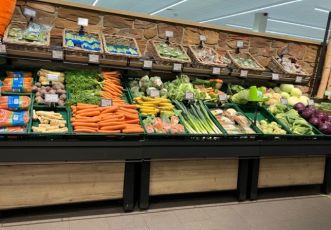
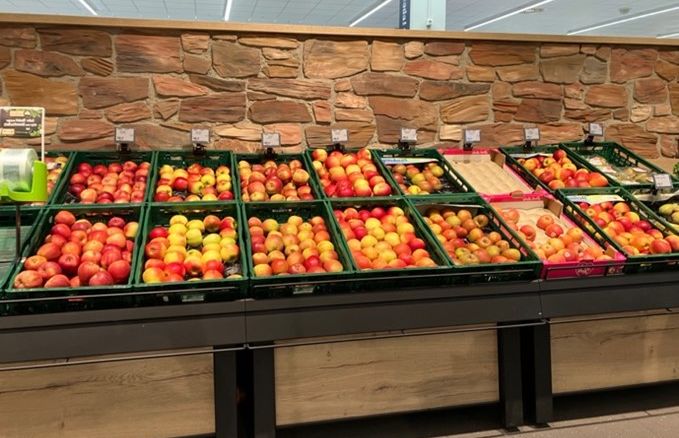
It can be done. These pictures show a local supermarket in Germany where most of the vegetables and fruit are not plastic wrapped. In addition, there is payment on plastic bottles and refunds when returned, rather like we had on glass bottles of Tizer in the 1950s when I was a kid. Same with aluminium cans. The one-time use of plastics is visibly less than in the UK supermarkets. Why is the UK/Scotland not doing the same?
The fifth and potentially final round of negotiations at the Global Plastics Treaty (INC5) is taking place this week from 25th November – 1st December 2024 in Busan, Korea. The last round of negotiations ended with a ballooned and unworkable treaty text, and no agreement to cut plastic production – the single most important part of the treaty. Nearly all plastics are made from fossil fuels like oil and gas, so the lobbyists from those industries were out in force at such discussions. There is an horrendous estimate that 749 million tonnes of plastic will be produced by 2050 (202 million more than in 2022).
Record numbers of plastic industry lobbyists are attending global talks that are the last chance to hammer out a treaty to cut plastic pollution around the world. The key issue at the conference will be whether caps on global plastic production will be included in the final UN treaty. Lobbyists and leading national producers are furiously arguing against any attempt to restrain the amount that can be produced, leaving the talks on a knife-edge.
New analysis by the Centre for International Environmental Law (CIEL) shows 220 fossil fuel and chemical industry representatives – more plastic producers than ever – are represented at the UN talks in Busan. Taken as a group, they would be the biggest delegation at the talks, with more plastic industry lobbyists than representatives from the EU and each of its member states, (191) or the host country, South Korea (140), according to the Centre for International Environmental Law. Their numbers overwhelm the 89 delegates from the Pacific small island developing states (PSIDs), countries that are among those suffering the most from plastic pollution.
Graham Forbes, the head of Greenpeace’s delegation, said: “The analysis exposes a desperate industry willing to sacrifice our planet and poison our children to protect its profits. Fossil fuel and petrochemical lobbyists, aided by a handful of member states, must not dictate the outcome of these critical negotiations. “The moral, economic, and scientific imperatives are clear: by the end of the week, member states must deliver a global plastics treaty that prioritises human health and a liveable planet over CEO payouts.”
So, there is an urgent need and a strong public mandate for the UK new government to significantly raise the UK’s leadership and ambition on reducing plastic waste. This is an essential step towards achieving a zero-waste economy, which is one of the Ed Miliband, Environment Secretary’s top five priorities.
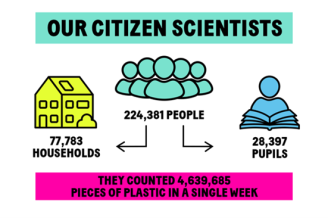
Plastic pollution is hugely significant to the UK public. Over 220,000 people across the UK participated in Greenpeace’s The Big Plastic Count earlier this year, a citizen science project showing that we throw away 1.7 billion pieces of plastic per week, with 58% of it incinerated – and just 17% recycled. The UK tops the charts for plastic waste per person globally – second only to the USA.
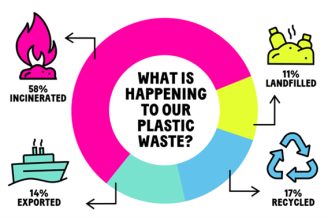
What can I/we do to change this on Arran, at the Coop (remember the PR of the Coop is “we own the Coop”)? Perhaps, collaborate with other Coop groups to add pressure to change to more sustainable/recyclable packaging. Also ramp up political pressure on our local North Ayrshire Councillor, our MSPs and MP, and try and avoid plastic packaging, and as we approach Christmas, all things plastic wrapped or made entirely of plastic!
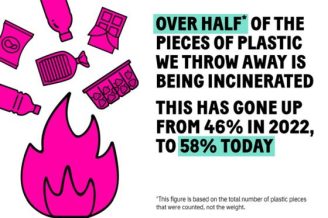
©Greenpeace
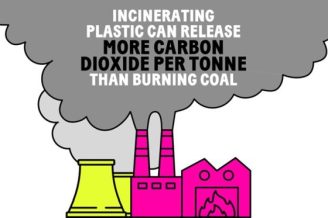
Incineration is not the answer as incinerating plastic can release more carbon dioxide per tonne than burning coal, worsening climate change. We must reduce our carbon footprint by reducing greenhouse emissions. So, it is not OK to allow 18 new incinerators to be built in the UK – from Glasgow to the Isle of Wight. This problem is not going away. We can tirade about plastics and it is clear that one trip plastics are a huge problem not only in terms of disposal but in their rapid degradation into microplastic pollution. But what are termed engineering applications of plastics, particularly rigid thermoplastics are tremendously valuable in our modern society. In reality, the problem we see in rivers, beaches, landfill sites and incinerators is one trip plastics. There are answers to this problem so let’s use science and ingenuity to solve one use plastics!
It has been a difficult autumn in many ways, the American election, with Trump heading to The White House, the Israeli/ Palestinian conflict, and the ongoing attacks by Russia on the sovereign state of Ukraine. The real sense of helplessness in the face of the climate crisis too. Then I read an article by Rebecca Solnit:
She writes that “authoritarians like Trump love fear, defeatism, surrender. Do not give them what they want. We must lay up our supplies – of love, care, trust, community and resolve – so we may resist the storm”. I would add that it is community that will push climate improvement, change political agendas, urge the financial markets, and consumer society with its sense of entitlement to modify and even change what it wants, and also for all sectors of finance to care more about people, communities and the ecosystems of the world. We each must play our part. Let us make 2024 a real turning point for our world.
A very happy Christmas to you all!
Sally Campbell
November 2024