Issue 22

In the December edition of the Voice for Arran we will carry your Christmas messages for only £5!

There are examples throughout this edition.

Just use the comment form in this edition to send us your message and we will contact you with payment details.

Scottish Ballet on Arran

Tomorrow (if you are reading this on November 1st) Scottish Ballet arrives for four packed days of workshops and performances in the Find Your Feet project. Details are given on their poster.

First Encounter is the name of the brand new piece to be performed in Brodick Hall on Friday, November 2nd. It is choreographed by Chris Marney, an up-and-coming dance ‘voice’ both in Britain and beyond. Set to arrangements of well known Coldplay and Kings of Leon tracks, First Encounter is a dynamic work, providing a fast moving and exciting taste of ballet. It will be performed on Arran by third year students from the Royal Conservatoire of Scotland’s Modern Ballet course.


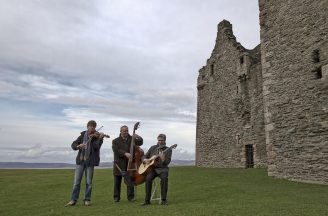
Magical music from the Tim Kliphuis Trio

On Saturday, 20th October, the Arran Music Society kicked off its new season with an electrifying performance from the Tim Kliphuis Trio. A packed audience was thrilled from the first moment by the artistry and dizzying technical skill of the three players, who ranged easily from classics to jazz, folk song to European Gypsy music. Roy Percy, the master of ‘slap’ bass and Nigel Clark, a superlatively accomplished guitarist, have played on Arran with other jazz groups several times, but in the company of the young Dutch violinist, Tim Kliphuis, they reached into a new, highly creative interpretation of every number.

Listeners were spellbound as the traditions were both respected and extended, well-loved tunes blossoming into exuberant invention. The players, using no printed music, had a magical degree of empathy between them that made it seem as though intricate arrangements had been meticulously rehearsed - but Tim brushed away the suggestion, saying simply, “We’ve played together so much, we just understand each other.” In fact, the three of them are superlative classical musicians who have stepped into the creative territory of making new discoveries, even while the old traditions are honoured and respected. The sudden emerging of the Skye Boat Song as a pure, utterly simple violin solo in the midst of complexity was deeply moving, and so, in an opposite direction, was the group’s exploring of the Pachabel Canon. The well-known ground sequence that anchors the piece provided the basis for something quite extraordinary as these consummate musicians found new implications lying hidden within it. Similarly, Winter, from Vivaldi’s Four Seasons, retained all its shivery classical impact though a blizzard of invention grew from it until notes were whirling like an intricate pattern of snowflakes.

The group will be touring internationally with the legendary Netherlands Chamber Orchestra in the coming season, but everyone who listened to their astonishing performance in Brodick will be hoping to see them return to Arran.


Arran Visual Arts workshop and Art and Craft family day

On the weekend of November 17-18, Rebecca Roberts will be running a workshop at the Rangers’ Centre in Brodick Castle grounds on Exploring Texture in Painting. Rebecca will bringing a variety of gels, mediums and knives for people to try, and will demonstrate the use of glazes and other finishes. Students can attend for both days or just for one if they prefer. All details from Alison Barr, on 01770 303607.

A cheerful event for families takes place in Corrie Hall on Saturday, December 1st, when adults and children are encouraged to work together on a craft or art project. The day runs from 10:30 am to 3:30 pm, so there is time to achieve something quite substantial, or else to try a variety of approaches. Adults are invited to attend, bringing one or two children of around primary school age. The cost is just £3 per child. Bring your own lunch.


Jazz Café Band

Arran’s Jazz Café Band will be playing on Friday 2nd November after the Fireworks at Catacol Bay Hotel, starting at about 9.00pm.

Their next gig will be on Saturday 24th November at the Glenisle Hotel, where they will be contributing to the Lamlash 'Santa's Sparkle' event. Times not confirmed as yet, but it’s in the evening, probably late-ish.

On Saturday 8th December, 8 to 11pm at the Kinloch, the band joins a Party Night suspected to have a Spanish flavour, as tapas is promised. Makes a change from mince pies.


Corrie Film Club shows a great Scottish classic

Another Time Another Place, from the book by Jessie Kesson, was made in 1983 by Michael Radford, who directed Il Postino. Set in the Second World War, the black and white film re-creates with absolute accuracy the heavy, skilled hand-work that was needed then in running a farm - but it is far more than a documentary. It tells, with detailed insight, the story of Janie, the farmer’s young wife, who falls in love with Luigi, one of the Italian prisoners sent to help with agricultural work when so many men were away in the war. In this story of agonisingly split loyalties, Phyllis Logan is unforgettably touching and open, and the film lingers in the mind like an unsophisticated, vulnerable equivalent of Brief Encounter. Janie finds in Luigi a talented sensitivity and understanding that is completely absent in her hard-working, no-nonsense husband. Had the pair met at some other time, in some other place, the story of their lives would have been so different. This is a classic love story, and also evokes a lost world of hardship and beauty that lingers in the imagination as a wistful dream.

The showing is in Corrie and Sannox hall on Sunday November 11th, starting at 8.00 pm. All are welcome, whether Film Club member or not. There is no charge for admission, though a small contribution to the hall’s running costs will be welcomed.


Open Studios print winner

Our photo shows Josephine Broekhuizen at Whiterock Studio, presenting prize-draw winner Nigel Marks with an original print of her linocut used for the Arran Open Studios brochure. During a long and busy weekend in August, the brochure brought a lot of visitors into artists’ studios to see and talk about their work.

All the visitors to studios were invited to fill in data forms, thus providing statistics to help procure funding for next year’s event. This gave Josephine Broekhuizen, in her role as organiser, a better idea of how far and from where visitors had travelled to the event, and provided information about how many studios people had managed to visit and what their reactions to the artists and artworks were. All valuable stuff! The data forms were put into a hat and the winner, Nigel Marks, found himself the owner of an original print from Josephine’s linocut.

Nigel came specially to the island for the Open Studios Event and coincidentally was coming back to visit family when Josephine phoned to let him know that he had won the print. He was delighted to pick it up in person from the Whiterock Studio and brought other members of the family with him. And yes, he definitely intends to come back to the Open Studios Event next year!


Young film project at Brodick Castle

Progress report by Heather Gough

In the McLellan Film Project, eighteen young people, aged 15 - 17, are meeting every Tuesday until the end of November to learn the skills of plotting, screenplay writing, storyboarding, acting for camera, filming, sound and editing. The end product will be their own 15-minute film, set in Brodick Castle as a location.

Since last month’s report, things are developing fast. The group of young enthusiasts is working like a real film unit, with their producer (Susie Mowatt) being responsible for all aspects of the production, including finance. There’s only the smallest support from the supervising adults. Susie must communicate all decisions and ongoing work to everyone else and be in charge of buying props whilst using her initiative at all times to ensure a smooth-running operation. On top of all this she is also a busy member of the technical team, closely involved with framing shots, working out angles and being aware of how to digitise the script and storyboard.

The technical team includes David Gillingham, who is working on sound but also acting in front of the camera as a footman, and Kieran Robertson, who has already made a film in a previous McLellan Project and brings valuable expertise to the sound and camera tasks of a fictional film. Sarah Jenkins is also proving an able and enthusiastic camera-person, along with Mollie Hodkinson, who also has an acting role as a maid. Sophie Corbett and Kristina Colwell have the daunting task of tape review and editing. Kirsty McAllister is in charge of continuity, a job that demands exacting precision, and also takes an acting part as the cook.

Others in acting roles are Eilidh Blair, Robert Ingham, Chris Jenks, Linzi Nicol, Katharine O’Donnelly, Connor Reid, Murray Stout and Ceile Swinton-Boyle, all of whom provided constructive ideas for the plot. Chris Jenks and Katharine O’Donnelly finalised a script, with dialogue that puts Downton Abbey to shame! Though the action takes place in the Victorian age, the young team has avoided any hint of cliché, and their script exploits the severe conventions of the time in a fresh way, exploring themes of parental manipulation, peer pressure, prejudice and homosexuality. The talent and enthusiasm of the young people is engaging and they have convincing ideas about creating a fictional film in a period setting that deals with powerful ideas about forbidden love and the strictures of conventional society.

The camera, as the saying goes, ‘takes no prisoners’. Every detail is apparent on film, so skilful acting is essential. Though experienced in stage work, these young people are being tested as never before to produce authentic performances. It is exciting for everyone, but being involved means taking on a team responsibility which is highly demanding and, frankly, a little scary. We are all learning. All of us are enthralled by the process and, in the case of the adults, by the talent, skill, exuberance and maturity of the young team.

As always, this McLellan Youth Project aims to allow young people a free rein with their ideas. And as always, the organisers and background tutors (Sarah Cook, Ed O’Donnelly and Heather Gough) are amazed at the rich seam of creativity, expertise and talent displayed by the students. Voice readers will be kept in touch with the project over the next two months - including photographs of how work is progressing - without, of course, giving too much away!




National Poetry Day

Thursday October 4th was National Poetry Day, celebrated at the Brodick Bar by 53 people who all came together to read poems both old and new, some of them famous and others being aired for the first time. Tim Pomeroy, armed with a long shepherd’s crook, threatened to remove any over-running poet much like an unruly tup, and as a result, the evening ran with splendid smoothness, local poets reading their own work and others contributing stalwart favourites that produced a smiling nod of recognition. Heather Gough read Eddie Morgan’s passionate hailing of the Scottish Parliament with a fervour that moved everyone, but there was often laughter as well as much applause. Poetry is certainly alive and well on Arran.


Creative Scotland nibbles at the bullet

Alison Prince

The rumpus about Creative Scotland has perplexed many people. Just what is going on? As a professional writer, I have something of an overview. I was a member of the Scottish Arts Council’s Literature Committee for some time, and knew the nitty-gritty of grant applications from the inside. As a recipient, I had earlier been helped immensely by an occasional travel or research grant that enabled a book to be completed. In those days the Scottish Arts Council (SAC) operated modestly rom a couple of converted Haymarket houses, and its function was clear-cut. As well as supporting the big enterprises such as Scottish Opera, it provided vital sums of money - often quite small - that could make the difference between surviving and not surviving in the choppy waters of freelance creative work.

But everything changed. Perhaps in a wave of euphoria following the construction of the Parliament building, a mixture of ambition and spin swept over Scotland like a tidal wave. Grubby little artists were out; the big art business was in. The SAC morphed, slowly, painfully and expensively, into Creative Scotland. It designed a numbingly dull logo at dizzying cost and moved into a glass palace behind Waverley station, a prime Edinburgh site.

Individual artists began to realise that they no longer mattered. Those who ventured to seek support for a new project were told they should raise a first thousand from elsewhere, then Matched Funding might be available. For those already struggling to survive, as artists commonly do, that was not helpful. A lot of potentially good work died before it was born. Depression grew. Artists tend not to be business people. They are prepared to live on next to nothing because of the absolute imperative to pursue and develop a creative idea, and even when successful, they seldom swim happily in the world of form-filling and accountancy. As Creative Scotland sailed on, an unhappy silence set in, which did nothing to convey the dismay felt by countless working artists. It was the established leaders of the profession, secure enough not to care what the new organisation thought or did, who opened a counter-attack. Don Paterson, one of Scotland’s leading poets, wrote a strongly critical letter that hit the headlines, and since then, Creative Scotland has been blasted by a communication from 400 of the country’s most eminent writers, musicians and artists, demanding a rethink.

Sir Sandy Crombie, Chairman of the Creative Scotland board (formerly chief executive of Standard Life, which is hardly arts-related) said the board had been ‘taken aback’ by the intensity of criticism. He offered the excuse of ‘limitations and expectations’ imposed by the Government and Lottery on how their funds should be used, but that is exactly what must be tackled. The truth is, artists do not constitute a corporate Art Business. Like cats, they are difficult to herd and highly individual. The old SAC’s system of flexible funding understood this and embodied a hands-on working relationship with artists all over Scotland. In its place we have a glass monolith with a massive desire for self-publicity. It serves the abstract concept of Scottish Art, but has lost connection with the people who make art happen. The fact that the board admits to being ‘surprised’ by the strength of feeling expressed in the letter from the 400 leading artists tells its own story. Why were they surprised? Such blindness is a matter of national concern. Something has to change, and not in terms of adjustment to the window-dressing. Creative Scotland must listen to those who do the creating.


NAC faces up to effects of cuts

Councillor Willie Gibson, NAC Council Leader, warns that the government’s changes to the benefits system ‘are the most significant … in 60 years and will affect people across North Ayrshire.’

The facts are grim. More than 2,600 households in North Ayrshire may see housing benefits reduced under new rules about levels of occupation. A single person, for example, living in a two-bedroom property could have their housing benefit reduced by 14 per cent. Plans are in place to contact those households affected to provide tenants with support and advice in terms of the reduction in their benefit entitlement and their housing options.

From next April, NAC, in common with all local authorities, will be made responsible for administering the Scottish Welfare Fund, which provides Community Care grants and crisis grants. For the first time, more than 8,000 households will be paying their full rent directly to the Council under the new Universal Credit benefits system - to be introduced over four years from next October.

There is considerable disquiet about the effects that this system will have, and NAC is clearly doing its best to prepare whatever defences and help it can muster. A working group was established last February and has an action plan to support people in North Ayrshire when the changes come into effect. The group includes staff from housing, finance, social services, economic development and education.

Tenants will be offered support with budgeting, opening bank accounts, advice on payment and help from the Council’s Money Matters team. Council tax benefit is not set to change but Councillor Gibson warns that it may change in the future.


New appointment to help rescue Clyde fish stocks

COAST, as we all know, has been working for years to save marine life in our seas from extinction. It set up the No Take Zone in Lamlash Bay that has allowed scallops and fin-fish to start breeding again, but has not yet managed to be heard over the louder voice of the trawler fleet, whose determination to keep fishing until there is nothing left is fully supported by the Government. But, following a symposium held by COAST in 2010, a new body called SIFT (Sustainable Inshore Fisheries Trust) was set up, and two years later Alex Watson Crook has been appointed as a dedicated Firth of Clyde Project Co-ordinator.

The job Alex faces (with relish, it must be added) is to develop and implement SIFT’s sustainable fishery management plan for the Firth of Clyde. She is brilliantly qualified to do so, having been professionally active in fisheries management for more than 15 years. As she says, ‘I have worked with fishermen since I graduated in Applied Marine Biology in 1997. I have experience of working with many of the partners we’ll need to engage with.’ But she is clear, too, about how difficult that engagement may be in the developing crisis that lies ahead.

Fish stocks are dangerously low in the Clyde. Alex notes that ‘Some 72 per cent of the remaining Clyde stock is made up of whiting, of which around 85 per cent are below the legal minimum landing size.’ She distinguishes, however, between the effect of the big trawlers and the smaller, traditional creel and line fishermen.

SIFT was set up through dogged work by Howard Wood of COAST, Bob Younger of Fish Legal, Alistair Sinclair of Clyde Creelers, Andrew Wallace from the River and Fisheries Trust and Charles Miller. It represents a wide range of stakeholders whose interests dovetail with plans for better management of Clyde waters. SIFT is drawing up plans to establish a large inshore reserve that would ban trawlers but allow traditional creel and line fishing. The Government has only recently acknowledged that the interests of all marine stakeholders must be involved if we are to turn around the fortunes of the Clyde.

COAST finds itself in a bigger game than it ever envisaged when it was planning the Lamlash No Take Zone. Governments deal with large-scale institutions rather than individuals and small local bodies, so a step forward into the larger field of policy-making has been an essential one. That COAST played such a pivotal role in helping set up this new national body, SIFT, is something that Arran can be proud of. Support from the people of Arran has been hugely important in the development of COAST, and the continuance of this support and interest is vital. Hard work must continue if we are to ensure that in the years to come, the seas around Arran will be healthy and fish will be plentiful - not to throw overboard and waste, but to value as a natural food, locally provided. This need affects every one of us, so please keep an eye on what COAST is doing, and support them in any way you can.

See the current newsletter on the COAST website.

The SIFT website is at http://www.sift-uk.org.


More fishy business

A product called Bactocell has been approved for tackling deformities in farmed fish, a problem that has been costing the industry up to €20-25M per year. Be thankful we don’t see the bones that were in our farmed fish. Or perhaps we should.

EU taxpayers who took part in an EU-wide survey conducted by YouGov said they wanted proper fleet assessments to be carried out before subsidies were granted. 68% thought subsidies shouldn’t be given to fishing fleets at all, but should be put toward stock maintaining and rebuilding. But -

Overfishing will continue. At last week’s EU Fisheries Council, ministers agreed to continue subsidies that increase fishing capacity and thus contribute to overfishing.

Lerwick fish landings plummet

Though a higher tonnage of vessels than ever was handled at Lerwick Harbour in the first 9 months of the year, fish landings have been down 18% on volume and 42% on value. This is odd, since the overall tonnage of vessels handled at Lerwick increased by 10% on the same period. Of this tonnage, slightly fewer vessels have been fishing trawlers, but not enough to explain a so drastically reduced catch volume.

Victor Sandison, Deputy Chief Executive, Lerwick Port Authority, said the harbour had been busy with numerous ‘oil-related arrivals’ and increased cargo shipping. Total ferry passengers carried had decreased by 5.4%, though there were more cruise passengers.

Nobody has asked if the drop in landings may be due to a drop in the number of fish. Odd, that.


Cheap juice for electric motoring

The Energy Saving Trust (EST) Scotland is to provide 100% funding for the installation of POD Point charge hubs to business users of electric vehicles. This will cut the costs of electric motoring to under 2 pence per mile. POD Points can be programmed to synchronise charging cycles according to the availability of locally generated electricity, or even use the spare energy from buildings to charge parked cars.

Electricity can be ideal for businesses such as delivery firms or public transport, where drivers do routine, planned journeys and return to base to charge overnight. The POD Point is in effect a ‘smart’ device that can be programmed to set the time for workplace charging, so businesses can make the most of lower-cost off-peak electricity.

For more information, see the POD Point website, or call POD Point on 0207 247 4114.


Renationalise the railways?

‘Come back, BR, all is forgiven?’ Quite a lot of people would like to see a return to a single service. After the West Coast debacle, which cost £40m and left nobody any the wiser, we’re beginning to look at the state-run railway networks of Europe with a certain amount of envy.

According to the Green party transport spokesman, rail privatisation costs passengers and taxpayers £1.2bn per year more than it did in the last years of the nationalised system. That’s double what it used to be, and Britain’s rail fares are higher than in any other country in Europe. Time for a re-think, perhaps.


True grit for winter

NAC announces that it has about 10,000 tonnes of grit stockpiled to help keep our roads clear in the coming winter. A weather station on the String provides forecasts, and information about any closures of roads or schools due to severe weather can be found on the Council website.


The wonders of spawning salmon

Sally Campbell

Like many people, I had never seen spawning salmon until last month in British Columbia in Canada. As a young person I had seen anglers and their attendant gillies on rivers in northwest Scotland, but the Canadian salmon of the Kootenay Lake are different. They live only in fresh water. The history of this is interesting.

Many years ago, British Columbia was teeming with sockeye salmon, which migrated hundreds of kilometres down the Columbia River system to the Pacific Ocean, returning three years later. But the river now has 11 major dams between its mouth in Washington State and the Kootenay Lake, so the salmon could no longer migrate. Their access to the Pacific Ocean was cut off. They did not die out, however - they adapted.

Today’s salmon never leave the lake. They live on plankton and aquatic insects in the deep, cold waters of Kootenay Lake and spawn in the many streams and rivers leading to it. Spawning is the last event of their lives, which may be between 4-8 years, for they die afterwards. When living in the main lake, they are bright silver, but as they spawn, they stop eating and begin to absorb their scales. Their bodies turn bright red but their heads are green They are called Kokanee, which means 'red fish' in the local native (Ktunaxa) language.

To spawn they fight their way upstream, find a place to nest in gravel and after depositing, fertilizing and protecting their eggs, they die. Their flesh feeds trout and other fish as well as animals, such as bears and cougars. Birds benefit as well, and so do the small organisms in the stream that the young Kokanee will feed from. It's a rich ecological cycle.

The wild Atlantic salmon rivers on Scotland’s west coast offer opportunities for us to see spawning of wild salmon, but the chances are increasingly rare. Sea lice and chemicals from caged salmon aquaculture are clearly having a major negative impact on Scotland’s iconic species. Those of us interested in the wider ecosystem must work to ensure that this wonderful migrating species, a king of fish, returns in much larger numbers. We need to ensure that what has previously been a large, well-sustained tourist and rod fishing industry is maintained and continued. Gillies with detailed knowledge of their own rivers and burns in the northwest Highlands have a wealth of experience in caring for these magnificent fish. We must not lose this culture for the short-term profit of multinationals interested in aquaculture farming of caged salmon.


November Recipe from Richard at Arran on a Plate

Clams are a nice alternative to mussels. They are however more expensive but require less preparation. Parlourde clams or Surf clams are both available at this time of the year. They must be alive when sold and cooked to ensure they are fresh. You can treat them like mussels and have them steamed simply in a white wine sauce, but with their depth of flavour they will make a perfect winter warming soup.

Clam chowder
To serve 4

1kg Clams
1 Onion
4 Cloves garlic
2 Bay leaves
2 Sticks celery
2 Carrots
2 Large potatoes
250ml White wine
250ml Double cream
500ml Water
Small bunch of tarragon

Method

Wash the clams in cold water, discarding any that will not close when knocked on the side. Put these in a large pot with the white wine and steam with a lid on for 5 minutes. Take off the heat and allow to cool a little. Meanwhile chop up all the root vegetables, you can leave them chunky or dice them finely. Place these in a large pot and slowly start to fry them. Season with some salt and pepper. Once they have got a little colour on them, strain the wine from your clam pot and add this to your veg. Add the water and bay leaves and allow to simmer on the heat for 30 minutes.

Now pick the clams out of the shell. Add them to your soup and pour in the cream. Allow to simmer for a further 5 minutes.

Take half of your soup and place in the blender with the tarragon and blitz until smooth. Add it back to the rest of the soup mix it all back together and season to taste. Serve with some nice crusty bread.


Concertina weekend

David Donnison

What makes traditional or ‘folk’ music special? Usually it consists of Scottish and Irish tunes, mixed with some from England and America or from Gypsy origins. Some of these tunes have been around for hundreds of years, others are newly written but grew from the same roots. Folk music is fairly simple, but none the less beautiful for that. Its songs convey passion and pain, or can be bawdy or radical, mocking the powerful and the pompous. Think of Robert Burns if you have any doubt.

Traditional musicians often sit or stand in a circle - around a kitchen table perhaps, or in a pub - conversing musically with each other. Listeners sit in the circle or just beyond it. New recruits to the band are welcomed and offered help if they need it. Nobody is excluded or humiliated. The music is a conversation between the players and with their audience, the tunes often interspersed with chat and banter.

That was the experience we had under the leadership of Samantha Payn at the sixth of her annual concertina weekends at Kilmory Lodge. Year by year, these gatherings attract a larger number of musicians. There were twenty this time, from a wider spread of countries (Holland, America, Germany and all parts of Britain.) They offered a greater variety of instruments than ever before, but the concertina remained our main focus.

Samantha welcomed us with a splendid meal on Friday evening, provided by Assja Baumgärtner and Josephine Broekhuizen, who catered magnificently throughout the whole weekend. As a tutor, Samantha has the great advantage of being an expert musician who has never trained as a teacher. Before we settled into a long session of playing around the kitchen table, she asked us to say what we wanted to do and to learn, and what we could offer to the group. The following morning she produced proposals for sessions that would best use our talents and fulfil our hopes. The group provided its own informal but hard-working opportunities for learning, interspersed with great food, good beer from the barrel, occasional walks to the sunlit sea and lots of cheerful talk. On Sunday we had two long sessions in the pubs of Whiting Bay and Brodick where local musicians and singers welcomed us - Samantha generously refraining from drink so that she could drive the minibus.

What a wonderful weekend! We hope to return next year early in October. If you want to know more and perhaps join us, see Samantha’s website.


Crossword

Across

 1  Wasted on gin in the shed? It'll all be over soon (3,3,2,4)

 8  A cert to be drunk on board ship with leading lady (8)

 9  How a German might be heard to describe poetry that's not so good? (5)

10  Ruler in west Sardinia (4)

11  Dr. Gorse removed film composer (7)

13  Get some grief at home (6)

14  Sentimental like a hairpiece? (6)

17  Revolutionary absorbs change of fortune. It's a laugh! (7)

19  Edit mistake, fast! (4)

22  A Glaswegian's favourite racecourse? (5)

23  Six balls? In an era of excess! (7)

24  Lover decrees alteration to disc protector (6,6)


Valdete Tries a New Mode of Transport.

Sue Davidson sends us an update on her work in Albania. ‘Vali’ is short for Valdete, the girl Sue and her husband, Julian, brought to Arran for an operation that enabled her to recover some mobility.

Last Saturday we wanted to go and visit four disabled people, three of them in one family, in a village some distance away. The physiotherapist who treats Vali volunteered to bring some students and come with us to visit these people and see how we can help them. This was most unusual, an Albanian wanting to do something without expecting payment - and on her day off!

We’d been assured that the road was OK, but it certainly wasn’t for the faint hearted. There were huge channels and lots of loose shale, and the gradient was about 1 in 3. But there was nowhere to turn round, so we had to keep going. I wasn’t very happy looking down over a sheer drop, with of course no wall, fence or barrier. All my passengers were relieved when we came to the outskirts of village, where I stopped, as going any further looked almost suicidal.

We needed Vali as an interpreter, but there was a problem about how to get her, in her wheel chair, along the steep, rocky paths to the village centre. I left her with Liljana, the physiotherapist, and took Arber, the male student, on a 15 minute trudge to the village to seek assistance. Two women said they’d help, but the thought of carrying Vali in her wheelchair for that distance over such rough terrain didn’t exactly appeal. Although the worst of the summer heat is past, it was still 28 degrees and there was no shade. There was some discussion about a ‘gomari’, which I know means donkey. Surely they weren’t thinking of putting her on a donkey?

Oh, yes, they were. Ten minutes later the women reappeared with the said animal, complete with seat - a basic affair made of wood by the owner and fastened on with cotton straps which didn’t look particularly strong. I didn’t think Vali would accept this mode of transport - but how wrong I was! As you can see by the photograph, this was a great adventure to her and she hung on with her one good hand while the women walked beside her, holding onto her. They’d obviously done this before. Half an hour later, we made our grand entrance into the village, with Vali feeling very tired but elated that she’d made it.

We met the disabled family. Genti, a young man in his twenties, has never had a wheelchair and gets around by shuffling on his bottom like a baby, which is humiliating for him. His sister Susanna needs a larger wheelchair, which we can supply. Their younger sister is still able to walk so we’ll take her a walking frame and try to keep her mobile for as long as possible. Liljana was able to read medical notes about the family, and we discovered their problem is a genetic degenerative disorder that affects three out of the seven children in the family. They need physiotherapy twice a week just to try and maintain some movement and muscle tone but how do we do this in such a difficult, inaccessible place? There’s another boy in the village with cerebral palsy, so he’d be included in this venture. There must be some way; we just have to find a solution.

While writing this, I’ve just had a phone call from a local church. They are looking for twenty- five wheelchairs. Another problem to solve! This is life in Albania, but that’s what we’re here for.

By the way, Vali survived her donkey ride with no ill effects - just a slightly tender posterior for a couple of days!


Recipe of the month

Christmas Cake

This is a rich, dark, moist fruit cake, best made a few weeks before Christmas so as to let it mellow and develop its full flavour.

Ingredients

2 (8 oz) containers of candied cherries.
1 (8 oz) container of candied mixed peel.
2 cups raisins
1 cup dried currents
1 cup dates, pitted and chopped
2 oz almonds + more for topping if liked
½ cup brandy
2 cups plain flour + ½ cup to add to fruit
½ teaspoon baking soda
1 teaspoon ground cloves
1 teaspoon ground allspice
1 teaspoon ground cinnamon
½ teaspoon salt
1 cup of butter
2 cups brown sugar
6 eggs
¾ cup molasses or golden syrup
¾ cup apple juice

Method.

(1) In a medium bowl, combine cherries, mixed peel, raisins, currents, dates, and almonds. Stir in brandy and leave to stand for 2 hours, or overnight. Dredge soaked fruit with the ½ cup of flour.

(2) Preheat oven to 275°F (135°C) Grease an 8-inch cake tin, line with grease-proof paper, which should in turn be greased. Mix together flour, baking soda, cloves, allspice, cinnamon and salt, and set aside.

(3) In a larger bowl, cream butter until light. Blend in brown sugar and eggs. Mix together molasses and apple juice. Beat into butter mixture alternately with flour mixture, then fold in floured fruit. Turn into prepared cake tin. If you do not intend to ice the cake, arrange split and blanched almonds to cover its top.

(4) Bake in preheated oven for 3-3½ hours or until a toothpick inserted into centre of cake comes out clean. Remove from tin, lift off paper. Let the cake cool completely, then wrap it loosely in waxed paper. or foil and store it in an air tight container.

Ice and decorate to your own taste, or eat as it is.