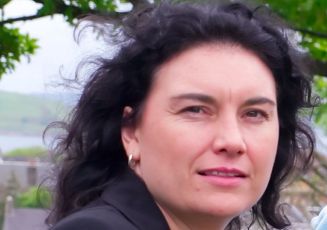
News from Patricia Gibson MP
Here is a round up of February news from Patricia Gibson MP. See also her Let Them Eat Cake piece in this issue.
SOARING ENERGY COSTS THREATEN HOSPICES SNP MP WARNS
5th February
North Ayrshire and Arran MP Patricia Gibson has urged the UK Government to provide more support to hospices to tackle the threat posed to their future by soaring energy costs, estimated to be in the region of £100 million a year.
Hospices deliver essential end-of-life palliative care to around 300,000 people every year in the UK, but the support provided via the new Energy Bills Discount Scheme – which is reserved to the UK – is the same as that provided to hospitality outlets. However, unlike, businesses, the hospice sector cannot pass on increased costs to service users and the cost-of-living crisis has reduced the sector’s fundraising.
Speaking after raising this vital issue at Westminster and tabling an Early Day Motion, Mrs Gibson said:
“Most of us have, at some point or another, had cause to be grateful to hospice services for the invaluable care they provide our terminally ill loved ones. However, the cost-of-living crisis is having a significant impact on the sector’s fundraising at a time when the costs of running a hospice are spiralling.
“Hospices receive most of their funding through donations from the public and plays a critical role within our health and care system, relieving pressure on our NHS. By their very nature, simply cutting energy consumption is not an option when medical machines need to be kept running and inpatient units need to be warm for those in their care.
“I was hugely disappointed by the UK Government’s response when I raised this issue at Westminster. While the SNP Government is doing everything within its power to tackle this crisis, including providing at least £7 million in annual funding, it is the UK Government that retains powers to mitigate the energy costs crisis, and it must use them.
“The Energy Bill Relief Scheme, which has supported businesses, schools, hospitals and care homes, as well as hospices and other charities, ends next month. Its replacement is considerably less generous, and the hospice sector faces an energy bills cliff-edge in April.
“That is why the UK Government must urgently step up the energy bills support it provides to hospices. Otherwise, the survival of hospice services could be in jeopardy.”
See also this article in The Herald: Survival of Scotland’s hospices ‘could be in jeopardy:’
OPPPOSING TORY PLANS TO RAISE THE PENSION AGE TO 68
29th January
Last week I led for the SNP in a Westminster debate on pensions, as details emerge of UK Tory Government’s plans to gradually raise the state pension age to 68 by 2046, are to be accelerated.
It seems that plans to raise the pension age could be implemented by 2034 – affecting everyone currently aged 54 and younger.
The UK already has one of the lowest pensions in Europe and these plans will impact millions of people, many of whom are already struggling financially.
The charity Age UK said any government decision to accelerate the rise in the state pension age “will condemn millions to a miserable and impoverished run-up to retirement and often beyond, too”. Indeed, many people are already in poor health by the time they reach state pension age.
The chances are, if you speak to women born in the 1950s, they’ll tell you that the biggest UK Government swindle in recent memory was robbing their generation of women of their rightful state pensions at age 60. Many discovered, often by sheer accident, that their anticipated pensions would not arrive until years later as it was equalised with men. The anger, sense of betrayal and disappointment was only inflamed when UK Government Ministers bizarrely and insensitively insisted that this provided an opportunity for the women affected to train for new careers. Some of them then formed the campaign group Women Against State Pension Inequality (WASPI) which continues to campaign for this injustice to be recognised and remedied.
Because women born in the 1950s faced delays of up to six years to access their state pension, one in four now struggle to make payments on crucial bills with one third in debt. Single women are worst affected.
The website Interactive Investor calculates that bringing forward the increase to 68 to 2034 could mean a “lost year” of full state pension of £ £16,902 for workers aged 46.
Royal London Insurance found that more than half of those aged 55 and over are likely to have the state pension as their main income.
Pensioners relying on state pension as their main source of income are more likely to have already undergone a working life of low pay, have health challenges in retirement and a lower life expectancy. They are also the pensioners who simply cannot afford to retire early when health problems occur. Raising the retirement age even further will therefore have a disproportionate effect on poorer older people who will enjoy fewer retirement years.
A review of the state pension age in 2017 established that people should expect to spend one third of their adult life in retirement. Given that life expectancy in the UK is, at best, stagnating, this seriously undermines the case for raising the state pension age.
The UK Tory Government should abandon any further acceleration in the state pension age across the UK and all other parties should join the SNP in opposing it and commit to continuing that opposition beyond the next election.