Good Friday and Easter in a 19th Century Opera
By Peter Finlay
What follows are not exactly the most recent thoughts on Good Friday and Easter you could find. They date from the second half of the 19th Century after all! Yet they are remarkable. They come from the mind of one of the greatest of opera composers, Richard Wagner. Not a conventional Christian by any means. He had indeed been fascinated by Buddhism and also by the atheist philosopher Schopenhauer. Yet it was his mission in life to explore musically in ways that had never previously been explored the deepest questions any human mind can conceive. Forced upon us simply by the very fact of our existence and the strangeness of human life itself.
In his last work, Parsifal, Wagner portrays a kind of Holy Fool, or Innocent – Parsifal himself. Yet in his innocence he learns wisdom or knowledge, not through reading or study but through compassion, which Schopenhauer saw as the final basis for morality. He witnesses suffering in the shape of the failed and morally flawed hero king, Amfortas with his spear wound that cannot heal. The wound, significantly is in his side, in the very place where the spear pierced Christ as he hung on the cross. Parsifal is changed by the sight of Amfortas’ wound, changed from the happy go lucky lad who could unthinkingly kill a flying swan with his arrow, thinking all nature was there simply for his unrestricted pleasure – ‘I kill anything that flies’ – to someone who has learned true knowledge through compassion.
He is taken on a journey by the old knight of the Grail, Gurnemanz, in the course of which he witnesses the Grail knights assembled for their celebration of the Holy Feast with the body and blood of Christ at its heart. It is their Good Friday communion. He is deeply moved by it all. Indeed, by it he finds everything about the world he half knew has been transformed. He undergoes a baptism from the hands of Gurnemanz and also from the strange, even profligate, wild woman, Kundry. Then Kundry dries his feet which have been washed along with the baptismal waters on his head, and, like Mary Magdalene with Jesus, she dries his feet with her hair. Parsifal then declares his first act as a renewed man will be to baptise the sinner who has washed and dried his feet. He pours water on Kundry’s head, counselling her to have faith in the Redeemer.
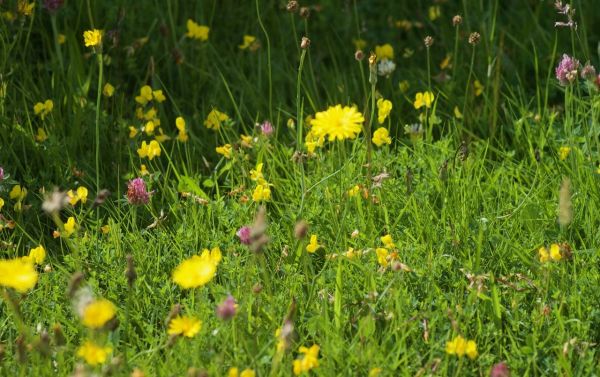
The meadows now are blooming in new beauty. Parsifal says, or rather sings, ‘Ne’er saw I so meek and tender sweetness’. Very lovely music plays all through this scene. Gurnemanz tells him it is all the effect of Good Friday which transforms everything. Parsifal exclaims ‘Oh sorrow, that day of agony! When all creation, all that blooms, that breathes, lives and lives anew, should only sigh and sorrow.’ But to this the old knight responds: ‘As you see, it is not so. The sinner’s tears of true repentance today with holy dew bedeck the flowery mead…while all created things rejoice to see the sign of grace…today each blade and bloom upon the meadow knows well the foot of man will do no harm; in truth as God, with heavenly loving care endured for man and for him bled, so man now will repay that love and walk with gentle tread. And grateful, all creation sings… nature her innocence has won, all is renewed once more this day.’
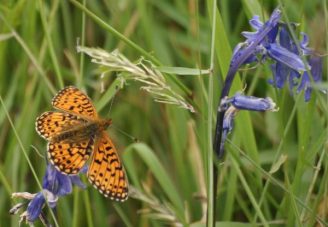
Here is an Easter for a world, as we know too well, at the mercy of forces that care nothing for natural beauty any more than they cared for the beauty brought to us in the person of Jesus these 2000 years ago. Yet Easter itself tells us these forces do not have the final word.

Images of spring beauty in High Corrie. All credits: Peter Finlay. Featured image shows portrait of Richard Wagner. Credit: Unsplash