Kia ora – A New Zealand Odyssey (in several chapters)
“House exchange in North Island, New Zealand – up to six months” said the advert and so it was that we set off from Arran in early August to begin our journey down-under. Forty hours and 11,000 miles later we arrived, a little dishevelled, in the city of Tauranga. Situated on the Bay of Plenty, it was pleasantly mild even in late winter.
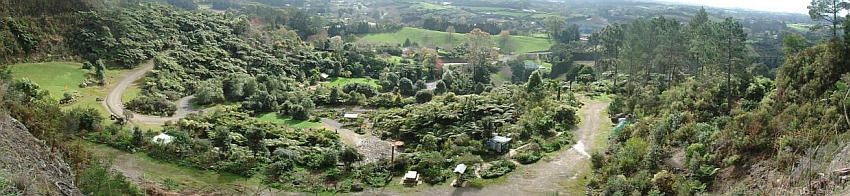
In the first few days, as we recovered from our mild jet-lag, we just toured locally. Te Puna quarry where teams of volunteers have built a conservation garden was a particular favourite. Noticing an advert in the local free paper we went along to a meeting of the Bromeliad Society. The members were very welcoming and the talk was fascinating. A quick look at Google on returning to the house revealed that the speaker’s Bromeliad nursery was on the outskirts of Auckland and they had a letting cottage which was vacant the following week. Well, where else could one go!
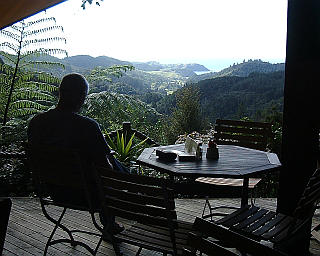
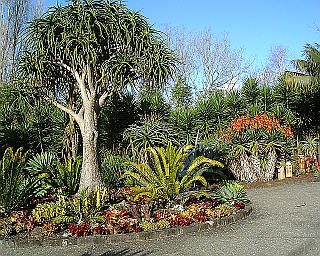 Totara Waters is at the western end of Auckland’s Waitemata Harbour and only a short passenger ferry ride from the city centre. A bus trip through the old part of the city took us to the Auckland Museum with its collection of Māori treasures and an excellent “Māori Cultural Experience”. The natural history of New Zealand is fascinating; there were no mammals at all until humans arrived. The Māori people came from Polynesia between 1250AD and 1300AD and Europeans arrived about 1790AD, before that there were only birds, reptiles and insects. When the Māori first arrived, the land was mostly covered in forest & bush and vast areas were turned into agricultural land. Until the Europeans arrived, the Māori people had no knowledge of either metals or writing, working with stone tools and passing on their legends by word of mouth. The written Māori language (Te Reo) was developed as late as 1820 by professor Samuel Lee of Cambridge University working with the chief Hongi Hika and the chief’s young relative Waikato.
 Our journey North took us past Kaipara Harbour, one of the largest natural harbours in the world, to the tiny village of Matakohe where we spent a day in the Kauri museum. The Kauri tree is an ancient podocarp and grows to enormous sizes. It also produces a resin known in New Zealand as “Gum”. The Māori people made good use of the Kauri timber for their buildings, however the European settlers really exploited it. Kauri timber was exported all over the world as building material and the gum was exported for many uses including as a vital component of linoleum. The Kauri tree is now protected and the timber is only available from diseased or damaged trees or ancient fallen trees which have been extracted from the bogs. “Bog Kauri” can be many thousands of years old, is used for woodcarving and has particularly attractive colouring and grain patterns. The history of New Zealand’s European settlers has largely happened since the invention of photography and the Kauri Museum has a comprehensive photographic record of the timber and gum-digging industries.
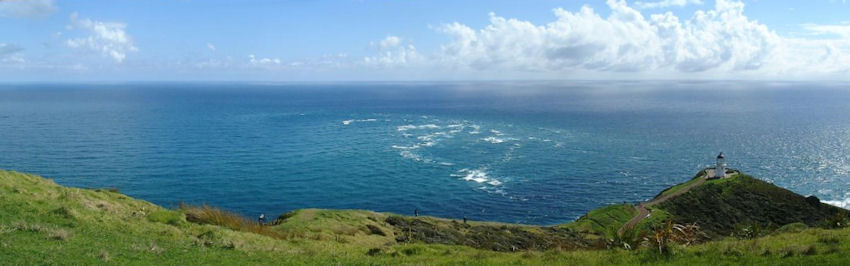
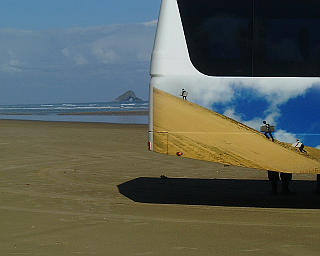
After a night in Whangarei, our next stop was in Paihia on the Bay of Islands. The drive to Paihia along the coastal road through Helena Bay, Russell and the Okiato ferry has some wonderful scenery. August is out of season for most New Zealanders and so we found many bargains in accommodation, often staying three nights for the price of two. Our Motel in Paihia offered this bargain so we had two full days there. On the first day we took a boat trip around some of the 150 islands in the bay and on out to the “Hole-in-the-rock” at Cape Brett. We had hoped to be able to swim with the dolphins but the pod had young and the law is very strict so all we could do was watch!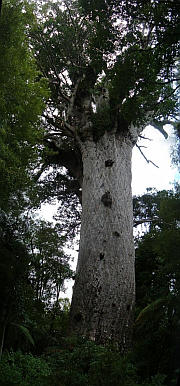 On a calm day the boat trip will take you through the hole in the rock, but unfortunately our luck was out there too. The next day was an early start as we took a coach trip from Paihia up to Cape Reinga at the northernmost tip of North Island where the Tasman Sea meets the Pacific Ocean. It’s actually rather less of a coach and more a specially converted Hino truck! Comfortable but also robust enough to drive most of the way along Ninety Mile Beach. Before going on to the beach we were taken to the large sand dunes at Te Paki for a spot of sand-boarding. It had been raining earlier in the day and the sand was nice and hard which made for great sport!
On the recommendation of our ninety mile beach truck driver, we travelled about 20km south of Paihia to the glow-worm cave at Waiomio. The glow worm, Arachnocampa luminosa, is only found in Australia and New Zealand and, unlike the European Lampyris noctiluca, is really a worm. Actually it’s the larval stage of the fungus gnat, but it looks like a worm! Although this cave is smaller than the very popular Waitomo caves, there were only the two of us and having a personal guide made for a really interesting tour.
The route back to Tauranga took us past the largest surviving Kauri tree in New Zealand, Tāne Mahuta. With parking by the side of the road, there is a board-walk through the bush, but at first we couldn’t find the tree. Tāne Mahuta is estimated to have a trunk volume of 245 cubic metres of timber. When you compare that to the average trunk volume of 2.5 cubic metres for a 20 year old Sitka Spruce, you can understand why we couldn’t see the tree for the wood!