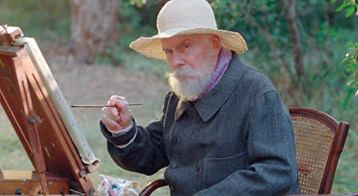
Corrie Film Club shows ‘Renoir’
As all film buffs know, there are two Renoirs – the famous painter and his equally famous film-maker son. They were connected by a girl who enchanted them both and supplied hope and inspiration at a very hard time. Corrie Film Club shows this evocative film on Sunday, 8th June, in Corrie Hall, beginning at 8:00 pm. As always, all are welcome and there is no charge, though donations to the hall’s upkeep are welcomed.
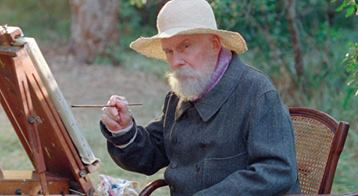 The film opens in the summer of 1915, when Pierre-Auguste Renoir, the Impressionist painter, is struggling with the pain and limitation of rheumatoid arthritis, and with the grief of having lost his beloved wife, Aline. He is 74, but determined to carry on. ‘I refuse to paint the world black,’ he says. World War I is raging in the north, but here, at his farm, Les Collettes, at Cagnes-sur-Mer on the Cote d’Azur, the illusion of tranquillity persists – but only just. His son Jean returns from the front on crutches. His brother has also been injured, and despite the plentiful servants and attendants who look after the famous painter, he is depressed and in such severe pain that working is hard. Matisse recommends a 15-year-old model known as Dedée, who duly arrives. She is delectable, with sumptuous red hair, but irreverent and mouthy. For both father and son, she brings new life, even while infuriating the caretakers who have so long looked after the household.
Exquisitely photographed by the Taiwanese cinematographer Mark Ping Bing Lee, and brilliantly acted by Michel Bouquet as the painter, the film won the 2012 Best Director Award at Cannes, yet it split the critics. Stephen Holden of the New York Times loved it, while the Guardian’s Peter Bradshaw wrote it off as trivial and passionless. Viewers will react as seems fit to the injured men on the roadside who stare with hopeless hunger at Dedée, and to Jean Renoir’s helpless infatuation with the red-haired girl. In true life, he married her when the war ended, and went on to make the films for which he is famous. This film about him and his famous father is one perhaps simply to be looked at rather than analysed, for it celebrates the glory of colour that fascinated the painter and still lives in his pictures.