Arran students help COAST keep track of invasive Japanese Knotweed
 23/10/2015, Lamlash
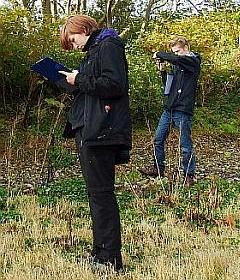
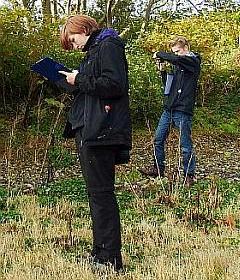
Alyssa Colwell, Katie Mowatt and Charlie Weir are pupils from Arran High School. They have joined the Community of Arran Seabed Trust (COAST) team for a week of work experience. Katie is considering a career as a researcher: “I thought COAST could be an interesting experience and give me a better idea of what I’ll be doing if I finally go into research”.
Their task has been investigating the prevalence of Japanese knotweed around Lamlash bay. Alyssa explains about their findings: “We went from Clauchlands Point to Kingscross Point over the course of three days and found substantial evidence of the presence of Japanese knotweed, finding twenty-eight separate patches, some as large as twenty square metres, if not bigger. We found the majority between Kingscross Point and Cordon, but there was a definite presence around the rest of the bay, particularly near residential areas”.
Japanese knotweed is a non-native, invasive plant species which has a negative impact on the natural plant species found on Arran, as well as being damaging to properties, should it grow near them. This is because the roots of the plant can grow through concrete and cause structural damage to any buildings within a vicinity of seven metres. It can be removed by excavation or by the use of herbicide spray over the course of about two years, but any treatment must be performed by a trained professional, as there could be legal consequences if the plant is not completely destroyed. From a fragment the size of a fingernail, the plant can grow vertically to the height of three to four metres above ground and three metres below, as well as growing seven metres horizontally underground. The plant is characterised by long bamboo-like shoots with purple flecks, stems in a zig-zag pattern with smooth, flat based, shield shaped leaves, which can grow to ten to fifteen centimetres. In the summer months, the plant grows creamy white flowers, which it loses by winter.