Scamming and its Effect on Vulnerable Individuals, and some thoughts about the State Pension Age
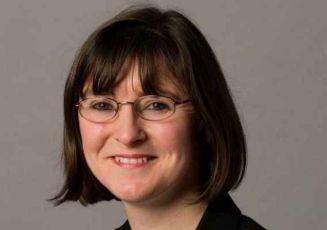
 Last week in the House of Commons, North Ayrshire & Arran MP, Patricia Gibson, sponsored a debate on Scamming and its Effect on Vulnerable Individuals. Said Patricia: “This is a huge and growing challenge in all of our communities, particularly as the population is ageing and more and more people are living with dementia. Scams disproportionately, but do not exclusively, affect the elderly and vulnerable.
“Too many people are targeted and scammed, with their own homes often becoming the setting for this cynical and cruel criminal activity. Whilst it is believed that only around 5% of scam victims report such crimes, Trading Standards understand that harm extends far beyond any financial losses incurred. Scam victims may suffer emotional and psychological trauma with even an impact on the victim’s physical wellbeing.
“Pension frauds, bogus equity release schemes, fictitious prize draws, false investment opportunities, upfront payments to release lottery wins, upfront payment for building work that is either never started or never completed; the list of attempts to defraud people out of their cash goes on.
“I urge all constituents to never send or give money to anyone they don’t know and to contact the police by calling 101, in any doubt about someone who approaches them with an “opportunity”. If anyone believes they have been a victim of a scam they should report it to Action Fraud on 0300 123 2040.”
Patricia has joined the grass roots campaign to raise local awareness of scamming by becoming a SCAMbassador for North Ayrshire & Arran.
Patricia also sent us the following, about the State Pension Age:
“The principle behind the equalising the State Pension Age (SPA) is something that all parties support in the name of restoring parity between men and women. However, any levelling must be done honestly and responsibly, something absent from the UK Government’s strategy thus far. The State Pension is not a privilege, it is a contract, and in terms of women born in the 1950s, the UK Tory Government has categorically broken that contract.
The 2011 Pensions Act accelerated the timetable for increasing women’s State Pension Age. Women will see a rise in age from 63 to 65 between April 2016 and November 2018, and from 65 to 66 by October 2020. These changes impact on 240,000 Scottish women, 4,800 of whom reside in my North Ayrshire & Arran constituency. This means they will have to wait longer than anticipated before receiving the State Pension. What’s more, the UK Government has given these women next to no notice to prepare for these changes. In many cases, individuals have not received any notification, throwing thousands of retirement plans into chaos.
This injustice has inspired many to speak out against the Tories’ ill-advised plans. None have been more vocal than the Women Against State Pension Inequality (WASPI) campaign group. Their strength and conviction contributed in no small part to the matter being debated at Westminster several times.
A Public Petition I am gathering signatures for will be presented to Parliament on 11 October urging the Government to make fair transitional arrangements for all women born in the 1950s (on or after 6 April 1951) who have unfairly borne the burden of the increase in SPA. Last week the SNP published independently commissioned research proving that Tory figures, supposedly illustrating the ‘unaffordable’ cost of such a transition, are entirely false.
The report by Landman Economics models five different reform options for compensating women who will lose out from accelerated increases in the SPA specified in the Pensions Act 2011. One option is a return to the original timetable set out in the 1995 Pensions Act, whereby women’s SPA rises from 63 in March 2016 to 65 by April 2020, with no further increase to 66 until the mid-2020s. This has been costed at £8 billion, a sum dwarfed by the £30 billion figure used by Tory politicians attempting to absolve themselves of responsibility.
The National Insurance Fund (NIF) is billions of pounds in surplus and can only be used to pay for contributory benefits such as the State Pension. Millions of pensioners, workers and their employers have no idea that the money they pay in National Insurance is not being used to pay higher pensions and benefits. The NIF had a £20.9 billion surplus at the end of March 2015 and projects a surplus of £30.7 billion next year.”