Issue 111

Hello and welcome to the June edition of the Voice for Arran. We hope you are all keeping well!

Arran is taking its first tentative steps out of lockdown, and as is happening all round the world conversations are taking place on how to proceed next. It feels almost unimaginable (and very exciting) that more and more headlines actually suggest that a green recovery is on the cards. The EU has pledged billions for a ‘green’ stimulus package, and businesses seem to be calling on the UK government to lead the country out of recession with huge investment in building green infrastructure. Here in Arran, community groups and businesses are meeting and an online survey has been distributed for residents to share their views.

In this issue of the Voice, amongst other things we look at themes around growth and degrowth, and a couple of our articles show that a green recovery in food growing is already taking place here. In For the Love of Soil, Alice Maxwell describes the successes and failures she encounters with her flowers, vegetables and herbs over the seasons, and Eco Savvy introduce their new Growing on Arran Podcast. Sinead Fortune also considers the fundamentals of growing, in A Food Revolution starts with Seed. She discusses the importance of returning to a local connection with seed that has been lost over the years. With stocks of seed running low in small organic companies recently, due to a huge increase in demand, Fortune encourages communities to develop their own seed banks, something which Eco Savvy has exciting plans to establish for Arran in the near future.

This theme of nurturing life takes us right to the centre of the New Roots Collective’s call for a ‘degrowth’ model for rebuilding the economy. In an open letter, they suggest scaling down wasteful production and focus instead on our basic human needs, such as the right to food, housing and education for everyone, as the best way of moving beyond lockdown. Their number one principle for the recovery of the economy and the basis of creating a just society is to “Put life at the centre of our economic systems”. In this approach, attention is given primarily to people and the natural world, with investment needed in healthcare, education, renewable energy and ecological agriculture. In Arran, tourism could also be added to this list.

What could these insights mean for a post-covid recovery in Arran? And what would it look like with such a respect for life at its core? We are hearing conversations about putting the community’s safety and well-being at the heart of recovery, as well as how to manage the safe return of visitors. Arran depends on tourism but a new way of organising this will be needed. The arguably old, growth model of tourism based on the maximisation of visitors and the idea of Arran as a product, keeps us separate from the natural world, which we are now learning more starkly than ever with Covid -19 is increasingly untenable. Once we put life at the centre and honour our connection to nature then the safety and well-being of Arran and it’s community will be safeguarded, and from this understanding means also that the safety and well-being of all who visit will be too.

We hope you enjoy this issue and have a great month! Elsa

Degrowth: new roots for the economy

As long as our economy is dependent on growth, a recession will be devastating. Instead we need a planned, sustainable, and equitable downscaling of the economy.

A letter from the Degrowth New Roots Collective, published in openDemocracy 13 May 2020

The Coronavirus pandemic has already taken countless lives and it is uncertain how it will develop in the future. While people on the front lines of healthcare and basic social provisioning are fighting against the spread of the virus, caring for the sick and keeping essential operations running, a large part of the economy has come to a standstill. This situation is numbing and painful for many, creating fear and anxiety about those we love and the communities we are part of, but it is also a moment to collectively bring new ideas forward.


A Food Revolution Starts with Seed

The following article (below) was linked on the Eco Savvy Food Forum Facebook page a wonderful resource with lots of information and ideas for sustainable food, growing and eating practices. As part of Eco Savvy's Sustainable Food Programme, Jess is looking to put together an inventory of seeds that people have had success growing and saving on the island. This is so that seeds which have adapted to our local climate can be saved and shared via a seed swap. Eco Savvy are keen to catalogue seeds on the island so please get in touch with Jess if you grow your own or know someone who does: jess.ecosavvy@gmail.com.


For the Love of Soil

For the love of soil - reflections on gardening - by Alice Maxwell

The soil is the great connector of lives, the source and destination of all. It is the healer and restorer and resurrector, by which disease passes into health, age into youth, death into life. Without proper care for it we can have no community, because without proper care for it we can have no life.”

Some Environmental news

Here is a report from marine scientist and Lamlash resident Sally Campbell, with some recent news on various environmental issues...

COP26: a new date is set for Glasgow November 2021, delayed from November 2020. For the first time, the UK will host the 26th UN Climate Change Conference of the Parties (COP26) at the Scottish Event Campus (SEC) in Glasgow on 1 – 12 November 2021. The climate talks will be the biggest international summit the UK has ever hosted; bringing together over 30,000 delegates including heads of state, climate experts and campaigners to agree coordinated action to tackle climate change.


Eco Savvy’s Growing on Arran podcast

Eco Savvy have recorded their first podcast answering the questions residents had about growing on Arran!

Jess at Eco Savvy writes, "Since the lockdown began we have been running a series on growing your own food on Arran and sharing content about how to get started in the garden.

We also asked whether people in the Arran community had specific questions about their own gardens. We received quite a lot of questions and decided to turn to the gardening community to find the answers to some of them. What resulted is the podcast that I am delighted to share with you!"


Home schooling activities with COAST’s MerPack

Planning your home schooling week and looking for something a little different?

Delve into COAST’s MerPack for a fascinating alternative to the usual home school routine. The Marine Education Resource pack is free to download and is full of fun ideas and activities.

There are five sections, each with a different focus, including information on food chains, sorting and classification of marine species as well as time for shore study and a look at how we impact our oceans. The activities range from science based sections, with focused areas on literacy and numeracy skills, as well as some links to award winning educational films. Children will learn to draw comparisons between what they see and know on land with the less seen and more unknown creatures found in the ocean. They will also discover how humans are impacting our marine ecosystems and what we can do to help.


XR Peace report nuclear convoy in Covid lockdown

  • CLIMATE CHAOS and COVID-19 PANDEMIC: DANGERS FOR OUR SECURITY WHEN WARNINGS ARE IGNORED
  • GLOBAL CEASEFIRE NOW! SAVE LIVES, BUILD INTERNATIONAL SECURITY AND PEACE
  • NUCLEAR WEAPONS IN COVID TIMES: DEADLY THREATS TO LIVES, HEALTH AND SECURITY (see below)
  • USING NUCLEAR WEAPONS: HUMANITARIAN CATASTROPHE AND MASSIVE CLIMATE DESTRUCTION
printable versionsXR Peace is a coalition of organisations for peace and justice joining Extinction Rebellion. It has been estimated that about 6% of the global carbon footprint results from military-related activity. Militarism and war are inextricably linked with imperialism, racism, and the destruction of habitats. XR Peace proposes to make explicit the links between militarism and the climate emergency. We will also highlight the opportunities that are presented by transferring the resources, skills and people power from the military into addressing the climate crisis. We need systemic change if we and our ecosystem are to survive.

A history of the Vikings part four

THE BATTLE OF LARGS OCTOBER 1263

In the concluding part of Jim Henderson's history of the Vikings, we hear how both the Scots and Norwegian fleets congregated, with a huge group of Viking longships gathering in Loch an Eilean (Lamlash Bay) before the fated battle which began on 2nd October 1263, just slightly further north up the coast.

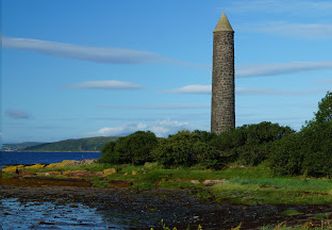
BreivikSandvicFladdCleats, Merkland, Feorline, Ormidale, Chalmadale, Scorrodale, Dunfion, Largybeg Margnaheglish Re-written from previous research by Jim Henderson 24th January 2020. Featured image shows the Battle of Largs monument, known as the Pencil.With many thanks to Jim for his fascinating series on the Vikings! 

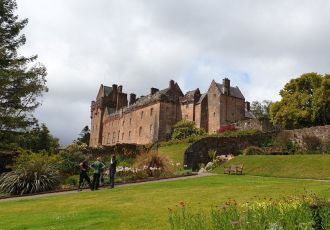
The Future of Brodick Castle

On 11 May, the National Trust for Scotland (NTS), the country’s largest and oldest conservation charity, announced a series of emergency actions designed to ensure its survival during the COVID-19 pandemic and its aftermath.

Unfortunately, this announcement included placing 429 staff from its permanent workforce of 751 at risk of redundancy, including 16 at Brodick Castle.

This was inexplicable, given it was made the day before the Chancellor was to announce the future of the UK Government’s furlough scheme, which pays up to 80% of the wages of staff who are retained but cannot work as a result of the COVID-19 pandemic.


All dressed up and nowhere to go, Arran

Earlier last month the BBC ran a photo story – All dressed up and nowhere to go - by photographer Robin Sinha, who came up with the idea to take pictures of people who were missing some special and social occasions due to lockdown, or who maybe just felt inspired to change their tracksuits for their 'Sunday best'!

As people continued to live in isolation Robin asked his neighbours to pose on their doorsteps dressed as if ready for a night out. He wrote, "I was already shooting a series of images regarding my own isolation experience but having seen some doorstep projects from around the world, I felt inspired to approach (at a safe distance) my local neighbourhood," says Sinha.


Information sought on the life of Allan Nicol of Whiting Bay

A member of The Orders and Medals Research Society (UK), Simon Muggleton, is currently researching the life and career of Allan Nicol, of Whiting Bay. Simon contacted the Voice to see if readers might have any information relating to Allan and which could assist Simon with his research. Simon bought Allan’s medals in auction recently and he is keen to research his naval career. Allan who was born on the Isle of Arran, was the Chief Engineer aboard the MV Brisbane Star, who in August 1942 was part of convoy WS21S (Operation Pedestal) taking supplies to Malta. The ship was torpedoed in the bows just a day away from Malta but thanks to the Captain, Frederick Riley DSO and Chief Engineer Allan Nicol the ship got into Valletta Harbour safely with their supplies. Sadly Mr Nicol died on 17th April 1944 in Liverpool (circumstances unknown) and is buried at Kilbride Old Churchyard, Whiting Bay on the Isle of Arran, his birthplace (b 12.12. 1886).


Further action needed even as furlough extended

Two months have now passed since the lockdown began and all our lives have been impacted by measures introduced to minimise the spread of the coronavirus and protect our vital NHS services.

For almost everyone, this has caused huge disruption to our lives. We have been unable to see friends and loved ones, we need to queue to get into the supermarket, and trips and outings have been restricted. While some measures have been lifted in England, the rest of the UK remains in lockdown.


Easing the lockdown – a report from Kenneth Gibson, MSP

First Minister Nicola Sturgeon MSP has set out the route map for easing Scotland out of the lockdown imposed to minimise deaths from COVID-19.

These are difficult times and will continue to be so, but if we comply with rules as we ease out of lockdown, the sooner we can move to the next phase.

The plan to ease lockdown – it will not be lifted in the near future – consists of five phases, the first of which commenced on 28 May. Phase 1 includes more outdoor activity being permitted and being able to sit or sunbathe in parks and open areas. You will also be able to meet people from another household, although initially in small numbers, while outside. This change will particularly benefit those without gardens and make the lockdown more bearable for those who live on their own.


McLellan Arts Festival postponed until 2021

A message from the Arran Theatre and Arts Trust:

It is with great sadness that we at the Arran Theatre and Arts Trust have decided to postpone this year’s McLellan Arts Festival.

We have been watching the developing situation closely and we have concluded that it would be both risky and irresponsible to hold a festival under the current circumstances.

We’ve been working with all our artists and venues to ensure we can present this year’s programme at next year’s event; a programme which will include a ‘Come and Sing Mozart Requiem’, and is one we are very much looking forward to sharing with
you.


Poems from lockdown

This month we bring you the last of the poems we received during April and May, in an email exchange that coincided with the start of lockdown. The poems have kept coming over the past few weeks, and capture a lovely glimpse into people's moments of reflection during this period. Some people have been inspired to write their own words, others have chosen poems that are close to them in some way. We have so enjoyed reading the contributions from people and hope you will too.


£75 million boost for Scottish universities

Local MSP, Kenneth Gibson, reports on the £75 million  boost for Scottish universities announced by the Scottish government to help with their recovery after Covid-19.

The COVID-19 crisis has had a huge impact on people, institutions and society.

Scottish university income has been significantly affected by the pandemic, particularly the loss of international student income, cancelled conference bookings and returned accommodation fees.

As such, last month the SNP Government announced a one-off £75 million increase in funding for Scotland’s universities to protect their world-leading research programmes against the financial impact of COVID-19. This will help secure the jobs and training needed to support ongoing and future research, meaning institutions can concentrate fully on planning the long-term future of a sector so vital to the Scottish economy.


Arran MP Patricia Gibson reports on some of May’s political issues

North Ayrshire and Arran MP, Patricia Gibson, has been kept busy during the weeks of lockdown, and here reports on several issues on which she has continued to press the UK government: 

UK GOVERNMENT URGED TO BACK CONSUMERS AMIDST TRAVEL INDUSTRY TURMOIL

Arran’s MP Patricia Gibson, SNP spokesperson Consumer Affairs, has urged the UK Government, to which such matters are reserved, to financially guarantee refunds for consumers facing cancelled travel plans.


Marine News

Sent in by John Kinsman, station manager at Coastwatch St Monans, east Fife.

Face visors and face masks
Coastwatch St Monans station received a donation of seven face visors and face masks from a local lady who made them for the NHS, local chemist shops and other volunteer organisations. Coastwatch St Monans operations manager John Kinsman said the donation of face visors and masks will help to protect his team while on duty or on a call out from the coronavirus. Each team member has now been issued with the visors and masks thanks to the generosity of this local lady.


Recipe for June

Pea and Potato Frittata 

Contributed by Anne Kinsman

Ingredients:

3 Table spoons olive oil
1 Red onion sliced
567g new potatoes, cooked and cut into thick slices
200g frozen peas
6 large eggs
75g cheddar cheese (or reduced fat cheese)
1 half tea spoon white wine vinegar

1 round lettuce, leaves separated and torn into bite size pieces
1 small cucumber halved lengthways and sliced.

Method:

1. Heat 1 tablespoon of oil in a medium ovenproof frying pan, about 20cm wide. Fry the onion over a medium to high heat for about 8 minutes until soft and lightly golden.
Heat the grill to high.
2. Add the potatoes to the pan, stir in the peas and cook for 2 to 3 minutes, stirring frequently until the peas are bright and green and defrosted.
3. Beat the eggs in a jug and pour into the pan to cover the vegetables, swirling to coat the base of the pan.
4. Once the base has set (about 3 minutes), sprinkle over the crumbled cheese and transfer to the grill. Grill for 4 to 5 minutes until there is no visible runny egg but still a little wobble in the middle.
5. Meanwhile whisk the vinegar with 2 tablespoons of oil in a large bowl. Toss in the lettuce and cucumber and mix everything to coat.
Serve alongside wedges of the frittata.