Issue 115

Hello and welcome to the October issue of the Voice for Arran! We hope you are well and enjoying the arrival of the fresh autumn days.

This issue opens with a protest song – Yon Muckle Stob – an original Scots rendition of a well-known tune, L’Estaca, by local musician and writer, Malcolm Kerr. When I received this article I was charmed by the tale of the song’s formation and with the song itself, and as the pieces for this issue have come together, the spirit of Yon Muckle Stob has in some way come to frame the intertwined political themes present in the following pages.

Sitting here now reflecting on how the stories of protest and political struggle have touched me, I have also been forced to look at my own pretty dismal record of political participation over the years. Of course some of this, as I am understanding more deeply from the articles, is not my fault. In a recent blog, George Monbiot expresses the difficulties present in the UK political system very clearly (see the article on the Scottish Climate Assembly). The present two-party system we have does not give much meaningful opportunity to engage. However I know too I have avoided certain means and ways of political participation, partly because I tell myself, in matters that concern my life, that yes, I am an active and responsible citizen!

Sally Campbell’s piece Our Collective Responsibility, however, has brought my disengagement sharply to my attention. In looking at ways to help solve the climate and biodiversity crises, she turns her attention to democracy and accountability on Arran. And as she asks, “I recently watched the on-line meeting of Arran Locality Partnership (ALP). How much do YOU know about it?” I thought – well, not very much. She notes that many people she has spoken to about this have never heard of it. She then asks, “Where is the democratic accountability in these groups deciding on Arran’s future?” This really made me sit up.

Now I’ve spent some time consciously thinking about it, I realise I actively veer away from such initiatives as the ALP. It’s partly because they are not part of my day to day focus or work, but it’s also because I am put off by the, to my ears, fairly impenetrable jargon that seem to characterise these events. The language makes it hard for me to engage, to understand even what is being said, and what the issues are that are being ‘consulted’ on. I doubt I am alone in this. Or in the fact that I find the heartfelt expression of truth in a song like Malcolm’s, or in a talk like Sir Geoff Palmers (see Climate Change and Racial Injustice) much easier to connect with than that of the language and issues of local government consultation.

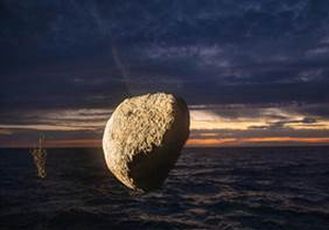
But there I notice another disjuncture, between this disconnection to our political system and the energy and dedication coming out of the pieces in this issue. So many of us seem to be turned away from formal channels of participation, meanwhile time and again I read accounts of so much engaged and inspired activity, which fill me with hope and inspiration too. In Sally Campbell’s article we also hear how Greenpeace have dropped boulders into the North sea to ensure the Marine Protected Areas really are protected; in another piece we hear of the 12th Birthday of the No Take Zone in Lamlash, an entirely community led achievement; and we hear each month of the ongoing activities of Eco Savvy, a network of people working continuously to promote the environmental health and sustainability of the island. The will is there, but the routes of formal political participation don’t often seem to connect up with it.

Scotland is just starting its process of setting up Climate Assemblies, similar to that which has taken place in England over the last year or so. The logo for this initiative claims that it is ‘Doing Politics Differently’. Maybe governments are now listening to protest movements, such as Extinction Rebellion, who have been calling for greater participatory democracy, and an alternative way of doing Politics, since its’ campaign began. I will wait with anticipation to see if this turns out to be so. I may also try to join a local government online event. There is one coming up on October 5th as part of Challenge Poverty week in North Ayrshire, and as part of a new Scottish government narrative on a wellbeing economy, where the health of the community and environment supposedly takes precedence over economic concerns.

It all sounds hopeful but the words of Yon Muckle Stob keep returning to me – that freeing ourselves, and our natural world, from undemocratic structures takes a lot of work, and perhaps also takes a move by those in power to an understanding that those making democratic advances, are not “anarchists” or “criminals”, as Monbiot points out, but are people with the energy and inspiration to make a difference to our world, and need therefore to be met as such.

Have a great month and I hope you find some inspiration in this issue, Elsa



Yon Muckle Stob

“If a man were to make all the ballads, he need not care who should make the laws of a nation.” Andrew Fletcher of Saltoun

It is a warm summer evening at the house of friends in Pont-l’Abbé in the Pays Bigouden of West Brittany. We have been outside in the garden, but the centre of gravity of the party is moving indoors. There has been a fantastic meal featuring local produce, wine, much local cider, and good craic. The conversation has moved on, possibly to aspects of local politics and some technical stuff about sound systems. In any event, well beyond the limits of my rusty high school French. I am having difficulties keeping my eyes open. Generous though the hostess is, I don’t know her well enough to fall asleep there and then. A crisis is looming. Et toujours, on ronfle!


Have you been called to join Scotland’s Climate Assembly?

Last month people across Scotland received invitations to join Scotland’s Climate Assembly

Similar to jury service, this citizens assembly will bring 100 randomly-selected representative individuals together over several weekends to discuss one of the biggest challenges of our time; how Scotland should change to tackle the climate emergency in an effective and fair way. It could be you, your neighbour, your Granny, taking their seat in a few weeks time. The assembly will hear from experts and collectively come up with recommendations, which will then be brought to MSPs.


Our Collective Responsibility

Sir David Attenborough in closing the Programme “Extinction: The Facts” said with heartfelt conviction:

I do truly believe that together we can create a better future. I might not be here to see it. If we make the right decisions at this critical moment, we can safeguard the planet’s ecosystems, its extraordinary biodiversity and all its inhabitants. What happens next is up to every one of us”.

So what action is being taken NOW to safeguard our seas for example, and precious offshore Marine Protected Areas? “For our government to be taken seriously as a leader in marine protection, it must ban supertrawler operations in the UK’s Marine Protected Areas.” The worst affected MPAs in 2019 were the Wyville Thomson Ridge (off the Shetlands), Geikie Slide and Hebridean Slope (off the Hebrides), Offshore Overfalls (south coast), Faroe-Shetland Sponge Belt (off the Shetlands), Darwin Mounds (off the Hebrides) and Southern North Sea (east of England).


It’s time for a wellbeing economy – but what does that really mean?

Imagine an economic system which delivers social justice on a healthy planet: a system in which the economy works for the people, not the other way around. This is a wellbeing economy.

At WEAll (Wellbeing Economy Alliance) Scotland, our goal is to work with governments, organisations, and individuals to enable the transition to such an economy.

In a wellbeing economy, growth is an optional means, never the end goal, and it must always be inclusive. But what does this actually mean in practice?


Climate Change and Racial Injustice

In the following article, Ruth McLaren, Project Coordinator at Eco Savvy, writes about the online workshop on Black Lives and Climate Justice which was organised by Scottish Communities Climate Action Network last month:

In May when the videos of George Floyd’s brutal murder started leaking out on social media, triggering global protests about racial injustice and police brutality, it felt like there was a renewed drive to actually address these overwhelming and awful issues. There was new talk and new action about how we can all challenge the structures that we live in and strive to be not just “non-racist” but actively “anti-racist”.


Book review – Finding Freedom: how death row broke and opened my heart

A book review by Alice Maxwell

Finding Freedom – How Death Row broke and opened my heart by Jarvis Jay Masters

When Jarvis Jay Masters was incarcerated in San Quentin prison at the age of 19 he was illiterate. Fellow prisoners taught him to read and write, whereupon his talent as an author and poet blossomed.

In his book Finding Freedom, Masters describes life in San Quentin, a hellish place full of violence, anger and despair. Yet Masters himself leads a life dedicated to non-violence. He fosters no hatred and uses every minute of his time to pursue a spiritual path dedicated to the service of others. Although his stories are often gritty and tragic, they are told without bitterness, and a gentle humour pervades his writing.


The Paton Family – Artists on Arran

This wonderful article by Rowan Paton recounts the Paton family's history on Arran, and was first published at the Arran Arts Heritage Trail website. It is reprinted here with kind permission from the author and the Arran Arts Heritage Trail team. Featured image shows Windows in the West by Avril Paton.

I grew up looking at my great grandfather’s paintings. They were always present, in whatever house we lived in. Finely tuned, powerful images of mountains, mists, hillsides, orange bracken and weather. As a painter, he was clearly mesmerised by his surroundings and the landscape of Arran. My mother had grown up in Corrie and Sannox. My grandmother’s island family, originally hailing from Dunfermline Fife, date back to to 1720. Fishermen, boat builders stonemasons, nurses and painters.


An extract from Alastair McIntosh’s new book Riders on the Storm

The following blog was first published at Community Land Scotland

In his new book, Riders on the Storm: Climate Change and the Survival of Being, the Isle of Lewis raised author, Alastair McIntosh, sums up the science of climate change science that will lead into the United Nations conference of world leaders, COP26, to be held in Glasgow in November 2021.

But what might be Scotland’s distinctive contribution?

In this adapted extract, Alastair highlights the importance of land and local development trusts. He tells how he took a group of village leaders from West Papua Province of New Guinea on a study tour of Lewis and Harris. It drew out a sense of vision, hope and action that can be proudly shared across the world.


News from Eco Savvy

Here is a round up of the latest news from Arran Eco Savvy:

Savvy Film Club

This week: Eco Savvy are trialling a new Savvy Film Club format as they realised there might be a small scheduling clash with the Great British Bake Off. Therefore, this week's film, Public Trust, is available to watch online throughout the week (and ongoing).

The film looks at land rights in America which is a huge topic which will affect the whole world in terms of destruction of wild landscapes and serious global implications in the continuous pursuit and use of fossil fuels when we should be moving towards renewables. The film also highlights the following issues:


Natural Beekeeping with Bill Anderson

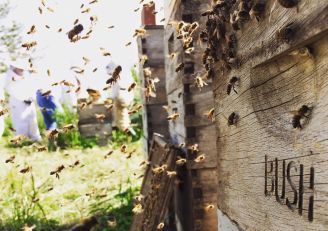
On 17th September, author, director and beekeeper Bill Anderson, gave a fascinating online presentation on natural beekeeping following the recent publication of his book ‘The Idle Beekeeper: The low-effort natural way to keep bees’. As Bill was visiting Arran recently, the event was organised so that interested beekeepers on the island may benefit from these practices. Bill is clearly passionate about his subject and this was a great opportunity to discover new insights from the world of Natural Beekeeping. Following on from the success of this talk, a follow up presentation with Bill has been set for October - see below for more details.


News from the UN Biodiversity Summit

Reports from the UN Biodiversity Summit taking place this week:

Biodiversity Crisis: World Leaders pledge to ‘reverse’ destruction of the natural world by 2030

Writing for the Independent Environment online Harry Cockburn reports on a 30x30 commitment by political leaders which aims to protect 30 per cent of land and ocean around the planet by the next decade.

Political leaders from 64 countries participating in the United Nations biodiversity summit this week have signed a pledge which they say recognises the scale of the destruction currently being wrought on the natural world and signals an ambition to reverse biodiversity loss within the next 10 years.


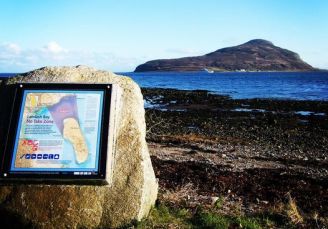
12th Birthday of the Lamlash Bay No Take Zone

On 22nd September COAST and the Arran community celebrated the 12th Birthday of the No Take Zone.

The Lamlash Bay NTZ was established by the Scottish Government in 2008; this pioneering project shows it is possible to improve our environment, as proven by a decade worth of .

COAST said, “Twelve years ago, we could only dream of the precedent Scotland’s first and only No Take Zone would set.”

Local MSP, Kenneth Gibson, who was instrumental in the designation of the NTZ, has said: “I am absolutely delighted that the No Take Zone has been such an outstanding success. The community on Arran should be very proud of their achievements over the last decade to promote marine conservation. This study proves the potential of effective marine management and I will be pressing the Scottish Government to seriously consider the creation of more NTZs as part of their marine management plans”.


The Eco Savvy shop reopens

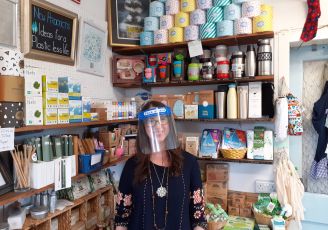
Eco Savvy were thrilled to reopen their Community Shop in Whiting Bay a couple of weeks ago. Since then they've been incredibly busy welcoming new, and regular, customers into their shop.

Opening hours are Thurs - Sat, 10:30am - 4:30pm.

Please note that they close each day for half an hour, between 1pm and 1:30pm to allow for extra cleaning to be carried out before their volunteers change shift.

Eco Savvy offers a fantastic selection of everyday items, more friendly to our environment through their ingredients and packaging, e.g. bamboo toothbrushes, reusable cloths, soap & shampoo bars, deodorant, etc. The shop also holds an amazing selection of donated goods - books, clothes, toys & games, music, film, household & DIY items, electricals, craft supplies, and much more. The stock is ever changing thanks to the many kind donations they receive.


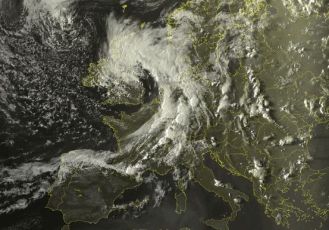
No such thing as bad weather…

As you may have heard from hillwalker Alfred Wainwright, or - depending on your circle - from Billy Connolly, there’s no such thing as bad weather. There is simply the wrong clothing!

When many of us think of the great outdoors, our minds go straight to summer.

Sheltering from unexpected showers, squinting into the distance in the sun, nodding to passers-by that “it’s a great day for it.” But as we know, the Scottish summer is ever-changing, unpredictable and gone for this year.


11th Commando Black Hackle – Part two

A history of the 11th Commando by Jim Henderson

‘Lest we forget’

In the second part of Jim Henderson’s history, we learn about Churchill’s orders, early combat and the start of the 11 CommandoNext month the Commando arrive in Lamlash.

In praise of the fountain pen

A reflection on the art of writing by Alice Maxwell

I am frenetically writing up an article for The Voice. Delete, Copy, paste … delete, copy, paste… I must type faster .. how do you spell necessary? Thank goodness for the auto-spell. Beads of sweat trickle down my face obscuring my vision as the deadline approaches.

My fountain pen watches these proceedings suspiciously. “I suppose I will soon be out of a job?” she says sadly.
I stop typing and pick her up lovingly, feeling the well-worn metal between my fingers. My boyfriend gave me this pen years ago, and she is a trusted friend.


Poem for October

Three Dollars Cash

Three dollars cash
For a pair of catalog shoes
Was what the midwife charged
My mama
For bringing me.
“We wasn’t so country then,” says Mom,
“You being the last one—
And we couldn’t, like
We done
When she brought your
Brother,
Send her out to the
Pen
And let her pick
Out
A pig."

Alice Walker

This poem by Alice Walker, who was brought up in Eatonton Georgia, makes me wonder if anything similar used to happen on Arran. Poem and words contributed this month by Cicely Gill.


Marine News

Sent in by John Kinsman, station manager at Coastwatch St Monans, east Fife.

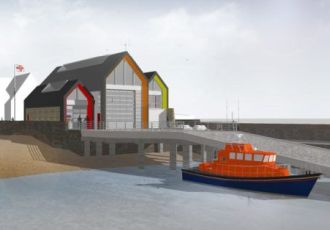
New Anstruther Lifeboat Station

Plans for a new lifeboat station at Anstruther, Fife have been approved by councillors although a question mark remains over the future of the existing historic building. Members of Fife council north east planning committee agreed to rubber stamp the RNLI blueprint for a purpose built facility on east shore.

It will accommodate an upgrade of the village’s all-weather lifeboat to a newer Shannon class lifeboat which could reduce life-saving response times. But a separate application for conservation area consent to knock down the existing base, which was built in 1904 to make way for car parking was also approved despite community calls to save it.


Recipe for October

Sent in by Anne Kinsman

Baked haddock with fennel and tomatoes

Ingredients:

4 Haddock (or other white fish, such as cod or whiting, responsibly sourced) 175 – 250g each
4 tbsp lemon juice
4 tbsp olive oil
1 tbsp balsamic vinegar
1 tbsp clear honey
4 garlic cloves finely chopped
2 red onions quartered
2 fennel bulbs quartered
20 vine cherry tomatoes
Salt and pepper

Method:

1, Preheat the oven to 220C / Gas mark 7.
2. Season the haddock fillets with salt and pepper and pour over the lemon juice, and set aside.
3. In a small bowl mix together the oil, vinegar and garlic and season with salt and pepper. Put the onions and fennel in a large bowl and pour over the mixture. Toss to coat thoroughly, then spread out on a baking sheet.
4. Roast in a preheated oven for about 10 minutes. Add the fish fillets to the baking sheet and roast for a further 15 minutes.


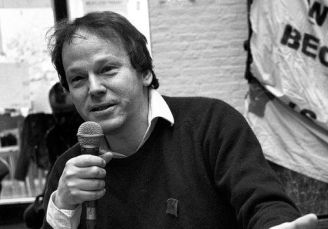
Remembering David Graeber

The anthropologist, anarchist and activist, author of "Debt: The First 5000 Years" and "Bullshit Jobs", has died at the age of 59. His openness, originality and optimism will be hugely missed.

By Jonathan Moses, writing in OpenDemocracy on 7th September 2020

I first met David in the makeshift living room of a building we’d stolen. Or at least I think it was then – David could often be found in such circumstances, sitting at the back of rooms, in small meetings, plotting some strange and unlikely caper with a 10% chance of coming to pass. It was 2011, during the high point of student occupations over tuition fee rises and higher education cuts, and one day, seemingly from nowhere, there was David.