Issue 136

Hello dear readers, and welcome back after our unexpected break. It’s good to be here once again, bringing news of what has been happening as well as what is to come, as September starts in Arran in full festival flow. We are moving into the second week of the McLellan Arts Festival with lots of interesting events lined up, including Wee Mac Arran, the island’s first children’s book festival, on 9th and 10th September. This is an amazing opportunity for children and grown-ups alike, with many well-known and much-loved authors, poets and illustrators performing live here over the two days.

Continuing with the festival theme, and another first for the island, is the Arran Festival of Food and Drink, taking place on 16th – 24th September. The week is packed with different food events taking place across the island, including a seaweed forage with COAST, a pick your own picnic at Woodside Farm, a festival farmers market, barn dance and BBQ! And if you’re not in Arran for all this wonderful cultural and foodie activity? The Climate Fringe Festival is also happening in Scotland in September, with community based climate actions going on from Orkney to Shetland to Glasgow and Arran, when we will be visited once more by the lovely Nature Library. The Library will be based this time at Arran Botanical Drinks, Cladach, on the weekend of 10th September.

Still not anywhere near the festival fun?! Then we hope you find some good things to read here. With the upcoming busyness, we have kept one eye on the increasingly worrying matters of the climate and biodiversity crises. The Scottish Government is currently working on a new Biodiversity Strategy and the public consultation is open until 12th September. Some of the articles that have come in for this edition issue a timely reminder about the gravity of the problems we face, and the consultation is a welcome opportunity for us to respond to this significant policy which should define how the country will respond to the global nature crisis here in Scotland from now until 2045.

In her piece ‘In Memoriam: James Lovelock’, Sally Campbell marks the death in July, of one of the most instrumental inventors, scientists and environmentalists of our time. We learn about Lovelock’s invention of the electron capture detector in 1957 and how he used this “to determine the widespread presence of chlorohydrocarbons in the atmosphere”, becoming “the first to discover human made gases were building up in the atmosphere.” The invention would also, in Lovelock’s words, lead to “the discovery of the ubiquitous distribution of pesticide residues in the natural environment, and to Rachel Carson’s book, Silent Spring, which can be said to have started the environmental movement.”

In another event in July, the head of the Environment Agency, Sir James Bevan, launched a report, Working with Nature. In his speech he quoted the opening lines of Silent Spring, “ ‘On the mornings that had once throbbed with the dawn chorus of robins, doves, jays, wrens, and scores of other bird voices there was now no sound; only silence lay over the fields and woods and marsh.’” Ahead of the UN Convention of Biological Diversity later this year, he warned of a ‘silent spring’ that awaits humanity unless action is taken.

I have taken a short break and crossed the stretch of water from Arran to Holy Isle, a place of such vibrant natural beauty and a stillness of its own, that Carson’s words seem to echo more deeply in my ears. I truly hope that Bevan’s next ones ring louder in the months to come, that: “Since we humans and everything we cherish depends on nature, we have the strongest possible interest in avoiding that outcome.”

We hope you have a lovely month, enjoy the issue, and any of the festivals if you are able to join them! Elsa

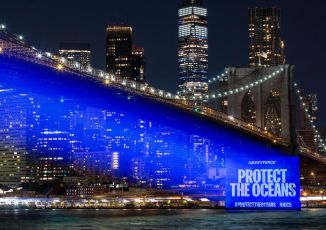
Unintended consequences for global and inshore waters

Words can be powerful, but they can also be empty of meaning. When it comes to the global climate crisis, most of us are dedicated to holding politicians to account on their policies – and that they take on board what is now the obvious role the climate change has in so many global crises. Up until the present time we have been accepting of silence, indifference or misinformation on this vital issue. Each one of us needs to get organised and to be heard in order to protect our marine environment. Why the concern?


McLellan Arts Festival week 2

News from the McLellan Arts team, as we go into week two of the festival:

Last Thursday and Friday saw the McLellan Arts Festival start with a bang with outstanding performances of Cicely Gill’s play Sail or Stay playing to packed enthusiastic audiences. They seemed to be thrilled by the set, characters and incidents as well as the quality of the acting and of the authentic music so ably performed by Angus Adamson and his fellow musicians.

Saturday saw three of the McLellan Poetry Competition winners read their poems at the Hollie McNish gig - a great night with performance poets, Michal Mullen and Hollie herself delighting the audience with their, often hilarious, but always deep insights on life.


Wee Mac Arran

Arran’s first Children’s Book Festival

With Arran Theatre and Arts Trust

Wee Mac Arran

Friday 9th and Saturday 10th September 2022

A line up of nationally acclaimed authors, poets and illustrators will be performing live over the two days. Friday is focusing on Island schools and nurseries, with public events in Arran Library. Saturday is open to families and visitors to the Island at all of the venues – Brodick Hall, Arran Heritage Museum and Arran Library. There is also a Wee Mac Exhibition at the Ormidale Pavilion, a book signing tent and a Play Talk Read Bus for younger visitors.www.weemacarran.scotWe are delighted to welcome to Wee Mac Arran one of Britain’s best-loved and most admired contemporary poets, when she will be reading from her award-winning work. Carol Ann Duffy was born in Glasgow but moved with her family to north-west England as a child. She has lived in Manchester for many years, where she is Director of the Writing School at Manchester Metropolitan University. Her poetry, for both children and adults, has won numerous awards both here and internationally. Carol Ann Duffy was Poet Laureate from 2009–2019.She was appointed DBE in 2015Saturday 10th September at 1pm in Brodick Hall.

McLellan Poetry Competition 2022

First Prize Winner 2022 McLellan Poetry Competition

Annaliese Broughton

We Did Not Know

Annaliese Broughton is a working-class poet, theatre-maker and facilitator living in Ayrshire. Recently, she was selected to take part in BBC Words First, a talent development scheme for spoken word artists. Her poem ‘New Meanings’ is currently being animated by Calling the Shots and will air later this year as part of the BBC Contains Strong Language Festival. Annaliese is ecstatic to have won the McLellan Poetry Competition 2022 with her poem ‘We Did Not Know’. Featured image shows Annaliese. Credit: Annaliese Broughton.here


Climate Fringe Festival launches

In the run up to COP26, during September, a Climate Fringe Festival became the focus for hundreds of climate based events which were being organised across Scotland. Mirroring Edinburgh’s Festival Fringe, an amazingly eclectic mix of events, performances and climate actions were promoted through the Climate Fringe website. The Climate Fringe Festival is happening again this September, and is being coordinated by Stop Climate Chaos Scotland, a diverse coalition of over 60 non-profit organisations, with many further organisations supporting the festival itself.


Books and Botanicals

Join The Nature Library at Arran Botanical Drinks, Cladach, Brodick

Saturday 10th and Sunday 11th September 2022

The Nature Library is excited to be part of the Climate Fringe Festival 2022, a community-led and community-organised series of events taking place across the whole of Scotland, bringing books to two new venues to highlight the importance of literature in times of climate crisis.websiteAbout The Nature Library

An evening with pianist Deborah Nemko

Isle of Arran Concert by Dr. Deborah Nemko: Music of Remembrance and Celebration

When music professor, researcher, and pianist Dr. Deborah Nemko performed to standing-room-only crowds on Arran in late 2019, nobody could have guessed it would be the last live event the Arran Jewish Cultural Association would sponsor for over two years. At the time, Dr. Nemko was visiting Alice Maxwell of Lamlash, a friend since their days attending Manchester University. Their reunion in August, 2019 inspired a house concert hosted by Alice Maxwell featuring “Music in the Time of Anne Frank”.


In Memoriam: James Lovelock

Who died on his 103rd birthday, 26 July 2022. An article by Sally Campbell.

“My main reason for not relaxing into contented retirement is that like most of you I am deeply concerned about the probability of massively harmful climate change and the need to do something about it now.”
– James Lovelock in a talk at the Geological Society of London, 5th May 2011.

As an ecologist, I was interested early on in complexity which in simple terms really is how everything affects everything, as clearly illustrated in the tidal cycles on the seashore, effects of sea temperatures, waves, pollution, types of sea shore and animals and plants. Human interactions too leaving their imprint on the marine environment, from fishing to cruising to tourism and containers for trade. We are all realising that these effects collectively influence our world climate and the future of life as we know it on planet Earth.


Speaking nature’s language

It’s easy to feel overwhelmed in the face of the climate emergency and a crisis in the state of nature.

But a subtle change in our thinking about the environment could help us overcome some of those feelings of powerlessness.
And environmental researcher Philippa Bayley and visual artist Neville Gabie may have found a way to help us do just that, with their project living-language-land.

Art
In 2021 they began to approach speakers of endangered languages all over the world and asked them to share words that reflected their relationship with the land. “We wanted to create a window into different environments and landscapes and the diverse ways in which people live,” explains Gabie.


Dúlamán

***

dúlamán gaelachdúlamándúlamán maorachdúlamán

*

Róisín Á Costello is a bilingual writer and academic who lives and works between Dublin and County Clare, Ireland. Her writing has been published in Elsewhere and The Hopper, and in the Spring 2022 issue of Banshee. Róisín has previously been shortlisted for the Bodley Head/Financial Times essay competition and in 2021 was selected as the recipient of a Words Ireland mentorship by Dublin City Council.Featured image and all image credits: Róisín Á Costello


Poem for September

Living with the News

Can I get used to it day after day
a little at a time while the tide keeps
coming in faster the waves get bigger
building on each other breaking records
this is not the world that I remember
then comes the day when I open the box
that I remember packing with such care
and there is the face that I had known well
in little pieces staring up at me
it is not mentioned on the front pages
but somewhere far back near the real estate
among the things that happen every day
to someone who now happens to be me
and what can I do and who can tell me
then there is what the doctor comes to say
endless patience will never be enough
the only hope is to be the daylight


A brief history of travel and (the old) Brodick pier

With the summer tourist season coming to a close, and in the context of the demolition of the old pier, Arran resident Jim Henderson has written an historical account of travel to Arran. Information taken from Arran population census 1961 3700, 1971 3564, 1991 4474.

The ‘Comet’ was launched in 1812, and within 10 years, development of the Clyde was rapid with many commercial paddle steamers operating several routes. The prosperity being witnessed, it began to influence the growth of holiday destinations, with quiet villages like Rothesay, Largs and Dunoon becoming large towns. Arran mainly missed out of this development due to the restrictions being imposed by the duke, which eventually was relaxed in 1895 following his death in Algiers.


Arran Geopark summer news

We have an update from Arran Geopark on some of their activities over the summer. Ranger Jamie Barrow has been busy both with clearing up after campers, as well as holding regular (usually weekly) volunteer meets. Arran Geopark are always keen to welcome new volunteers, so check their website for more details of these sessions over the autumn if you are interested. Volunteers meet for half a day at different points around the island to help maintain the areas, for example clearing paths and ditches, and keeping access to walking routes open. 


Community Support Services survey

The Arran CVS https://www.arrancvs.org.uk/ is restarting its activities that have been on hold due to the pandemic, and would like some input from the community about this. The link to the survey is included below:

Community Support Services

Prior to Covid, Arran CVS delivered several services locally to enable those most affected by social isolation or loneliness, some of these projects stopped taking new referrals and volunteers, some had to be put on hold altogether. As the path is now clear to reinvigorate these activities, we hope you will help guide us by taking a few minutes (only 4 questions!) to complete this survey:


Trees – a poem

As the trees around Arran are being harvested, Voice reader Elizabeth Ross sent in this poem. Thank you Elizabeth, for sharing your work... 

Trees

They stood in whispering silence, fifty years tall.
When they were born so were my children
Who grew with energy, running and shouting,
While the trees just stood, quiet, moved only by the wind.
Growing slowly, entwining branches in close embrace.
Few birds fluttered in the quiet shade.
Few plants grew ‘neath the dim canopy.
Few people walked the church-like aisles.
Until, my children grown with children of their own,
The trees were ready. Roads were built and machinery moved in.


Corrie Film Club

The next film to be shown at the Corrie Film club is Wild Rose (UK 2018 Tom Harper. 101 mins. Cert 15), on Sunday 11th September, at 7.30pm in the Corrie and Sannox Village Hall.

A fiery Glaswegian singer and single mother, dreams of Nashville glory in this gritty feelgood feature.

Rose-Lynn Harlan (Jessie Buckley) is a 23 years-old working-class girl from Glasgow, who tries to rectify her chaotic life: foul-mouthed, streetwise, rebellious and free-spirited, Rose-Lynn reunites with her children, older Wynonna and younger Lyle, cared for during her imprisonment by their grandmother Marion (Julie Walters).


Marine News

Sent in by John Kinsman, operations manager Coastwatch St Monans, east Fife

Children rescued as dinghy blown out to sea

A group of children were rescued after being blown out to sea on a dinghy at Broughty Ferry.
The local lifeboat and coastguard teams were alerted after the youngsters got into trouble while on an inflatable near the beach. They were blown away from shore as hundreds of people headed for the coast amid the good weather.

A spokesman for the coastguards said; "There was an incident involving a number of children who were being blown out to sea in their dinghy. We sent Broughty Ferry lifeboat, Dundee coastguard and Arbroath coastguards rescue teams. All were recovered and brought safety back go shore."


Recipe for September

Sent in by Anne Kinsman

Tomato and green bean salad 

Ingredients:
250g (8oz) baby tomatoes, plum if possible
250g (8oz) thin green beans, topped and tailed
Handful of mint, chopped
1 garlic clove, crushed
4 tbsp extra virgin olive oil
1 tbsp balsamic vinegar
Salt and pepper

Method:
1. Cut the tomatoes into halves and put them in to a large bowl.
2. Cook the green beans in boiling water for about 2 minutes. Drain well and place in the bowl with the tomatoes.
3. Add the mint, garlic, oil and vinegar.
4. Season to taste with salt and pepper and mix well.
5. Serve warm or cold