

As winter approaches, we have seen much ado on the island over a proposal by the owners of Troon harbour to upgrade the facilities there so that the Arran ferry might sail to and from Troon rather than Ardrossan, and so, they claim, reduce the number of sailings disrupted by bad weather because of the better protection offered by Troon harbour. Naturally Ardrossan has hit back, citing the shorter sailing time between Brodick and Ardrossan and the ease of transfer between ship and train. They also helpfully point out that the same bad weather is experienced by both ports, as if the design of the harbour entrance was irrelevant. Whatever the rights and wrongs of the arguments put forward by both ports, if the outcome is a more reliable service (perhaps to be achieved through investment to improve the weather resilience of Ardrossan?), that can only be welcome.
Alan Bellamy
Holy Isle Wind Turbines
Not surprisingly we have received quite a few emails about the Holy Isle Wind Turbine proposal which was given planning permission last month. Some were supportive of the proposal, some not, and a small selection is shown below.
From Rory Cowan: I am disappointed to hear that The Voice is in favour of the desecration of Holy Isle. It is my belief that this is a planning disaster for several reasons. Firstly wind is not the highly efficient deliverer of electricity that it is claimed to be. Going around the island where there are wind installations it is interesting to note how disappointing the electricity generation in reality is. Secondly it is interesting to discover how much the generators on the mainland are paid NOT to generate when other mainstream plant cannot be throttled back. Thirdly a far less intrusive way of generating a comparable level of electricity could have been using photovoltaic with battery back-up. There are huge areas of roof and ground area available for photovoltaic 'farm' which could have been used, far easier to install, cheaper and far easier to control and which would have been far more appropriate to the needs of the Buddhist community on Holy Isle. Finally if heat is really what they want, what is there to stop the use of heat pumps to pump heat from the water to the land. Relatively speaking there is just about an unlimited source of heat available for heat pumping from the water to the few dwellings on the island. Finally, the observation of the planning officer concerned is that vegetation would help to mask the installation. Well his guidelines specifically prevent him from drawing such a conclusion for the simple reason that vegetation does die and may not regenerate thereafter. Hence the ruling - yet he uses such an observation and at the same time refuses to consider alternatives to wind generation.
Finally, take a visit to Gigha and note how unobtrusive and in keeping with the skyline their wind generators are. NOT!
I do not believe at this stage that we either want or need this on the iconic skyline of Holy Isle. There are better ways.
Arran tenant farmer set to be evicted by Charles Fforde
The Voice has regularly reported on the dire story of land ownership in Scotland, under the heading ‘Land Matters’. Now we have a prime example close to home.
Lesley Riddoch in The National describes how John Paterson, 34, has been the tenant of Glenree farm on Arran for 15 years. His father Jim, originally from Ayrshire, moved the family over to Arran in 1996 to take on the lease for the 5,000-acre livestock farm with a ten-year limited partnership, which was then passed on to his son John and renewed on an annual basis. In 2003, John became a secure tenant courtesy of Scottish Government legislation.
However there was a major flaw in the drafting of the legislation, and on November 28, the Paterson brothers and their family will become the next set of Scottish farmers dealing with homelessness and eviction, seven months after the passage of a Land Reform Act that did nothing to tackle their specific situation.
The family had a meeting at the farm with landowner Charles Fforde and were told they must leave on that date in November, and that another lease was not up for discussion.
Nor is there any guarantee of compensation despite the fact John and his father have made substantial improvements to the land and farmstead during their 21 years as tenants – they’ve put up sheds, built a slatted house for cows, a silage pit, new sheep handling facilities, erected tens of thousands of metres of fencing and made environmental improvements.
For the full story click here.
There is a petition that you can sign here.
Corrie Film Club
The film for Sunday 13th November is Salt of the Earth, directed by Wim Wenders (France 2014 Cert 15).
This striking film follows the career of photographer and ethnologist Sebastiao Sagaldo who travels the world capturing humanity in all its guises. The Guardian review of the film said:
“Speaking to Wenders while gazing at – and sometimes through – his back catalogue, Salgado proves an adept and compassionate storyteller, his training as an economist providing sociopolitical insight into the suffering (manmade rather than natural) that threatens to engulf his work. “Everybody should see this image,” he says at one point, although the unspeakable sights captured by his camera prove so unbearable that one is all but forced to look away. Elsewhere, footage of Salgado with Papua’s Yali tribe or the Amazonian Zo’é of Brazil offer a more uplifting portrait of humanity, while the reforestation of the Instituto Terra suggests that all may not yet be lost.”
8pm at Corrie and Sannox Village Hall. Do come along; everyone is welcome, members and non-members alike.
Old friends return
Those who have heard them on their previous visits to Arran will need no urging to come to the concert by Djordje and Andrea Gajic on Saturday 19th November in Brodick Hall. It starts at 7.30, and as at previous concerts the seating will be in café style, and you can bring a bottle if you like.
Both Djordje and Andrea, performing together under the name Ad Libitum, are virtuosi of their respective instruments – the violin for Andrea and the accordion for Djordje. Together they perform an exciting repertoire. Djordje, born in Serbia, studied his instrument in Russia, where they take the accordion really seriously. Andrea has studied there as well, and also at St Mary’s Music School in Edinburgh, which is now one of the top-quality institutions where she teaches. Both have performed to great acclaim all over the world. Their repertoire as Ad Libitum ranges from the classics to music from Eastern Europe and South America. Critics have heaped praise on their performances, using words like “dazzling”, “wonderful”, “breathtaking”. Those who have experienced them before on Arran will surely agree.
As usual tickets will be available on the door on the night, in advance from Inspirations of Arran in Brodick, or online from www.arranevents.com.
Book Review
Beethoven for a Later Age: The Journey of a String Quartet by Edward Dusinberre, pub. Faber and Faber.
“Beethoven's sixteen string quartets are some of the most extraordinary and challenging pieces of music ever written. They have inspired artists of all kinds - not only musicians - and have been subject to endless reinterpretation. What does it feel like to be a musician taking on these iconic works? And how do the four string players who make up a quartet interact, both musically and personally?
The Takács is one of the world's pre-eminent string quartets. Performances of Beethoven have shaped their work together for over forty years. Using the history of both the Takács Quartet and the Beethoven quartets as the backbone to his story, Edward Dusinberre, first violinist of the Takács since 1993, recounts the exhilarating challenge of tackling these pieces.”
The dust jacket notes for this book pretty well sum it up; a fascinating look inside the life of a major string quartet plus a history of Beethoven’s composition of these wonderful pieces, all written in engaging prose that does not assume the reader is a musical expert. This reader at least thoroughly enjoyed Dusinberre’s book.
And the title? Beethoven is reputed to have said of the Opus 59 quartets “They are not for you, but for a later age!”
Alan Bellamy
Poem of the Month
Selected by David Underdown who also writes the commentary.
Drinking
by Abraham Cowley
The thirsty Earth soaks up the Rain,
And drinks, and gapes for drink again.
The Plants soak up the Earth, and are
With constant drinking fresh and fair.
The Sea itself which one would think
Should have but little need for Drink,
Drinks ten thousand rivers up,
So filled that they o’er flow the Cup.
The busy Sun (and one would guess
By his drunken fiery face no less)
Drinks up the Sea, and when he has done,
The Moon and Stars drink up the Sun.
They drink and dance by their own light,
They drink and revel all the night.
Nothing in Nature’s sober found,
But an eternal Health goes round.
Fill up the Bowl, then fill it high,
Fill all the Glasses there, for why
Should every creature drink but I,
Why, Man of Morals, tell me why?

The World’s first large-scale tidal energy farm launches in Scotland
The launch of the world’s first large-scale tidal energy farm in Scotland has been hailed as a significant moment for the renewable energy sector. A turbine for the MeyGen tidal stream project in the Pentland Firth was unveiled outside Inverness in the Scottish Highlands.
After the ceremony, attended by Nicola Sturgeon, the turbine, measuring about 15 metres tall (49ft), with blades 16 metres in diameter, and weighing in at almost 200 tonnes, will begin its journey to the project’s site in the waters off the north coast of Scotland between Caithness and Orkney.
The turbine will be the first of four to be installed underwater, each with a capacity of 1.5 megawatts (MW), in the initial phase of the project.
But the Edinburgh-based developer Atlantis Resources hopes the project which has received £23m in Scottish government funding will eventually have 269 turbines, bringing its capacity to 398MW, which is enough electricity to power 175,000 homes.
Maf Smith, the deputy chief executive of the lobby group RenewableUK, said: “New technology like this will be powering our nation for decades to come.”
The first minister called on the UK government to end the uncertainty around subsidies for similar schemes, warning that a failure to do so risks causing irreparable damage to the marine power industry.
Sturgeon said: “I am incredibly proud of Scotland’s role in leading the way in tackling climate change and investment in marine renewables is a hugely important part of this.
“MeyGen is set to invigorate the marine renewables industry in Scotland and provide vital jobs for a skilled workforce, retaining valuable offshore expertise here in Scotland that would otherwise be lost overseas.”

A Visit to Florence
Did you know that it is possible to leave Arran on the 8.20am ferry and be in Paris in time for dinner, after a relaxing journey by train all the way? Or that you can catch the 9am train from Florence and be in Ardrossan early the next morning, again travelling in a relaxed and civilized manner all the way by train, and with far less of a carbon footprint than if you had flown. And while in Florence there are innumerable treasures to look at. Here are just a few highlights from a recent visit.
Donatello’s sculpture of the prophet Habbakuk (completed between 1423 and 1425) was originally on the Campanile of the Duomo, and is now in the Museo Dell’Opera Del Duomo. The intensity of the figure’s gaze is said to have caused Donatello to seize it and shout “Speak, speak!” It has been described as the most important marble sculpture of the fifteenth century, because of its realism and naturalism, which differed from most statuary commissioned at the time. It is also known as Lo Zuccone, or ‘the pumpkin-head’, a reference to the figure’s baldness!
Michelangelo’s Pieta (1547-55) is also in the Museo Dell’Opera Del Duomo. One of his last works, he was almost 80 when he carved it. Vasari noted that the hooded figure of Nicodemus is in fact a self-portrait by Michelangelo, who intended the Pieta to be on his tomb. However it is suggested that he became dissatisfied with the quality of the marble and it had to be finished by a pupil after Michelangelo chopped off some of Christ’s limbs.
Another by Donatello, this is the colossal seated figure of Saint John the Evangelist, which until 1588 occupied a niche of the old cathedral façade. It seems to anticipate the works of Michelangelo, especially in the saint's acute and penetrating expression, and the realistic treatment of his open hand on the book. It also is said to be one of the clearest examples of how perspective is achieved. To offset the apparent distortion that would result from the statue being seen from below, the Evangelist's body has been made disproportionately long for his legs and thighs.
The magnificent dome of the Duomo itself, engineered by Filippo Brunelleschi and completed after his death in 1469, photographed from the Campanile. Brunelleschi's astonishingly innovative approach to what was considered to be an impossible engineering challenge involved vaulting the dome space without any scaffolding by using a double shell with a space in between. The inner shell (with a thickness of more than two metres) is made of light bricks set in a herringbone pattern and is the self-supporting structural element while the outer dome simply serves as a heavier, wind-resistant covering. The dome is crowned by a lantern with a conical roof, designed by Brunelleschi but only built after his death. It remains the largest masonry dome ever built.
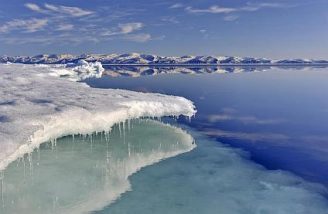
Speed of Arctic changes defies scientists
The Arctic climate is changing so quickly that science can barely keep track of what is happening and predict the global consequences, the UN says.
In an unusually stark warning a leading international scientific body says the Arctic climate is changing so fast that researchers are struggling to keep up. The changes happening there, it says, are affecting the weather worldwide.
The World Meteorological Organisation (WMO) says: “Dramatic and unprecedented warming in the Arctic is driving sea level rise, affecting weather patterns around the world and may trigger even more changes in the climate system. The rate of change is challenging the current scientific capacity to monitor and predict what is becoming a journey into uncharted territory.”
The WMO is the United Nations' main agency responsible for weather, climate and water. Its president, David Grimes, said: “The Arctic is a principal, global driver of the climate system and is undergoing an unprecedented rate of change with consequences far beyond its boundaries.”
“The changes in the Arctic are serving as a global indicator – like ‘a canary in the coal mine’ – and are happening at a much faster rate than we would have expected.”
He was speaking before addressing the first White House Science Ministerial meeting in Washington DC, held to develop international collaboration on Arctic science.
Climate change is causing global average temperatures to rise: 2014, 2015 and the first eight months of 2016 have all been record-breakers. The Arctic is warming at least twice as fast as the global average, in places even faster: the Canadian town of Inuvik has warmed by almost 4°C since 1948, about four times more than the global figure.
The increasing loss of Arctic sea ice is threatening polar bears across their range; melting sea ice is affecting the Arctic climate in a feedback loop; and scientists expect melting permafrost will release more carbon dioxide and methane.
And in another recent scientific paper, researchers have found that climate change is happening faster than many species can adapt to − and climate is changing between 3,000 and 20,000 times faster than many grassland species can respond.
Since the grass family includes wheat, corn, rice, sorghum, oats, rye, barley and many other plants that underwrite human survival, this is serious news.
Although the new research by scientists in the US does not directly address the future of food in a globally warming world, the researchers say their finding has “troubling” implications.

Crafternoon to fundraise for the charity ‘Mind’
From Coral Smith & Fiona Doubleday
One in four of us will suffer from some form of mental illness yet government funding remains inadequate. At Crafts & Company we wanted to do our bit to help so we hosted a crafternoon. People all over the country are taking part in these events where we get to craft, chat, eat cake and raise much needed funds. It is a winning formula.
Our crafternoon, ‘Mirrors for Mind’ involved us learning mixed media techniques to decorate a mirror to take home with us. We offered three different themes but in the end the ‘vintage’ and the ‘seashore’ themes were the preferred choice for members. We painted, cut, glued and stamped our way through the afternoon while attempting to tackle a mountain of cake generously donated by group members. Each member had their own craft box of resources and access to a huge range of additional inspirational resources on each table.
Not missing an opportunity to raise even more funds we held a raffle with all prizes donated and the majority being handmade items. Emerging from the creative process came some beautifully decorated mirrors and we all agreed that it was great fun. Using craft as a way to work with charities is an important part of Craft & Company’s mission and this workshop followed our highly successful ‘Little dresses for Africa’ campaign.
In total we raised almost £90 for ‘Mind’. We hope to host a second workshop with a different theme in the New Year as part of our Crafting and Well-being project. Our next workshop is a day of Christmas crafts on 6th December and all details are on our facebook page which you can access via our website www.craftsandcompany.net This time we are raising funds for the RNLI. Posters will be going up around the island soon.
We also have a new Crafts Club beginning at The Shore in Whiting Bay on Tuesday 15th November from 10-11.30am. Contact us via our website if you would like to join us. This will be a chance to craft, chat and eat yet more cake. The club will run monthly throughout the winter months.
There is a crafting revolution going on across the country at the moment and we are very proud to be part of it. Keep crafting people.
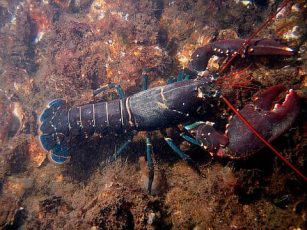
Arran no-fishing zone benefits lobsters
The Scotsman has reported research carried out over a four-year period in Lamlash Bay by scientists at York and Bangor universities. Results show the numbers of lobsters found in the area more than doubled in numbers as well as increasing in size over the course of the study. Populations of velvet crabs and brown swimming crabs were also monitored.

Host a fishy fundraising supper and help the RNLI save lives at sea in Scotland
The Royal National Lifeboat Institution (RNLI), is calling on people across Scotland the to step up to the plate and host a Fish Supper this Autumn, in honour of lifeboat crew who miss meal times and special occasions with loved ones to save lives at sea.
In 2015 alone, the charity’s lifeboats launched 8,228 times and its volunteers rescued 7,973 people across the UK and Republic of Ireland. This includes 348 people who would have died if not for being saved by the RNLI.
Community fundraising manager Rachel Stewart said, ‘As the nights start to draw in and the temperature drops it’s a great time of year to invite friends and family round for a fish supper, the money you raise will be used to train and equip our volunteer crews so they can weather the winter storms.’
Guests are invited to make a donation to the RNLI whilst the host cooks up a storm. All proceeds from Fish Supper will help provide the best equipment and training for RNLI volunteers.
The importance of togetherness and team spirit is at the heart of the RNLI and is what makes the charity and its volunteers so special. In 2015 RNLI volunteer crew members missed nearly 7,000 meals to rescue people in need of assistance.
Arbroath lifeboat crew were able to enjoy their fish supper al fresco as they dined out on the deck of their Mersey class all weather lifeboat thanks to their local chippy, the Round ‘O’ Chip Shop. The Round ‘O’ are hosting their own fish supper and donating proceeds to Arbroath Lifeboat Station.
To request a free fundraising pack and receive more information, visit RNLI.org/FishSupper. The website features recipes**, party game ideas and place name cards to help the evening go swimmingly.
Events can be held at any time. The RNLI is asking for donations to be sent in to the charity by 26 November.
Abolition of Forestry Commission Scotland?
Never in all of its nearly 100 year history has the Forestry Commission in Scotland faced a more important decision about its future, says The Woodland Trust Scotland.
Forestry is a vital industry for Scotland. It’s worth a billion pounds to the Scottish economy every year through timber production and through environmental benefits and services to tourism.
For such an important sector it’s understandable why the Scottish Government is looking to modernising its forestry services, but the Woodland Trust simply cannot support its proposal to essentially abolish Forestry Commission Scotland.
In short the Scottish Government’s proposal is to take the policy and regulatory side of Forestry Commission Scotland – which is currently a non-Governmental department funded by the Scottish Parliament – and bring it in-house, as a new division of the Scottish Government. Read the full details of their proposal.
The Woodland Trust values the role that Forestry Commission Scotland (FCS) currently plays across the world of Scotland’s woods. Forestry Commission Scotland is one of the most respected and trusted names – and brands - in Scottish public life, and while there are challenges, we believe it does a very good job at the moment. In fact it’s one of the best public bodies in Scotland.

Coastwatch Scotland
Coastwatch Scotland was founded in 2005 in Irvine as an independent non-governmental volunteer coastal monitoring and safety organisation. There are five stations operating in Scotland and England, based at Irvine, St Monans, Bowness, Tay, and Berwick-on-Tweed.
deputy station manager
Anne Kinsman
on duty at Elie harbour

The dangers of smoking
After some sessions on the dangers of smoking, Arran’s schoolchildren were invited to write something imaginative on the subject. Here is the winning piece, by Bradley Andrew Lord. Well done Bradley.
Bridge Challenge
South to make 6♠. West leads the ♣8.
Crossword
Across
1 Titan supercar catches Scotsman (5)
6 Ursine is also in Panama (5)
9 After port zero mother finds growth (7)
10 Frighten energy into distant view (5)
11 Setter sues broken seed (5)
12 Shivering chair makers? (7)
13 As the Salvation Army and I yield fruit (5)
16 Passage of article to man? (5)
19 Ovine partners with enrgy (3)
20 Mill grinding lie rate (7)
22 Southern heads cloak right near misses (7)
24 Erases lease in back eleven (7)
26 Esquire is red fighter in rare trouble (7)
27 Own article not out (3)
28 Fibre is the last exit opening (5)
31 Condition of Maine? (5)
34 Stretch ward (4,3)
35 Mystic stroked me as subject (5)
36 Find extreme error about ruler (5)
37 That's about before on that account (7)
38 Notions which I don't ever ask someone to start (5)
39 Clip is visible on the radio (5)
Letters to The Voice
Bruno Baumgärtner contacted us about the new ferry terminal:
What an awful, completely oversized s**t Calmac is building here. 50 Mio for a new larger ferry instead of two new smaller, faster ones and at least double the crossings the whole year. And once finished, about 30 Mio for this eyesore.
The government would have been well advised to include the buses into the deal, so that foot passengers during the summer additional ferry will not be forced to wait up to one and half an hour to leave Brodick.