It was political show-time in Arran this week with the arrival of the Scottish cabinet on Monday 27th August. The ministers spread around the island in the morning, making visits to various Arran businesses, schools, and community organisations, before heading to the High School for a cabinet question and answer session with Arran residents and school children. There was a Brexit session at the Ormidale Pavillion, an environmental one at COAST and the First Minister Nicola Sturgeon went to the Auchrannie Hotel where she launched the Scotland for Employee-Owned Businesses venture and a new Food and Drink Tourism Action Plan. By building on the island’s strengths she said, the government want to capitalise on our economy and the action plan aims to do this by doubling tourist expenditure on food and drink from 1 to 2 billion pounds.
Now cut to the other side of this expenditure – the massive waste that will be generated and the tonnes of food that will be binned. The Guardian recently revealed new research which shows that the amount of food that is wasted each year will rise by a third by 2030, when 2.1bn tonnes will either be lost or thrown away, equivalent to 66 tonnes per second. Unfortunately these are the aspects of new action plans which cabinet ministers don’t mention. Yet how to address these issues could be built into the initiative from the start, and a sustainable action plan would be one that was genuinely possible to engage with and celebrate.
In this edition we look at one Arran retailer who has set up a programme which does start to address the issue. The Co-op has a new scheme called Food Share, and with some planning it could be a brilliant way to reduce the food that gets thrown out each day and at the same time go to people that really need it. With a supermarket ready and willing to take on the problem, and also provide advice on how to do this, it seems like a fantastic opportunity which hopefully islanders will take. Some of Arran’s other community organisations are also looking for support. Eco Savvy is looking for trustees to join their board and help realise their exciting plans over the next year or so, and COAST is keen to hear from people who have some time to spare and could volunteer at the amazing new Octopus centre.
Community action aside, we have the usual mix of previews and reviews, and tonight of course (if it’s your thing!) is the start of the McLellan Festival. There will be poetry in Corrie hall followed by a whole week of music, film, talks, ceilidhs and much more. Enjoy the issue, and all that is going on around the island!
"Whether you have a cancer diagnosis, have a friend or relative affected by cancer, or are worried about cancer in any way at all, there are lots of ways that Macmillan can support you - medically, financially, emotionally and practically.
Screening and what to look out for, for example signs and symptoms
Different cancers, their treatments and side effects
How cancer affects your life, for example: finances or employment
Talking about your cancer, or talking to someone with cancer
Being there for someone with cancer, or the support available locally
Scottish Cabinet Secretary, Roseanna Cunningham, visited COAST this week at Scotland’s first MPA visitor centre, the Octopus Centre.
During the Scottish Cabinet’s visit to Arran on Monday 27th August, the Secretary for the Environment, Climate Change and Land Reform, Roseanna Cunningham, made a trip to Coast where she was welcomed by co-founder Howard Wood, and shown round the new Octopus centre by members of staff and volunteers. The Octopus Centre is the first MPA visitor centre in Scotland, with the official opening just a short way off on 22nd of this month. It is 10 years, nearly to the day, since the establishment of Scotland’s first No Take Zone in Lamlash Bay. On the 20th September 2008, the first UK community led Marine Reserve was designated by the Scottish Parliament.
On Sunday 5th August, people gathered on Lamlash Green and also in Lamlash Church hall, to mark the 73rd anniversary of the Hiroshima and Nagasaki bombings. There were several speakers on the day, including SNP MP Patricia Gibson, Janet Fenton of SCND and ICAN (International Campaign to Abolish Nuclear Weapons), and David McKenzie of Nukewatch. There was tea and cake, discussion and reflection, and people wrote messages to hang on a peace tree that Isla Blair had organised for the event. Some of the messages are shown here in the slideshow.
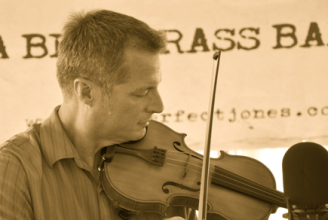
On Thursday 6th September there will be a fiddle workshop at the High school at 2.00pm, with renowned fiddler Paul Anderson. If there are any fiddlers out there, this sounds like a workshop not to be missed! It is open to both young people at the High school and adults.
Paul is one of the most respected exponents of the Scots fiddle tradition today, and as such is in regular demand to perform at concerts, festivals and clubs. He has traveled the world with his music and is one of Scotland’s most successful fiddle tutors, with his pupils regularly winning fiddle championships all over Scotland. He is in regular demand as a workshop leader as well having led workshops at St. Andrews University, Aberdeen university, the traditional music course at Benbecula college, all five north Atlantic Fiddle conventions and workships in Canada, Australia and the USA.
Fish farming is increasing throughout the world, so more feed factories are being built. This is a huge multinational industry, with great economic power, which we see daily in the west coast lochs of Scotland. Marine Harvest is building a large feed facility on the east coast of Skye at Kyleakin. The new plant costing £93 million will be completed in 2018. This plant capacity is around 180,000 tonnes per year and the plant will produce fish feed to supply Marine Harvest’s salmon farms across the western Highlands and islands of Scotland, as well as Ireland, Norway and the Faroe Islands. There is concern amongst communities and environmental NGOs in Scotland and the UK about fish health, escapes and Scotland’s inshore environment for wild salmon and creeling.
September 15th is National Chamber Music Day, and Enterprise Music Scotland along with Music Arran and Coast, are running an ‘Eco music’ themed day in Lamlash.
The organisers at Enterprise Music Scotland write:
On the 15th of September, Enterprise Music Scotland (EMS) will host National Chamber Music Day 2018, the event which celebrates chamber music throughout Scotland! We’ll be filling the streets with the sound of chamber music by putting on free, impromptu concerts for members of the public across the country. As 2018 is the Year of Young People, National Chamber Music Day will be packed full of family friendly concerts and opportunities for young people to get involved in listening to, creating and performing chamber music. We will be branching out further than ever before with performances taking place in venues from the Borders to the Highlands as well as more remote areas including the Islands of Orkney, Skye, Arran and Lewis.
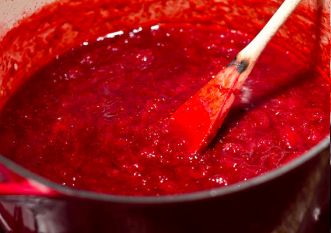
Stirring the jam saucepan, I reflect how far I’ve come, full circle in fact, ending up exactly like my mother, stirring the jam saucepan. She left school at 14, worked through the war in the blitz, then like so many others, returned to hearth and home, a housewife, a mother, a jam maker.
Whereas I, through high pressure education, university degree, graduate job, failure at marriage, then the women’s movement, dungarees, liberation, consciousness raising group – I rejected all that jam making stood for: housewifely slavery, kitchen sink, boredom and drudgery.
In the third part of their series, Stories from Scotland's Seabed, Open Seas looks at the history and current habitat of Horse Mussels.
Background
Horse mussels look like giant cousins of the mussels you’ll find in the fishmongers – they are a huge mollusc! In Gaelic they are known as ‘clabby dhu’ meaning black mouth, a name referring to their gaping mouth which filters the passing currents and that can look pretty disturbing when seen underwater…
Where they cluster in a dense and big enough group, the complex matt of live and dead horse mussel shells starts to form a reef amongst which other small marine life takes hold and takes advantage of this horse mussel-created-habitat. Well established reefs provide grounds for a range of species, including cod and haddock, spider crabs, whelk and scallop spats. These species spawn and feed and spend their juvenile (and highly vulnerable) years in this habitat.
Are you a keen hillwalker? Are you looking for a unique and magical experience you'll never forget? Register now for the Torchlight Challenge at Goatfell on Sat 15th Sep. Join our experienced mountain rangers on a night walk to the top, where we'll shine a beacon back to those on Ben Lomond and Ben Lawers. All funds raised go directly to the National Trust for Scotland's mountain causes.
Ben Lomond / Ben Lawers / Goatfell Saturday 15 September Registration Fee: £15
"An extraordinary novel … It’s an astonishing performance …He’s incredibly good at describing trees, at turning the science into poetry …The book is full of ideas … Like Moby-Dick, The Overstory leaves you with a slightly adjusted frame of reference … Some of what was happening to his characters passed into my conscience, like alcohol into the bloodstream, and left a feeling behind of grief or guilt, even after I put it down. Which is one test of the quality of a novel." (Ben Markovits, Guardian).
Hundred of passengers on the paddle steamer Waverly were left high and dry when the vessel broke down in the middle of the Firth of Clyde. The Waverly was stuck between Helensburgh and Greenock for several hours but later made it in to Greenock. Waverly Excursions Ltd said it was due to a problem with the vessel’s boiler controls and it regretted the inconvenience and disappointment to passengers.
Engineers were called to try to repair the vessel. One passenger on board the paddle steamer said, “There are worse places to be stranded but after a while it does start to wear thin.”
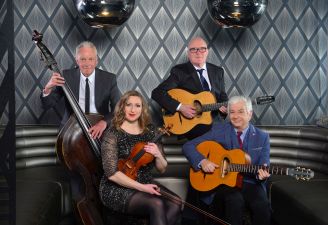
Rose Roomwill be playing at Whiting Bay Hall on Friday 28th September at 7.30pm
Scottish Jazz Awards finalists Rose Room have become one of Scotland’s leading ensembles influenced by the Gypsy Jazz genre. Sharing a love of Swing music and the style of the great Django Reinhardt and Stephane Grappelli, their “vigorous and vivacious” performances go “down a storm” with any audience as they serve up their 1930s ‘Hot Club’ standards, Gypsy Jazz favourites and self-penned originals with virtuosity, verve and panache recreating the excitement of Rive Gauche Paris.
Insyriated (Belgium/France. 2017. Directed by Philppe Van Leeuw. 85 min. Cert 15.) will be showing at Corrie film club on Sunday 16th September at 8 pm.
A brutally tough drama from writer-director Philippe Van Leeuw. The scene is a crowded apartment in the Syrian capital Damascus, in which a family is barricaded, effectively imprisoned by the civil war outside. A mother attempts to keep her family safe as war rages and a sniper lies in wait outside her home. This nerve-wracking study of life in Damascus won an Audience Award at Berlinale.
Tiffany Atkinson was born in Berlin and is currently Professor of Creative Writing at the University of East Anglia. This poem is taken from her third collection ‘So Many Moving Parts’ published by Bloodaxe in 2014. Her poems often surprise with their combination of wit and tenderness. In Nightrunning she expresses the often contradictory feelings we have about our lives during moments of introspection in the small hours.
The Isle of Arran, Firth of Clyde: These self-cloned Sorbus species are unique not only to Arran but to two particular glens.
Glen Catacol is hot, humid, slightly overcast, and nothing stirs the air. In other words, the midges are ferocious. I march resolutely up the path, movement keeping the tiny bastards at bay, but the sight of a red-breasted merganser and her eight chicks huddling closely around her in the waters of the Abhainn Mór briefly stops me in my tracks.