Salmon saga gets stinkier
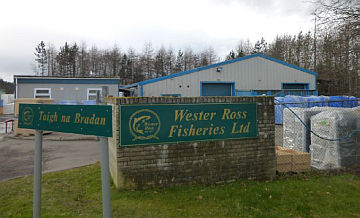
Public opinion is a slow-moving animal, but it is, like all mammoth organisms, weighty. And at the moment, it is coming round to an understanding that fish farms are not all they’re cracked up to be. The Sunday Herald headline a couple of weeks ago read, ‘Farmed salmon killed by disease leaps to 8.5 million’ and went on to reveal that new figures from SEPA (the Scottish Environment Protection Agency) show that losses from all salmon farms have reached nearly ten per cent of their production.
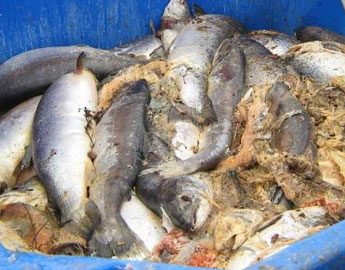
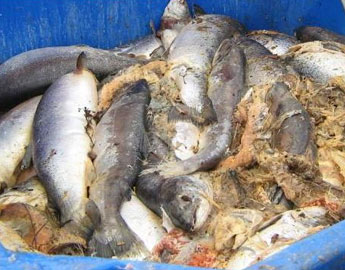
The statistics are appalling. What do you do with 13,627 tonnes of dead salmon? The spread of amoebic gill disease has been sweeping through caged fish along the west coast and on the islands, culminating in Shetland, where 2.4 million salmon have died.
 Anglers and environmentalists have no hesitation in blaming the intensive production methods used in salmon cages. Hugh Campbell Adamson, chairman of the Salmon and Trout Association in Scotland, said, ‘It is clear from these massive mortality figures that there are major problems.’ He holds that any intensive farming system, whether at sea or on land, is highly prone to disease outbreaks, and said, ‘When a large number of animals or fish are closely confined, the likelihood of endemic disease is greatly increased.’
The association’s aquaculture lawyer, Guy Linley-Adams, is worried about possible infection of wild salmon, with a consequent wipe-out in their numbers as well. He insists that salmon farms must be kept apart from wild fish and said that must only take place in closed containment, ‘where there is a biological separation between farmed and wild fish.’
It is curious that a nation which turned against battery hen farms years ago has not yet realised that penned fish, barely moving within their netted space, are suffering from the same intolerable conditions. Time for buyers to go on strike. Ignore the label on the pack assuring the buyer that the contents are from a ‘sustainable source’. Just don’t eat it.
Meanwhile Ben Lupo, owner of D&L Energy and Hardrock Excavating, is charged with ordering the dumping of thousands of gallons of chemical-laced fracking waste into streams in Youngstown, Ohio.
The Justice Department asserts that on the night of January 31, state investigators acting on a tip-off caught Lupo’s employees dumping oil and gas drilling waste – fluid, mud and oil – into a storm sewer that empties into a tributary of the Mahoning River. The storage tanks hold about 21,000 gallons of chemical-laced waste fluids and mud. A Hardrock Excavating employee told authorities he knew of 20 dumping incidents since November 2012.
D&L Energy operate the Northstar 1 fracking wastewater injection well that caused a series of earthquakes in 2011 and early 2012, including one quake that measured 4.0 on the Richter scale. Test results released by Ohio regulators show the presence of harmful pollutants, including benzene and toluene, in the watersheds contaminated by the waste.
Ohio has been accepting large volumes of waste from other heavily fracked states, like Pennsylvania, and environmentalists are concerned that the state is becoming a fracking waste ‘dumping ground’ – but not if Ohio residents can help it. They accuse the Ohio Department of Natural Resources of having ‘a long history of ignoring repeated flagrant violations’ and denying evidence of problems.
What America does today, Britain does tomorrow, the saying goes. Not this time, please God.