Why we need to put the fish back into fisheries
Leigh is a PHD researcher from the University of York who has spent the last three summers conducting research in the Lamlash Bay No Take Zone. With two others, he has co-authored a paper published by the University of York, titled The unintended consequences of simplifying the sea: making the case for complexity. Fish and Fisheries. What follows summarises some of the paper’s findings.
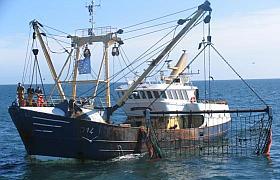
It is well documented that the increase in demand for fish, combined with advances in fishing technology, has led to decline of many large-bodied finfish fisheries around the world. As a result, catches of shellfish such as prawns, scallops and lobsters have rocketed as they begin to thrive in unnaturally predator-low environments that have often been degraded by trawling and dredging. Although these shellfish fisheries may initially yield greater economic value than the fisheries they replaced, they are likely to be unstable in the long-term, and at great risk of collapse from disease, species invasions and climate change.
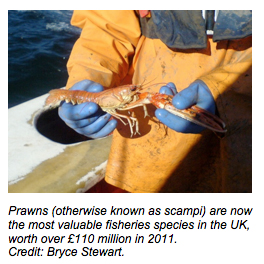
Closer to home, there has been a dramatic shift of species landed in the Clyde. Once dominated by finfish such as cod and haddock, nephrops prawns now constitute up to 84% of the current landed weight. It may prove difficult to reverse this shift because of a decline in important nursery habitats and a critical drop in the bulk of planktonic prey for fish species. High levels of juvenile by-catch have also done considerable damage, and there is great concern for the sustainability of remaining nephrops stocks because of the 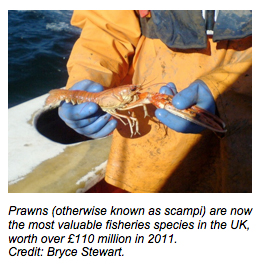 high risk of infection by parasites. This rising trend seems to be enhanced by the lack of predators and greater number of smaller-bodied individuals (found to be more susceptible to disease) in regularly fished areas.
With few species left to target, and recent assessments suggesting that the Firth of Clyde nephrops stock may already be exploited above the Maximum Sustainable and Economic Yield, the future of the nephrops population is vulnerable. Should it collapse, the social and economic consequences for Clyde fishermen (and in turn coastal communities) would be severe.
Leigh’s paper therefore outlines the need to implement management regimes that will promote the recovery of diverse ocean ecosystems. These regimes include a combined approach to fisheries management, including control of what gear and fishing hours are allowed. Marine Protected Areas (MPAs) must form part of this approach, to ensure fisheries’ sustainability and resilience in the future.
COAST (Community of Arran Seabed Trust) continues to work hard towards the designation of the Arran South Marine Protected Area; encouraging sustainable methods of fishing such as angling and creeling but preventing damaging trawling and dredging practises from taking place. COAST aims to initiate the public consultation phase of the proposal this summer. During this time COAST will continue to work closely with Arran residents, visitors and supporters, aiming to ensure that the MPA is designate and approved by the Scottish Government