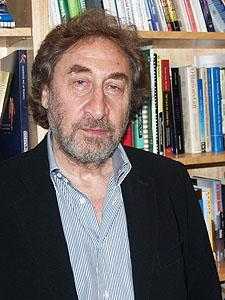
Book review – J by Howard Jacobson. A disturbing dystopian vision.
There have been a number of novels recently about a dystopian future – those of Margaret Attwood and Cormac McCarthy come to mind. Often these are centred on ecological collapse. J is different. Rather than environmental disaster it explores a psychosocial dystopia in which it is individual and cultural memory that has collapsed.
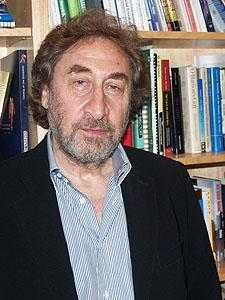 Published at a time of increasing antisemitic incidents across Europe, Howard Jacobson’s novel portrays a sinister UK several decades in the future, after a pogrom of the Jewish population – an event known in the novel as “what happened, if it happened”. The effort to wipe the massacre from memory forms the backdrop to a love story between two outsiders in a remote seaside village: Kevern, a perplexed woodturner in his 40s, and Ailinn, a younger woman abandoned as a baby. What neither knows is that state agents are watching and scheming to ensure they get together.
Jacobson embeds vignettes of “what happened” in dramatic exchanges and according to Anthony Cummins in the Guardian, the nested narrative stokes our curiosity by cutting between time frames with continual insertions of mysterious accounts of historical violence, and the novel’s success owes much to the fine texture of its dystopia. After “what happened”, all citizens were given new surnames to eliminate “invidious distinctions between the doers and the done-to”. Hinchcliffe became Behrens; Scannláin, Kroplik; and so on, in an initiative known as Operation Ishmael (because of the line in Moby-Dick, “Call me Ishmael”, a gag Jacobson can’t quite resist). The role of social media in the massacres means that mobile phones are now a thing of the past; Ailinn recalls reading, as a girl, “comics about a time when people wrote to one another by phone but wrote such horrid things that the practice had to be discouraged”.
The book’s title isn’t actually J, but a special character – the letter struck through twice – that is pronounced in the novel with two fingers over the lips for fear of who might be listening. Nowhere do “Jews” appear in the text; only an unspecifically specific “they”.
As a conspiracy narrative examining the manipulation of collective memory, J was worthy of its place on last year’s Man Booker shortlist. As Cummins says, Jacobson has crafted an immersive, complex experience with care and guile. But it is also something more – a warning, that what happened once can happen again, and an extended examination of the place and role of the ‘other’ in society. Whether that perceived ‘other’ happens to be Jewish, or an ‘unbeliever’ in the eyes of Islamic State, or even a Scot in the rhetoric of David Cameron in the lead up to the election, Jacobson makes clear the potential dangers of putting another group in the position of the ‘other’.
John Burnside wrote, also in the Guardian, “Jacobson’s achievement may well come to be seen as the dystopian British novel of its times. This is because J so artfully mirrors the main features of our current “lifestyle”, from the endless production of formulaic pop culture and the glorification of infantile consumption, to the avoidance of difficulty and a systemic contempt for privacy.”
J by Howard Jacobson is published by Jonathan Cape (£18.99).