The UN High Seas Treaty
What is the UN High Seas Treaty and why is it needed?
The global goal of protecting 30% of the High Seas, the World’s Oceans by 2030
By Sally Campbell.
After more than a decade of negotiations, United Nations member countries have agreed the first ever treaty to protect the world’s oceans that lie outside national boundaries.
Environmental groups say the UN High Seas Treaty will help reverse biodiversity losses and ensure sustainable development, but caution there is still a long way to go before implementation.
I have written about this Treaty before but it is worth reminding ourselves:
What are the high seas? A Reminder:
Two-thirds of the world’s oceans are currently considered international waters.
That means all countries have a right to fish, ship and do research there.
But until now only about 1% of these waters – known as “high seas” – have been protected.
This leaves the marine life living in the vast majority of the high seas at risk of exploitation from threats including climate change, overfishing and shipping traffic, and now mining for metals on the seabed.
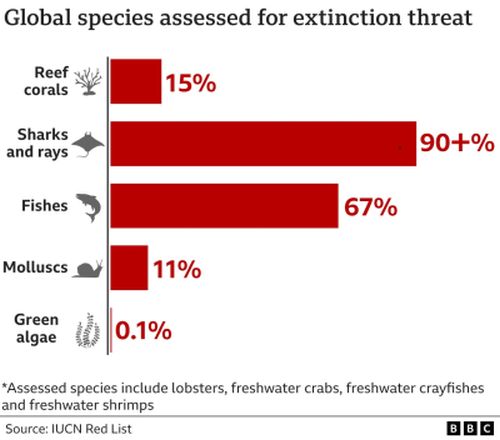
Which marine species are at risk?
In the latest assessment of marine species, nearly 10% were found to be at risk of extinction, according to the International Union for Conservation of Nature (IUCN).
According to Dr Ngozi Oguguah, from the Nigerian Institute for Oceanography. the biggest causes of extinction are overfishing and pollution.
Sharks, whales and abalone species – a type of shellfish – have come under particular pressure because of their high value as seafood and for pharmaceutical development. Plants and animals have developed natural defences against predators that can be applied to contain disease in humans.
The IUCN estimates that 41% of the threatened species are also affected by climate change.
Minna Epps, head of IUCN’s ocean team, said: “Carbon dioxide is actually being absorbed by the ocean”. This is why we have so much limestone in our world. But too much Carbon Dioxide “makes the ocean much more acidic, which means that it is going jeopardise certain species.”
Climate change has also increased marine heat waves 20-fold, according to research (25 Sep 2020.Vol 369, Issue 6511 pp. 1621-1625) published in the magazine Science. This can lead to extreme events like cyclones but also mass mortality events (National Geographic Sept 22 2022).
How will the High Seas Treaty protect marine life?
The key measure is placing a considerable proportion of the world’s international waters into marine protected areas (MPAs) – which will help achieve the global goal of protecting 30% of the world’s oceans by 2030, which was agreed at the 2022 UN biodiversity conference held in Montreal.
Activity can occur in these areas but only “provided it is consistent with the conservation objectives” – meaning it does not damage marine life. This could mean limiting fishing activities, shipping routes and exploration activities like deep-sea mining.
Environmental groups are seriously concerned about the possible effects of mining, such as disturbing sediments, creating noise pollution and damaging breeding grounds.
Countries will propose areas to be protected, and these will then be voted on by the countries that sign up to the treaty.
• Historic ocean treaty agreed after decade of talks (BBC 5th March)
• Why the historic High Seas Treaty got an emotional reaction (BBC 7th March)
What else is in the treaty?
The treaty’s other important points are:
• arrangements for sharing marine genetic resources; and
• requirements for environmental impact assessments (EIA) for deep sea activities like mining
Marine genetic resources: these are biological material from plants and animals in the ocean. These can have benefits for society, such as pharmaceuticals and food.
Countries have agreed to share “fairly and equitably” any discoveries made in the deep sea between countries. This was important for poorer nations who argued they may not have the resources to undertake this work independently.
However, Dr Robert Blasiak, from Stockholm University, said no one knows how much ocean resources are worth and therefore how they could be split.
Countries will also be asked to assess the environmental impact of activities in the oceans if the impacts are not well known or could cause harm to marine life.
Critics point out that countries will conduct their own EIAs and make the final decision – although other countries can register concerns with the monitoring bodies.
Richer nations have also pledged new money for the delivery of the treaty.
The EU recently announced nearly 820m euros (£722.3m) for international ocean protection. (EU Commission 2 March 2023)
When will the treaty take effect?
Countries will need to meet again to formally adopt the agreement and then have plenty of work to do before the treaty can be implemented.
It will only enter “into force” once 60 countries have signed up and legally passed the legislation in their own countries.
Signatory countries will then start looking at practically how these measures can be implemented and managed.
Will McCallum CEO Greenpeace claimed:-
“a multilateral success at a time of global fragmentation, and we hope a success also for the health of our oceans. Thanks to your support, our first major milestone to 30×30 is now out of the way – the small matter of ratification to come, and our team can now focus on what they love most and do best which is actually fighting for the sites we need to be protected under this new framework.”
After the UN Global Treaty on High Seas Protection. What next?
U.N.’s Intergovernmental Panel on Climate Change (IPCC): the Sixth “Synthesis Report”
On March 20 2023 U.N. Secretary General Antonio Guterres warned the “climate time bomb is ticking” as he urged rich nations to slash emissions during a recorded address at the launch of the sixth “synthesis report” from the U.N.’s Intergovernmental Panel on Climate Change (IPCC).
“Concentrations of carbon dioxide are at their highest in at least 2 million years. The climate time-bomb is ticking.”
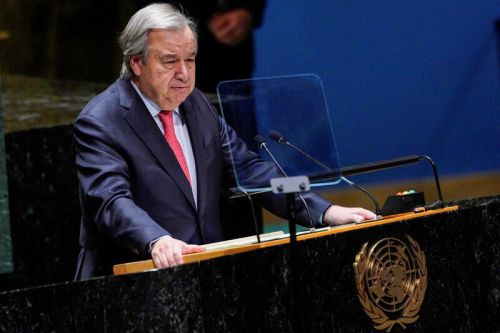
Although the IPCC report outlines the urgency of cutting back emissions by the 2030s, nations around the world have recently been rolling back their commitments.
The synthesis report summarized findings from three expert assessments published between 2021 and 2022 that looked at the physical science, impacts, and mitigation of climate change. According to the IPCC, emissions must be halved by the mid-2030s if the world is to have any chance of limiting temperature rise to 1.5 degrees Celsius (2.7 Fahrenheit) above pre-industrial levels – a key target enshrined in the Paris climate accord. The IPCC’s 6th Assessment outlines that climate changes will increase in all regions of the globe over the coming decades and that even with 1.5°C of global warming, there will be increasing heat waves, longer warm seasons, and shorter cold seasons – which will become more intense at 2ºC of warming.
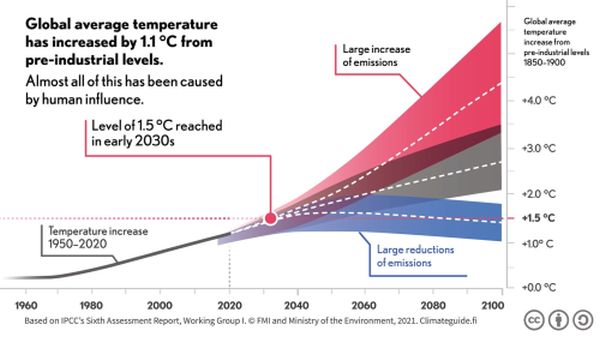
Although the IPCC report outlines the urgency of cutting back emissions by the 2030s, nations around the world have recently been rolling back their commitments.
Last month, South Korea revised down its 2030 targets (Reuters, March 21, 2023) for reducing greenhouse gas emissions in the industrial sector but maintained its national goal of cutting emissions by 40% of 2018 levels in what it called a “reasonable adjustment”. Under the plan, the industrial sector will be required to cut emissions by 11.4% from 2018 levels by 2030, compared with the 14.5% goal set in late 2021, the Presidential Commission on Carbon Neutrality and Green Growth said and the gap will be filled by switching more energy sources to renewables and making more reductions overseas. To give you some idea, South Korea derives more than 40% of its electricity from coal and has vowed to halve that proportion by 2030, but environmental groups including Greenpeace have said the goals are too low and criticized its plans to build more coal-fired plants.
But it is not just South Korea backpedalling on its net zero promises, as the Japanese government (Reuters March 20 2023) and its power utilities industry body have called for greater flexibility on energy transition rules, while some Group of Seven (G7) members want stricter rules on how countries should transition to cleaner energy. As chair of the G7 this year, Japan will host ministerial meetings on climate, energy and the environment in the last month ahead of a G7 summit in Hiroshima in May, to promote what Japan calls realistic energy transition.
Meanwhile, the European Commission has proposed allowing the sale of new cars with internal combustion engines (Reuter March 21 2023) after 2035 if they only run only on climate-neutral e-fuels, a document showed. Yielding to German pressure, the Commission suggested that such vehicles could be among those allowed from 2035, but their technology must prevent them from driving if other fuels are used, the document outlining the Commission’s proposals to Germany’s Transport Ministry showed.
Greenpeace in a recent report: “Our UK government is not rising to the IPCC’s challenge, but we, as part of the climate movement, will. We are winning the argument on climate change, but still losing the battle on the ground. It is time for a new approach.
In the speech accompanying the latest report from the UN top climate experts, the UN Secretary General, Antonio Guterres, compared the text to a bomb disposal manual. That the climate crisis is a ticking time bomb may not be an original analogy, but it has only grown ever more poignant over time. By now, the faint ticking sound is haunting us all.
The latest IPCC report was another reminder that we are winning all the arguments on climate change but losing the battle on the ground. Politicians, the public, institutions and corporations are all deeply concerned, but carbon emissions keep rising, and the timer keeps ticking down. Amidst the stark warnings from the world’s top climate experts about the rate of global heating and its impact, there was a chink of good news. We do not need to hope for a miraculous technological breakthrough – most of the tools we need to cut emissions are ready for use. We already have affordable, ready-to-roll wind and solar power, home insulation to fix our energy-wasting homes, electricity-powered transport and plant-based diets. Technological advancements can certainly help, but sitting around to wait for them will not.
The benefitting solutions we already have includes healthier, cleaner air and food, safer, quieter, more convenient cities, warmer homes and better access to nature, but the key sweetener is economic. Not only do the solutions cost far less than the consequences of sticking with dirty technologies, they actually cost less than those dirty technologies straight off the shelf. It should be a no-brainer.
The government is failing us. Then why is it that we are making so little progress in curbing the gases that are turning up the planet’s thermostat? What’s holding us back? When you look at the sheer scale and speed of the transformation we need to avert climate breakdown, it becomes pretty obvious that we cannot do it without the resources, coordination and expertise that only a government can muster. And yet it is pretty clear that our UK ministers have not read or understood the memo from the UN chief. In fact, the latest IPCC report was a mirror held up to the UK government’s failure to step up to the plate on the climate crisis. The Secretary General urged the leaders of wealthier countries to bring forward emission reduction targets, and the UK government has no plans to do so. He called for an end to fossil fuel exploration, and ministers here are busy handing out more licences to expand oil and gas drilling in the North Sea. He even pointed to renewable energy as a key solution to the problem, and the Sunak administration is still blocking onshore wind outside Scotland– our cheapest energy source – because of the ideological foibles of a few backbenchers.
The fossil fuel industry is blocking progress. It is clear that the political will to get serious on the climate crisis is not there. But how can there be a lack of political will to save everything that people value? Because while people want change, money is not so sure. And there is a huge concentration of money and power in the fossil fuel sector. Twenty-seven years after the Kyoto Protocol was signed, three of the six largest companies in the world by revenue are oil and gas giants (the Fortune Global 500 2022 rankings). According to the IMF, (Report 2022 Fossil Fuel Subsidies) around 7% of the entire world’s GDP is spent just on subsidising fossil fuels. That kind of power will not be toppled by a good idea or a thorough bit of research. We need to apply enough pressure to do the right thing on our political leaders to overwhelm the harmful influence of the world’s most powerful industry, and that pressure can only come from a truly mass movement for change.
We need a powerful protest movement. But while the UK government is failing to get to grips with the climate crisis, it is getting busy preventing the public from expressing their anger at this inaction. Not content with the draconian measures in the Police, Crime, Sentencing and Courts Act – already criticised by the UN – ministers are now tightening their crackdown on the right to protest with the Public Order Bill, which could become law soon. This dystopian legislation will allow police to stop protests before they even happen while widening stop-and-search powers that are already unfairly targeted at over-policed groups. A large protest movement, filled with unlikely alliances, is what our government fears, but it is what our country needs. The change we need cannot be achieved just by asking people to shop sustainably, watch their air miles and sign petitions. A truly mass movement is the only tool within our reach with the power to deliver the change we need, and supporting and building that movement is a crucial task for all of our campaign work. We either succeed together as a united movement, or we fail apart.
Time to connect and mobilise. Greenpeace will be listening, connecting and linking up with other organisations. We’ll look at where environmental issues overlap with broader societal problems like fuel poverty, wealth inequality and racism – and we’ll join forces with the people bearing the brunt of these injustices.
”Recently, Rebecca Newsom, Head of Politics at Greenpeace UK, said:
“Forget distant tropical islands and future generations – we have already seen what 40C summers and flash flooding look like here in the UK. The wolf is at the door. For many other communities around the world, like those facing devastating floods in Pakistan and Malawi, the danger of climate change is clear and present. Now is not the time for despair. We must fight to stop every fraction of a degree increase in global warming. Scientists and economists are clear that the technological solutions and economic case have never been more compelling. Rather than throwing lifelines to dodgy nuclear and unproven carbon capture schemes, the government should grasp the renewable energy system that will bring cleaner air, green jobs and cheaper and more secure supply.
But that also means closing the stopcock before our house floods. Fossil fuel companies have access to infrastructure and reserves that will force global warming beyond dangerous limits. We absolutely cannot risk more exploration and drilling. Fossil fuel companies must stop drilling and start paying tax on their bumper profits so we can ramp up renewables and support the most affected people worldwide.”
So, use every opportunity, we on Arran have to demand of our governments, our politicians, and our communities to apply pressure to do more, faster, to change behaviours, invest for a greener and more environmentally and economically better future. Finally, depressingly, I read this week that the UK government has cut its most senior diplomat post with no plans to replace Nick Bridge the last special representative for climate change, who stood down after 6 years in the post. Appointed by the foreign secretary to further the UK’s climate goals internationally, (see Damian Carrington) Tom Burke, a former advisor to the first special representative John Ashton, appointed in 2006 said “This will clearly be interpreted everywhere as a reduction in Britain’s political focus on climate change. Lowering the rank of the UK’s lead official on climate change is hardly a way of making this priority credible at home and abroad”.
Sally Campbell
April 2023