May Day for Keir Hardie
May Day, the 1st of May – the day that commemorates the struggles of working folk and the labour movement in general. Perhaps the perfect day to remember a great Scotsman – Keir Hardie. By Peter Finlay.
Bob Holman in his fascinating book about Hardie tells us how he once asked some schoolchildren in Glasgow what they knew of Robert Burns. It was close to his 250th anniversary. Everyone was eager to tell what they knew and even spoke of visits to see his cottage in Alloway. It was also just over 150 years since Keir Hardie had been born – and he had lived for many years only 16 miles from Alloway, in Cumnock. None of the class knew a thing about him. No blame on the children. It’s possible their teachers did not know very much either. Not all that many people do. Yet he was undoubtedly one of the principle figures behind the rise of the Labour Party – in fact we could say he was the principle figure. And he himself had a deep love of Burns’ verse and the common humanity so evident within it.
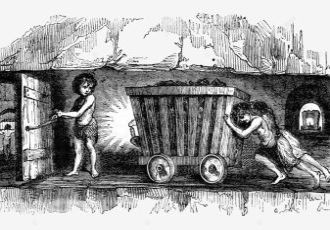
Keir was born in near poverty to a single mother, Mary, and at a very young age he was working in the mines, working as a ’trapper’ that is the job of ‘trapping’ air into the pit shaft so the men could breath. In the course of this at the age of only 12 he experienced a serious accident when the cage got stuck far down the shaft. It was an experience which led him when he became an MP to fight for the enforcement of safety legislation in the mines.
He was in fact a great fighter. He was ready to take on the rich and powerful. One such was Lord Overtoun whose chemical works in Rutherglen daily poisoned the lungs of the workers who were obliged to work there 7 days a week, with no breaks whatsoever and never a single week off. Men who took themselves to church on Sunday were docked their pay for the day – and for the following day too! Yet the good Lord Overtoun was a staunch Sabbatarian who also gave of his largesse to foreign missions and other charities!
Keir Hardie was a Christian himself and he knew his Bible in a way the powerful man clearly did not. He wrote a pamphlet depicting Overtoun in the light of Jesus’ Sermon on the Mount in Matthew’s Gospel – ‘ye outwardly appear righteous unto men but within you are full of hypocrisy and iniquity…’ The wrath of the establishment descended upon Keir. The power of the press sided with the hypocrite and Hardie was described amongst other things as an atheist (!).
But Keir was not the kind of man to buckle. He believed in the working people of the country. He was one of them. He realised their only possible representatives in Parliament at the time – who were the then Liberal Party – were made up of people just about as far from the working people as the rest of the ruling class. So with a few like minded companions he was led to start up what eventually became the Labour Party. In February 1900 the delegates to a conference passed Hardie’s motion to establish ‘a distinct Labour group in Parliament who shall have their own whips’ and with ‘a readiness to cooperate with any party which may be engaged in promoting legislation in the direct interests of labour…’
After the 1906 General Election, at their first meeting, the group’s members of Parliament decided to adopt the name “The Labour Party” formally (15 February 1906). Keir Hardie, who had taken a leading role in getting the party established, was elected as Chairman of the Parliamentary Labour Party (in effect, the leader).
So now the way was open, after the trauma of World War 1, for the first UK Labour Government to come into office in January 1924 with Ramsay MacDonald its first Prime Minister.
It was all quite an achievement for the lad from the Lanarkshire coal mines. An achievement he should long be celebrated for, nor forgotten by the schoolchildren of his own land.
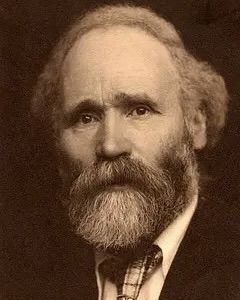
Featured image shows Engraving of a Trapper in Coal Mines, the work that Keir Hardie undertook as a young boy. Free image accessed at png.tree.com. Image of Keir Hardie above, by George Charles Beresford,1905. Public domain scan of 19th-century artistic photograph.