Issue 21

More on biomass.

The postponement of the planning application by Northern Energy for a plant to generate electricity from forestry timber has seen no let-up in the work being done by the Community Council on trying to establish a factual basis on which to consider the proposal further.

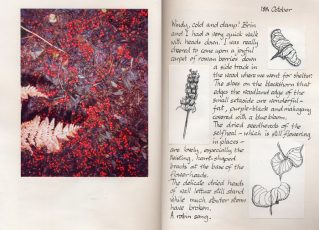
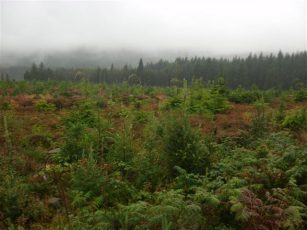
A site visit was held in pouring rain on Friday September 20th, during which it became clear that the proposed development would be well screened from view from any existing road. The down-slope situation being considered is already planted with trees, most of which are considerably taller than a 20ft chimney, and new trees planted between the road and the site will add a further visual barrier in time. Photographs taken are shown below.

However, a large section of the community remains adamant that no forestry timber should be used in this way, and the questions are wide-ranging. Rob Soutar and Andy Walker of Forest Enterprise attended a meeting of the Community Council energy group, which is trying to find a way towards an overall strategy for Arran’s future power supply, and they were very direct about the problems facing the Forestry. Thirty years ago, growing and exporting timber seemed a viable and straightforward business, but as Andy Walker wryly admitted, ‘We got it wrong.’ But nobody could have foreseen the vast increase in diesel costs that have now made harvesting and exporting timber from the island uneconomic. The Forestry needs a blueprint for the coming years, but there are problems on every side. A future for ‘recreational’ forestry of mixed conifer and broadleaf planting will demand much higher maintenance costs, and there is an obvious attraction in the idea of a local plant that can turn some of it into electrical power.

The question of atmospheric pollution remains a highly impassioned one. It could be pointed out that cottages burning logs in stoves or open fires have long been seen as ‘traditional’ and harmless. In olden days, every child who drew a picture of a house always put a chimney in the centre of its roof, with a scribble of smoke coming out of it. The wood-fuel industry, generally regarded as benevolent, has inherited this fact, but because it has never seemed alarming – and in truth, may not be – there is no disquiet.

New technologies are always partly in the land of the unknown, and can be frightening. Panic is damaging. We have no option but to do the best we can to understand the details of how any proposed plan will work. The current one nudges at the edge of the coming need for all communities to be more self-sufficient in energy production, and the response must be carefully considered. Taboos and terrors are not helpful. We are going to need a rational basis on which to base a tenable future.


National Poetry Day at Brodick Bar

This coming Thursday, October 4th, is National Poetry Day, and it will be celebrated in the Brodick Bar with a feast of poems. National Poetry Day has already had a curtain-raiser in the ebullient form of Jackie Kay, who left a packed audience in Brodick Hall excited by poetry as never before, but poetry on Arran has its own momentum, with a surprisingly large number of people reading, writing and discussing it.

On Thursday, local poets will be reading and the singing group, Vivace, will add spice to the entertainment. All poetry lovers are welcome to come along for a wildly mingled programme of fantastic poetry. If you would like to bring a poem to read and share, that will be welcomed  - though not more than 40 lines please! Experience has shown that there is always competition for ‘air time’.

The Arran Theatre and Arts Trust would like to thanks Ian McFadzean and the Brodick Bar for their generosity in hosting the evening.

see poster above


Isle of Arran Music Society

2012-13 season

Another scintillating season of concerts has been planned for the coming winter months.

The first is this month, in Brodick Hall at 7.30 pm on October 20th.
The Tim Kliphuis Trio (Tim Kliphuis, violin, Nigel Clark, guitar, Roy Percy, bass) fields two players already familiar to Arran audiences. Many will remember Roy Percy as a brilliant jazz exponent of the double bass, and Nigel Clark has played here several times in groups associated with the magical Lev Atlas and the Russian café. Tim Kliphuis himself, who comes from Holland, has made a startling impact on British music as a talented, intensely creative violinist. The trio he now works with is an astonishing group, moving easily from the classical repertoire to gypsy, jazz and Celtic traditional music. Their technical mastery is brilliant, and they demonstrate a vast range of musical genres.

The concert season continues until March. Here are the dates for your diary:

Arctic Winds

Saturday 17 November, 7.30 pm, Brodick Hall

Wind quintet (flute, oboe, clarinet, horn and bassoon)
Five top orchestral players, well known in concerts halls and on television, offer gems from the wind quintet repertoire, including tuneful pieces from Nielsen, Ibert and Danzi.

Sasha Volpov (cello)

Saturday 15 December 1.30pm, Brodick Hall
Sasha needs no introduction to Arran. A founder member of the legendary Rostov String Quartet, he has been coming to the island for many years. He is now world-renowned as a soloist and in constant international demand. His mastery of the cello is unsurpassed, and we are delighted to have secured a return visit

Cartha Trio (viola, clarinet and piano)

Saturday 19 January, 1.30pm, Lamlash Community Theatre

Prevented from coming to us last year by bad weather, this exceptional trio will play a varied programme, including a rare chance to hear Mozart’s Kegelstatt Trio. Please note, this concert will be in the Theatre so as to take advantage of the splendid Kawai piano.

Alba Brass (two trumpets, horn, trombone, tuba)

Saturday 16 February, Brodick Hall, 1.30pm

This highly enterprising group has a vast repertoire that demonstrates the history and virtuosity of brass instruments. They also commission new compositions, so their programme may well include surprises.

Kammerphilharmonie Europe (chamber orchestra of 10 musicians)

Sunday, 24 March, 3pm, Whiting Bay Hall
This large ensemble offers work by Vivaldi, Poncielli, Bach, Corelli, Faure and Grieg. A fantastic opportunity, not to be missed.

Tickets for all concerts £8 on the door (children free), from Inspirations of Arran, Brodick or online from www.arranevents.com

Meanwhile, the society urgently needs more people to take an interest in booking future concerts and giving a helping hand. If you can possibly manage it, please come to the
AGM on Tuesday October 2nd, in Brodick Library, 7.30 pm.  If this very lively society is to keep going, it will have to see a few more hands on deck.


A triumphant festival

The McLellan Arts Festival, begun in order to celebrate Robert McLellan, the writer and poet who lived and worked on Arran, has gone on to develop its own momentum as a feature of island life. This year’s festival was particularly successful, despite an economic state of things that makes such enterprises more challenging. It seemed charged with energy from the start, and a slightly dizzied look back at two weeks of almost constant events brings a mass of memories and images.

It opened with, almost literally, with a bang, when the brilliant Jackie Kay exploded onto the scene despite an almost nation-wide power cut that had the resourceful fixers from Arran Events backing up cables and mics with candles. Jackie is a performer who could hold her own in any venue as a stand-up entertainer, and was greeted with such enthusiasm that she remarked afterwards, ‘That’s the only time I’ve had an audience shouting for an encore!’ The following morning, she ran a well-structured, inspiring poetry workshop for a big group of writers and poets and left everyone newly excited and enthused. A ceilidh that night brought everyone together, listening in rapt silence to Tim Pomeroy’s skilled, moving songs and, after a great Corrie Hall supper, dancing to Scottish music and to the Jazz Café Band.

The McLellan plays that were staged in the run-up week, reviewed in our last issue, were beautifully staged and acted. One visitor from England was heard to say of the long poem,. Sweet Largie Bay, ‘I didn’t understand a word’ – but even she seemed moved. For those who found the run of the words more familiar, there was a rush of emotion as the life that has only so recently been left behind became real again, with all its heartbreaks, its beauty and its wry humour.

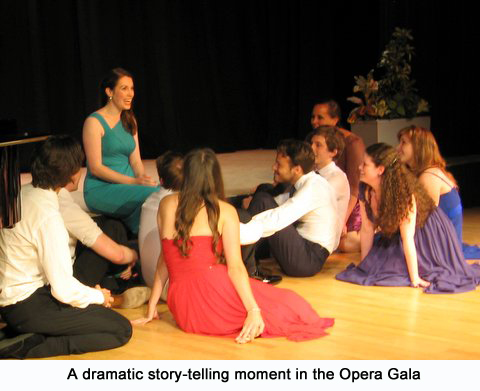
Something similar was evoked in Ed O’Donnelly’s two evenings of archive Arran film, beautifully put together and allowed to run in natural silence that allowed a packed audience each night to remember and dream. In absolute contrast, the talented students of the Royal Northern College of Music put on an Opera Gala that brimmed with glorious young voices and displayed the talent of those standing on the edge of future stardom. On the final night, students and local singers joined in a performance of the Haydn Creation.

Attendances at every event were excellent, even though financial constraints had forced the organisers to make a small charge for some that had previously been free. The McLellan Festival is clearly here to stay, and to grow from year to year.


Grans fight their way to Albania

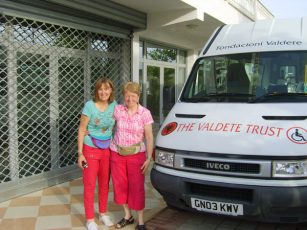
Sue Davidson, who with her husband Julian set up the Valdete Trust to help disabled young people in Albania, set off for Tirana last week in the minibus they have bought, towing a large box-trailer packed with wheelchairs and medical equipment. Sue’s friend, Pat Ferguson, went with her. Both of them grandmothers, they had worked together at Montrose House, often on night duty, so they were used to coping with emergencies, but the journey ahead of them turned out to demand all their stamina. Here is Sue’s letter from Tirana, after a 1700-mile drive that was not quite what they had expected.

Our overnight crossing from Hull was good, though the vibration of the engines disturbed our slumber. We arrived in Rotterdam somewhat jaded but Pat and I are used to sleep deprivation, so we carried on regardless. I have to say I didn’t really enjoy driving in the Rotterdam rush hour traffic with Pat trying to direct me  - it’s not easy to make sudden turns when you are 8 metres long. It was good to be on the road for Cologne.  A word of advice for European travellers, though - don’t leave the motorway for comfort breaks. It took us about an hour to find our way back onto the autobahn. From Cologne, we headed to Frankfurt, Regensburg and then Passau, our first night stop.

I’d booked a good hotel that had everything we needed, like free Wi-Fi and a place to park our bus and trailer, but we were very weary when we arrived there, after 11 pm that night. It had taken us longer than we thought but we were almost on the Austrian border so we knew we’d made a good start with 899 miles of our journey behind us.

We had a shock the next morning when we found our battery flat because, being so tired, we hadn’t closed the door properly so the inside light had been on overnight. This was not a problem as we had jump leads and only needed another car to start us up. None of the staff would let us use their car for this purpose, but they rang a few garages. One said they’d be there at 2pm, which was no good to us. This was only 10 am and we needed to be on our way. The engineer who turned up was very helpful, even escorting us to the autobahn. So off we went again, feeling quite euphoric as the weather just got hotter and hotter. Having a few days of constant sun was a novelty to us after a British summer.

Austria and Slovenia were beautiful, with good roads winding through mountains. We were heading for Opuzen, a town in Croatia not far north of Dubrovnik, and everything seemed fine. Until we reached the Croatian border. We were horrified to find that because of the physiotherapy equipment and disability aids we were carrying, we had to have transit papers, even though we told them it was humanitarian aid. We were directed to a block of mobile offices where five agencies were dealing with this documentation. They asked for a 2000 euro deposit and 200 euros for the transit papers. I don’t know why I asked if we’d get a receipt but when the answer was negative we realised this was in fact probably illegal. In countries where the government is corrupt, these things happen. The customs officer told us it was a private arrangement with the agent and unless we had this document he could not let us cross into Croatia. We seemed to have reached an impasse but I was determined not to abet corruption, so we went off back to the bus.

When I came back, the agent had changed his mind. He said he’d give us the necessary documents for 90 euros and we’d have a receipt for this amount. We weren’t exactly happy, but at least it was legal (probably). Having paid the fee we were soon on our way. The dispute had taken two and a half hours, so it was obvious we weren’t going to reach our destination that night. As it was getting dark we stayed in a motel near Zagreb and headed south in the morning.

Everything was going well until - guess what? Another border and another battle. The border authorities at Montenegro did not demand a bribe, but said we needed transit papers. This time the fee was 80 euros. Efficiency is not their forte, so this took two hours to deal with. We knew we only had about 180 miles left to reach our destination but it was getting late. Knowing what the roads are like near the border, I didn’t want to begin driving in Albania while tired and in darkness. We found a cheap motel that was clean and comfortable and felt quite happy, expecting to be in Tirana by about three the next afternoon. Little did we know!

The next morning brought a terrible storm. As we drove to the Albanian border, roads were inundated and fire engines were dealing with flooded houses. At times, water was cascading down from the hills like a river. In a car we might well have been stuck, but the large, heavy vehicle was an advantage. We needed cash to pay for a small ferry from Kotor. Sounds simple, but it wasn’t. Stranded vehicles had been left in the flooded square where the bank was and there seemed no way through. While Pat waded through 4 inches of water to the bank, I managed to turn the bus around with about an inch to spare. Traffic was chaotic because of the storm and it took us ages to get out of that town and onto the ferry. I’d told Pat to expect a lovely journey, but this time, it wasn’t.

As we neared the Albanian border, thunder was still rumbling, the sky was streaked with lightning and the rain was torrential, but it became hotter and hotter. We reached the border in  blue sky and sunshine, feeling quite pleased with ourselves for weathering all the storms and difficulties. The border guard asked what we were doing, and when we told him, he was delighted. They wanted us to weigh the bus, even though we had all our weights written down to show them, we complied - and were asked to pay just 2 euros. When we asked if that was all, the official seemed to understand. With a broad smile, he told us nothing else was needed.

Almost at the end of a long journey and no problem at the border - we were ecstatic!. But after about 10 miles when the police stopped us. ‘Dogane,’ he said. ‘Wait here’. We thought it was quite funny, being arrested after only half an hour in Albania, but 4½ hours later we were still there and less amused. Thankfully, I had an Albanian sim card so was able to phone friends to help us. Albanian conversations went on around us, most of which we didn’t understand, but at last they decided we could go report to the Dogane (customs) in Tirana the next day.

By this time it was dark and the storm from Montenegro had caught up with us. We drove to Tirana on terrible roads, trying to avoid potholes in the pouring rain, but at least the flashes of lightning improved visibility. Our Albanian friends were concerned about us and kept ringing to check our progress. It was a relief to everyone when we arrived at our apartment just after 11 pm.

We knew that unexpected things can happen on a journey like that, but it’s just as well we had no idea what we’d have to go through. I chose the right companion, who was stoic and good-humoured, always managing to find something in our mishaps that we could laugh at.
Would we do it again? Well, not this year! But this is not the end of the adventure, just the beginning. Watch out for the next episode!

 

Knotweed campaign in Whiting Bay?


Juliette Walsh suggests in a Facebook message that people might like to form a Japanese Knotweed working party to help eradicate the pest from ‘our beloved Whiting Bay’. Certainly the big weed with the hollow stems continues to wave its big leaves and bitty flowers around in countless places where it still has a stranglehold. As Juliette says, ‘It would be a case of lopping, digging and burning... how about a mid-week group?’ A grant from Earth Action is available for the purchase of loppers, but not until a recognised group is up and running. Look at the Whiting Bay Improvements Facebook page - or it that’s not you, send a message to info@voiceforarran.com and we will pass it on to Juliette. Gloves on, sleeves rolled up!


Co-op Election Result

Bill Roberts sends us the following announcement:

 I would wish to thank all those Islanders who voted for me in the SW Scotland Area Election.  Unfortunately, I was not re-elected so Arran will not have a representative on the Committee for at least 12 months.  I shall try again next year. 

Commiserations to Bill, who has done so much to serve Arran’s interests on the Co-op area committee.


Are the chips down for cod?

A new study reveals there are just 100 adult cod in the North Sea. These fish live for 25 years and grow to 6 feet long if they escape being caught. That’s almost two metres, if you think in those terms. And – this is the point – they don’t become sexually mature until they are four years old. Even then, the most successful breeding is among fish that are older than that.

An analysis carried out by Defra’s fisheries laboratory, the Centre for Environment, Fisheries and Aquaculture Science (Cefas) of around 500,000 fish in England and Wales makes alarming reading. The survey found 191 million one-year-old cod – baby fish, in other words – but hardly any of them survive into adulthood. Callum Roberts, professor of marine biology at York University, blamed industrial fishing for the fact that so few cod live to the breeding age of four years old.

Larger specimens are almost unknown. There are fewer than 100 adult cod in the North Sea now. Last year a study of sea ports across Europe revealed that fishermen did not catch a single cod over the age of 13. As Professor Roberts pointed out to the Sunday Times: 'This means that there are fewer eggs and larvae to perpetuate future generations.'

Scientists want this year's quota of 32,000 tons reduced in 2013 to 25,600 tons, in order to give cod a chance to grow to breeding age. Barrie Deas, chief executive of the National Federation of Fishermen’s Organisations, admitted that: ‘The most effective measure in rebuilding fish stocks seems to be removing vessels from service.’ Owners would have to be paid to decommission them.

Here’s the link if you want to read more:

http://www.dailymail.co.uk/news/article-2204091/Scientists-fear-cod-stocks-study-reveals-100-adult-fish-North-Sea.html#ixzz26uOSbmwO


Team Hedley runs for the Marie Curie Hospice

Many Arran people will have fond memories of Morven Hedley, who took such a lively part in the island’s theatrical life. A founder member of the Whiting Bay Drama Club, her career was cut short by cancer, and she spent her last months in the Glasgow Marie Curie Hospice, being cared for by wonderful nurses who Morven called her ‘angels’.

Her son David, himself a notable performer and singer, has embarked this year on a series of events to raise valuable funds for the Marie Curie Hospice in Glasgow. In May he ran the gruelling Whole Hog Challenge, a gruelling 7 mile cross country run with military endurance-style obstacles to be surmounted, and this month, on October 7th, he will be participating in a punishing 78 mile road cycle event in the Etape Pennines. Riders will be expected to tackle 5,407ft of

David has clocked up over 500 miles in training, and even his 5 year old son, Euan has been doing sponsored cycle ridess to help raise money for the nurses who cared for his Nana.
Team Hedley, as the pair call themselves, would be delighted if you would like to sponsor their efforts and help raise much needed funds for a charity that is very close to many of our hearts. It’s easy to do – just click on this address.
www.justgiving.com/teamhedley


Warmest wedding wishes to Anne and John!

Anne Adams and our Marine Editor, John Kinsman, are to be married early in October, in St Monans, Fife, where they both live. We send them our warmest congratulations – and of course look forward to more recipes and news of all things connected with the sea.


The Hedgehog at Corrie Film Club

The eponymous hedgehog of this 2009 French film, directed by Mona Achache, is a prickly concierge who lurks in her quarters under an expensive block of flats. It was taken from the best-selling novel called The Elegance of the Hedgehog, by Muriel Barbery, and will be shown at Corrie and Sannox Hall on Sunday 14th October, starting at 8.00 pm.

Renée Michel, the grumpy concierge, played by Josiane Balasko, has more intelligence and sensitivity than anyone thinks, but nobody realises it until the arrival of a new tenant called  Kakuro Ozu, a wealthy Japanese widower. The only person who takes the slightest interest is 11 year old Paloma, who carries a camera wherever she goes and regards her parents as so terminally boring that she contemplates suicide on her 12th birthday. Despite being essentially a spoilt brat, Paloma has the same watchful eye on her surroundings as the goldfish that circles its bowl, and the film develops a high degree of wit and charm.

This showing, which begins at 8.00 pm, is the first in the Film Club’s new series of films, each one to be shown in Corrie Hall on the second Sunday of the month. Membership of the society brings you a handsome 3-fold programme of the year’s offering, and the modest annual contribution of £15 helps to pay for the purchase of the DVDs, which are then made available to members for personal borrowing to watch at home. Visitors who are not members are equally welcome, however. Admission is free, though a small contribution towards the running expenses of the hall are always welcomed.

www.arranart.com/corriefilmclub.html


Film at Brodick Castle

Following the success of the last two years, the McLellan Festival Youth Project is now focussing on film-making. Eighteen young people aged 15 -17 with an interest in acting, film technology, writing and directing are meeting at Brodick Castle every Tuesday until the end of November to learn the skills of plotting, screenplay-writing, storyboarding, acting, camera work, sound and editing. It will result in the production of an original fifteen- minute film, entirely the group’s own work, set in Brodick Castle as a location.

 Voice for Arran readers may remember the previous successful stage performances of Just a Hoodie and Pot Noodle at the High School, and the same talent and enthusiasm is going into the film project. As always, the McLellan Youth Project aims to give young people a free rein with their ideas, and the organisers and background tutors (Sarah Cook, Heather Gough and Ed O’Donnelly) are again amazed at the rich seam of creativity, expertise and talent displayed by the students. The commitment of the young people is engaging, and they are already a strong team with convincing ideas about the fictional film being created. It will have a period setting and will deal with some powerful ideas about forbidden love and the strictures of conventional society.

Moredetail aboutthe project will be released in the Voice over the next two months, including photographs of how work is progressing – without, of course, giving too much away! The project organisers are extremely grateful for practical support from the National Trust and funding from North Ayrshire, without which this valuable creative project would not have been possible.


Community Council re-elected

At its first meeting of the administrative year last Tuesday, the Arran Community Council remained unchanged, with John Inglis in the Chair and Bill Calderwood as Secretary. Jim Henderson, Vice Chair, takes over from Harry Davidson as Treasurer
 

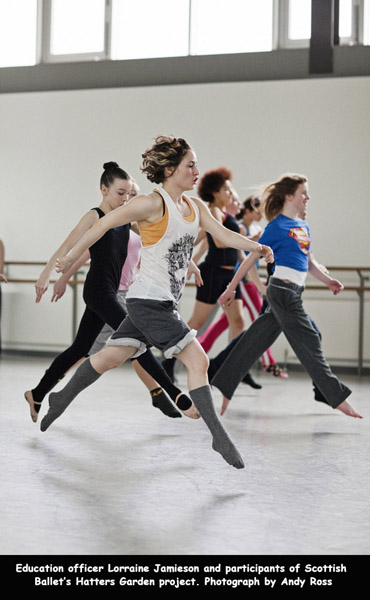
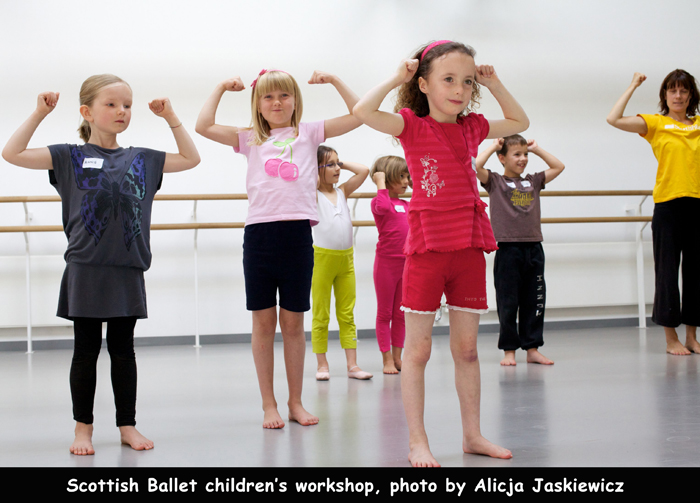
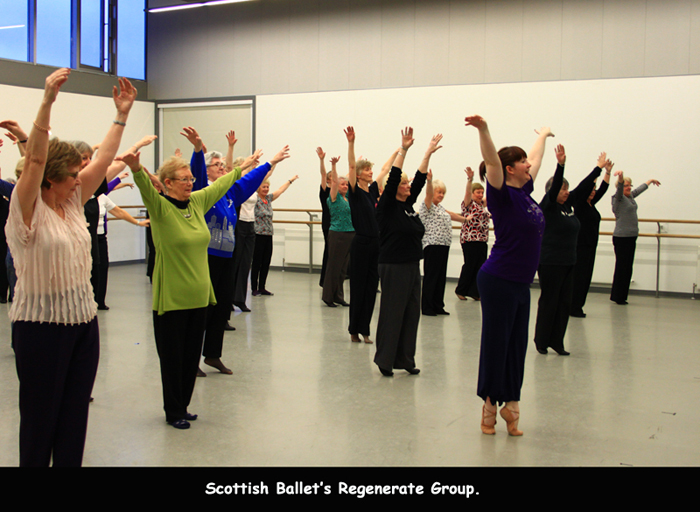
Scottish Ballet on Arran

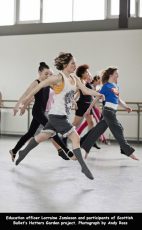
Dancers, musicians and tutors from Scottish Ballet will be on Arran from Friday 2nd to Monday 5th November with a wide range of workshops called Find Your Feet. Sessions will be held in every village – and they are not just for the young and mobile! The whole idea is to include everyone – small children, elderly people and those who work at everything from child care to truck driving, in hotels, shops, offices, workshops or on a computer at home. Footballers and other sports people will benefit from increased power and flexibility. Find Your Feet is designed to help everyone gain strength, balance and ease of movement. It will iron the aches out of stiff shoulders or a sore back, and open up the sheer pleasure of feeling able to move freely and with purpose.

There is no charge for any of the workshops – they are all completely free, as Find your Feet is paid for by Creative Scotland’s First in a Lifetime fund. The workshops will be held in seven communities across Scotland: Arran, Islay, Mull, Greenock, Perth, Fort William and Dumfries and Galloway. They will cover a wide range of interest, some of them concentrating on creative dance, others looking at music, costume or design. They cater equally happily for people who have never dreamed of dancing and those who are already working in that world. Classes in ballet technique will be available for those who want to expand their abilities, but no experience is needed. Complete newcomers to the idea of dance will be warmly welcomed.

Each event will involve collaboration with schools, nurseries and local organisations. Nobody will be left out. There will be fun Armchair Ballet events for residents of Montrose House and Cooriedoon Nursing Home. For those yearning to watch good dancing as well as take a hand (or foot) in it, on the Friday third year students from the Royal Conservatoire of Scotland’s Modern Ballet course will give a free performance of a dance piece called First Encounter. This dynamic new work, created by the Conservatoire in association with Scottish Ballet, is a by exciting young choreographer Chris Marney, now making a big name for himself in the dance world.

Catherine Cassidy, Scottish Ballet’s Associate Director of Education, is delighted by the prospect of coming to Arrann and says she is excited by ‘the energy and feedback we’ve received before we’ve even arrived!’ When the workshops end, there are further possibilities. The project can offer 50 funded places for local dance teachers from across Scotland to spend two days at Scottish Ballet headquarters. There, they can participate in workshops, watch professional dancers working and benefit from additional training that they will be able to bring back to their communities.

click pictures for more information.

Watch out for posters that will give all details – and meanwhile, here is a preview of the programme.


Arran’s busy MP

Katy Clark MP issues constant bulletins about what she is doing, and this month she has been dealing with a particularly hectic range of subjects.

The question of whether CalMac will continue to provide ferry services or be replaced by private operators is of course in the hands of the Scottish Government, but Katy welcomed the decision to extend CalMac’s Clyde and Hebridean ferry contact for three years. The promise that routes shall be tendered as a single service in the autumn of 2014 was equally welcome. However, Katy pointed out that ‘these lifeline services provide a vital service to those living on the Clyde islands and are far too important to be simply harvested off and sold to the highest private sector bidder.’ She added, ‘It would be completely unacceptable if the Scottish Government have simply kicked this issue into the long-grass so that an unpopular decision can be taken after the Independence Referendum has taken place.’

Of more immediate concern is the plight of people who, while themselves elderly, are caring for a dependent relative. Scandalously, the carers allowance is withdrawn once a carer becomes eligible for the state pension, although they may face high costs for heating and electricity if nursing a bed-bound person. Research estimates that there around 2.8 million carers over the age of 50 in the United Kingdom. Because of the responsibility they take on, their ability to build up a private pension is often limited, and many of them face their own years of old age with scant funds while they continue to support someone even more dependent or suffering from a disability. Katy Clark has tabled an Early Day Motion in Parliament calling for carers’ allowance to be paid to pensioners, and says, ‘I am urging the Government to amend this poor state of affairs at the earliest opportunity.’

Katy Clark is equally concerned about the private company ATOS Healthcare and the basis on which it decides whether is eligible for Employment and Support Allowance (ESA). Speaking in the House recently, she said, ‘For a number of years many constituents have been in touch with my office raising concerns about Atos and the way in which they conduct the work capability assessment. I have experienced many cases where constituents have got in touch with very credible claims but have had to fight hard to become entitled ESA. A large number initially had their claim rejected but got it overturned through the appeals process.’ (Though not without much stress and anxiety.) Katy pointed out that organisations such as Mind and professional bodies like the British Medical Association are taking the view that the process is fundamentally flawed.


Mistaken dash for gas

The new Green Party leader, Natalie Bennett, warns that George Osborne’s plans to burn more gas will cost £23bn per year more than the current system. An open letter to the government from its own independent advisory body, the Committee on Climate Change (led by Conservative Peer Lord Deben), criticised the Government’s: ‘ambivalent position... about whether it is trying to build a low-carbon or a gas-based power system. The letter featured evidence from energy research consultants Redpoint Energy which showed that gas burning would be a far more expensive option, and warned, ‘Plans which would increase energy bills would force people to choose between buying food and paying to heat their homes properly.’
Redpoint suggests Mr Osborne’s model would produce 90g more carbon dioxide per kilowatt hour of energy than the decarbonised alternative of using sustainable sources. It will force the UK to break laws set by its own Climate Change Act, requiring carbon emissions to be cut by 80 per cent by 2050. Redpoint’s research says this can be achieved if the system is decarbonised, but is impossible if energy production relies on more gas burning. Turning to sustainable energy sources, on the other hand, would save the UK £1.3bn per year.
Natalie Bennett described the Chancellor’s gas proposal as ‘Utterly wrong.’


Angus Smith writes on wood fuels

The Scottish Government renewables target of 11% of home heating in Scotland by 2020 is to be assisted by the Renewable Heat Incentive (RHI). For those who are not familiar with this Government-backed financial assistance scheme, it is a funding base which will offer guaranteed annual cash payments to householders who embrace renewable heating systems in their homes. In effect, the annual payments will fund the wood fuel required to run the system, providing the installation is carried out by an approved installer, such as Arran Energy Ltd.
The recent announcement of the proposed tariffs should be regarded as a positive step, though there will be many who would like to see more detail. The DECC's latest energy statistics highlight a 5.5% rise in electricity prices on last year’s costs. For gas the figure is a shocking 13%. There can be no doubt that conventional forms of energy are bleeding the consumer dry. Oil is set to increase even more drastically, and current advice to heating oil users is to stock up on oil now before the harsh prices really start to kick in. It is obvious that there is room for an alternative.
I admit to a personal interest here, since I am associated with Arran Woodfuels & Arran Energy, which has an advertisement in this October edition of the Voice. But in terms of common sense, the fact is that for householders on Arran in particular, there are advantages to be gained by using locally grown wood as your heating fuel – particularly as signing-up for RHI cash back payments will almost completely fund the cost of the fuel over the years to come.
With many Arran households feeling the financial pinch as they switch their central heating on, energy and money-saving measures have never been so important. Now is the time to look into the advantages of heating your home with local Arran wood, at less cost than any other fuel, whilst also doing your bit to achieve the Governments targets.
More details SEE THE POSTERS ABOVE


RECIPE OF THE MONTH

Bread and Butter Pudding

a traditional winter warmer from Anne Adams

Ingredients

50g/2oz soft butter
12 slices of soft white bread, cut diagonally across
50g/2oz raisins/sultanas
¼ tsp freshly grated nutmeg
¼ tsp cinnamon
350ml/ 12fl oz milk
50ml/ 2fl oz double cream
2 large free range eggs
25g/1oz white sugar
1 tsp vanilla extract or paste.

Method

Heat oven to 355°f/180°C/Gas4.
Grease a 2 pint/1 litre pie dish with a little of the butter. Spread each of the bread triangles with butter.
Cover the base of the pie dish with overlapping triangles of bread, butter side up. Sprinkle half the golden raisins/ sultanas evenly over the bread, then lightly sprinkle with a little nutmeg and cinnamon. Repeat this layer one more time or until the dish is filled, finishing with the raisins on top.
In a saucepan gently heat the milk and cream- DO NOT BOIL.
In a large baking bowl beat the eggs with most of the sugar and vanilla extract until light and airy and pale in colour. Pour the warm milk over the eggs and continue beating until all milk is added.
Pour the egg mixture slowly and evenly over the bread. Gently press the surface to ensure that every piece of bread is in the liquid. Sprinkle the remaining sugar over the surface then set aside for 30mins for the bread to absorb the egg and milk mixture.
Bake the pudding for 40-45 mins, until the surface is golden brown and the eggs well risen and set. Serve hot.


Curried Carrot Soup (Vegetarian)

from Chris Attkins of Arran on a Plate in Brodick, who says a big pot of this had sold out within an hour on a blustery day last week.

As the days get shorter and the temperature plummets, here's a warming soup that you can rustle up in no time.

Peel and chop a bunch of carrots, a couple of parsnips and a small swede.
Chop an onion and fry in a large pan.
Add a generous desert spoon of curry powder to your pan and continue to cook for a minute or two.
Chuck the chopped vegetables in the pan and cover with vegetable stock.
Bring to the boil, then simmer until the vegetables have softened. Remove from heat.
If you have a blitzer or blender, purée the mixture, otherwise work it through a sieve (then you'll add a blitzer to your wish list for Santa!).
Pour half a pint of cream into the soup and taste. Depending on your stock you may need to add salt and a little sugar will bring out the full flavour of the root vegetables.
Reheat to order and serve with freshly baked crusty bread and lashings of butter in front of a roaring fire.


A great launch for the Hamilton String Quartet

On the last day of September, the Community Theatre in Lamlash was packed with an eager audience, waiting to hear the first-ever performance of Diana Hamilton’s String Quartet. The professional Eumelia Ensemble – Angus Anderson, violin, John Harrington, viola and Sarah Harrington, cello – were joined by an equally talented cellist, Jan Anderson for Diana’s String Quartet, because it is scored for the unusual combination of violin, viola and two cellos.

Angus and John provided a nimble curtain-raiser with the Handel Passacaglia, essentially a lively series of variations, and then were joined by their cellist for a shorter piece written by Diana called Sea-Drift, which was full of atmosphere and movement. The five string players then moved into the main item of the evening – the new quartet.

The warm overall timbre of the two cellos was attractive, and throughout, interesting rhythms set the mood of each movement. Changing time signatures kept the listeners actively intrigued and fascinated. The growing enthusiasm came to a head as the third movement opened with an exotic tango that morphed into an equally seductive quasi-waltz. While being quite complex in its structure, the Quartet was easy and attractive to listen to, and was demonstrated in abundance the all-too-rare quality of ‘catchiness.’ This new work may well find its way onto the standard concert repertoire. The only question now to be asked is, ‘What is the phenomenally talented Diana Hamilton going to do next?’

Further delights were in store as Aileen Wright and John Cruikshank brought their expertise as singers to the programme. Both of them have glorious voices, but in addition, they both sing to an audience as if telling them something and unveiling a delightful story. The final item on the programme was the Piano Quartet in A minor, op.1 by Josef Suk. Here, Diana joined the Eumelia Ensemble as pianist. The empathy between them was miraculous as they watched each other carefully, perfectly matched in every shift of speed and subtle variation of meaning. The Suk is a beautiful piece, full of passion and meaning, and every listener was riveted – but as people drifted out afterwards, full of thrilled conversation, the main topic remained Diana Hamilton. As performer, accompanist, tutor and composer, she is amazing.