McLellan round-up
As the frantic fortnight of the annual McLellan Festival starts to fade, a state of wonder remains that a small island can put on such a packed, high-quality fandango of talent.
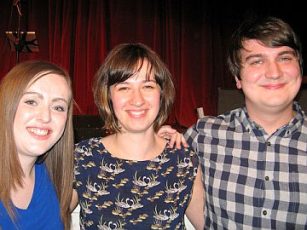
On the Friday night, Peter and Ann Sansom, both of whom are extensively published poets, awarded the prizes for the poetry competition. Almost all the winners were present and turned out to be delightful people, and one couple were so smitten with Arran that they decided to come and live here! Peter and Ann ran highly stimulating poetry workshop the next day that proved them to be wonderfully able tutors. They offered a constant succession of intriguing start-points and their shrewd editorial skills showed exactly why their magazine, The North, has run so long and so successfully. Anyone doing a kick-self for missing the workshop can access a mass of practical advice (and a lot of very good poems) in Peter’s cheerful, practical handbook simply called Writing Poems. Bloodaxe Books, ISBN 978-1-85224-204-6, £9.95. Rattling good value.
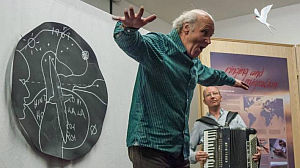
That same evening saw one of Corrie Hall’s legendary ceilidhs in full swing, with an abundance of food, music and dancing (some of which was notably individual.) A piper played for the Dashing White Sergeant and other old favourites, and Tim Pomeroy gave moving performances of songs to his own guitar accompaniment, producing an attentive hush – soon dispelled by the Jazz Café Band. A very good time was had by all.
The graduate students from the Royal Northern College of Music have become a traditional highlight of the Festival, and a packed audience at the Opera Gala night was once again thrilled to hear the soaring voices of these budding opera stars. Although young, each one presented a highly professional performance, lovely to look at, smoothly rehearsed and utterly confident. An additional benefit, very exciting for local singers, was the chance to work with the students and their inspirational conductor, Alec Crowe, in rehearsals and performance of Mendelssohn’s Elijah. It’s an electrifying piece, written with the full passion of a young composer, but it is complex. Alec, whose enchanting smile is coupled with a professional edge of menace, conveyed the demands of the music with absolute clarity, and the result was startling. John Bruce sends the stimulating and highly original review that follows.
ELIJAH – PROPHET OF FIRE
This was no ‘relaxing’ evening for Sunday night music lovers who ventured out to the AHS theatre to see and hear Mendelssohn’s oratorio Elijah. What we witnessed and heard that evening was vocalised drama on the grand scale: yay, of biblical proportions, ha!
Felix Mendelssohn’s oratorio in 2 parts dates from 1846 but has a back script worthy of a Cecil B. De Mille epic. Steeped in the early Bible narrative, we experienced the clash of cultures, ideas and beliefs, where ‘primeval’ forces are called upon to shape the destiny of peoples forging a nation. Suffering and challenge, drought and famine, lightning bolts and thunderstorms, slaughter and carnage, raising the dead, dismay and despair, and a final apotheosis by whirlwind (sometimes a chariot of fire). No, definitely not ‘relaxing’.
Maestro Alex Crowe marshalled his forces wisely and well, as he always does. Again this year, he had the marvellously talented music students from The Royal Northern College, Manchester blending with the combined might of the McLellan Festival Chorus. His superb pianists were Dan Browell and Ewan Gifford.
The acclaimed Irish baritone Gavan Ring, who possesses a singing voice akin to rich dark mahogany, took on the being of a powerful Elijah, the stern Old Testament prophet of the Hebrew god Jehovah. His role and power are declared in a first majestic curse on the entire nation: “As God the Lord of Israel liveth, before whom I stand: there shall not be dew nor rain these years, but according to my word.” Strong stuff. From then on, the plot follows the standard Biblical tale. Prophets always challenge kings who are seduced by pleasure, power and greed, so King Ahab is easily manipulated by scheming, beautiful Jezebel to allow the worship of the foreign god Baal. Prophets test their kings after a disheartened period of wandering in the wilderness, conversing with their God, and Elijah, too, does this.
The plot may be far from unique but Mendelssohn’s music is of a different stature. This is music of sustained power and virtuosity - a wonderful meld of solo voice and chorus. I have my own favourites. From part one, “If with all your hearts ye truly seek Me,” is a fine tenor aria sung by a soaring young voice, and the powerful and repetitive “Call him louder…” surely has echoes of Beethoven’s Choral Symphony? This is followed by Elijah’s wonderful strong and stirring aria, “Lord God of Abraham” and the command to slay the false prophets. The message is clear. This is an angry God whose word is “like a hammer that breaketh the rock,” and the alto aria that follows, “Woe unto them who forsake Him” hammers the message home.
From part 2, the plaintive and singularly beautiful aria, “Hear ye, Israel” for soprano voice would thaw the coldest heart. Brava! The rousing chorus of “Woe to him” again, for me, hints at Beethoven, then comes the despairing Elijah’s “It is enough,” a heart-wrenching plea to have done with it all. In sharp contrast, “Lift thine eyes” and “O rest in the Lord” are equally, and assuredly, angelic!
There is a penultimate little gem for a quartet of voices, “O come everyone that thirsteth” which is a virtual paean to peace, then the rousing chorus finale suggests that the Hebrew Jehovah is transformed from an angry and jealous god and can demonstrate a softer and forgiving nature, having succeeded in securing an absolute supremacy in the eyes of his people. Amen.
For me this was an extraordinary and memorable performance of focused power, controlled passion and intelligence by a very talented group of young singers and musicians, ably supported by our own considerable island chorus. Special praise to wee Ossian Gold who never ceases to amaze on the big stage.
Bravissimo.