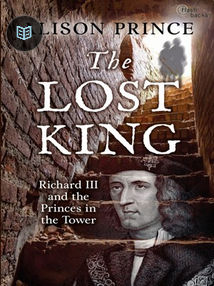
Richard III: A revisionist view
Alison Prince, as readers will know, is a woman of many parts. One of her latest ventures is an historical novel, The Lost King, aimed at young people about Richard III, that most maligned King of England, made notorious by Shakespeare, Josephine Tey and others in much higher places, as the murderer of his nephews, Edward V and Richard, Duke of York, the princes in the tower.
Controversy has raged for centuries amongst academics over Richard’s reputation and his involvement in the death of the young princes but general public opinion, for the most part, has stubbornly found him guilty. This is understandable, given that most people’s knowledge of the hapless monarch derives from Shakespeare’s eponymous play in which he is described as Richard Crookback. The discovery of his body last year does indicate a curvature of the spine, but in true Elizabethan style, his physical deformity became a metaphor for his personality and morality, thus demonising him as a ruthless, power- seeking, murderous monster in the eyes of succeeding generations. We cannot blame Shakespeare for that. The ‘historical’ sources available to him were dictated by his paymasters, whom he had to please. Henry Tudor, the triumphant final winner of the Wars of the Roses at the Battle of Bosworth, led Shakespeare to portray a version of history perpetuated by the victors. The new King Henry VII was desperate to consolidate his claim to the throne by destroying the reputation of Richard III and his Plantagenet lineage
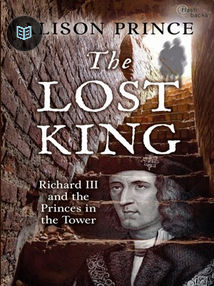 So, how refreshing it is to read a piece which makes a convincing case for Richard’s innocence and is utterly accessible, a great virtue given the incredibly complex era of the Wars of the Roses which formed the background to the life of Richard Plantagenet, of the house of York.
Alison uses a charming device to tell her tale – a young girl, Lisa, employed to be a companion of the young Prince Edward, heir to the throne, at Ludlow Castle where the young prince was living, safe from intrigue in London and visited often by his kindly Uncle Richard. As the story unfolds, Lisa becomes more and more involved with Prince Edward and his brother and more and more convinced of the kindness and moral strength of Richard III. Using contemporary sources, those written after the end of the Tudor dynasty when dissenters to the Tudor view dared to raise their voices and twentieth century research, Alison presents a compelling and logical case, not only for Richard’s innocence but for his worth as a king in brutal times. And all so readable and engaging! If you are interested in history and in how history can be distorted, this is a worthwhile read – and not only for young people.