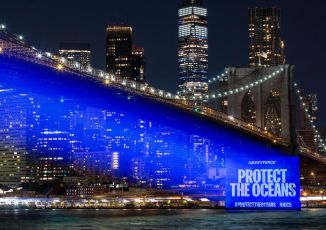
Survival of our Oceans
A VERY PERSONAL VIEW – WITH ACKNOWLEDGEMENT TO GREENPEACE
26 June 2024 was the 40th anniversary of the legislation being passed to repeal the three-mile limit in Scottish Inshore waters. The decisions finalised on this date profoundly changed the dynamics of Scotland’s coastal and fishing communities. ‘Our Seas’ released a blog post (www.ourseas.scot) which looks at the Cameron Report which was instrumental in this decision, as well as posted the report in full on their website. This is really important as many people have not had sight of this report before and it includes some striking historical accounts from small scale fishers who fought against removing the inshore limit. Open Seas writes: “Forty years ago today, decisions in Westminster profoundly changed the dynamics of Scotland’s coastal and fishing communities. At the stroke of a pen, Ministers passed legislation which removed a ban on bottom-trawling that had been in place for nearly 100 years. It has been described as one of the most disastrous decisions ever made in the history of our UK fisheries. The decision opened up inshore waters to more industrial and intensive fishing methods and in the longer term had a devastating impact on many inshore fishermen who previously relied on nearshore fishing grounds. Historical records now show that this decision was the result of lobbying by larger commercial trawlers and a Westminster government that failed to protect and respect the socio-economic value of traditional inshore fishing that had supported coastal and crofting communities for decades”.
All those years ago, power was exercised by the few, against the wishes of local communities. Similar communities around the globe are today facing equally fraught times from powerful exploiters. Where is the voice for these communities, and indeed for the oceans around the world?
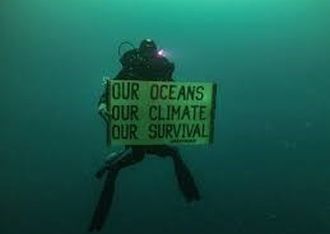
We are all drowning in Election News at present which has made for a fraught-few-weeks. Everyone is obsessed by different strands of the debate, from health, poverty, education, housing, planning, river pollution, the arts and poll data! Sadly, environment, climate change and the Global Ocean Treaty have made scant, if any debates or headlines. One exception on our oceans has been the new BBC2 series Putin v Greenpeace (now on BBC iplayer) which goes behind the scenes of one of Greenpeace’s boldest missions and courage to prevent drilling for oil in the Arctic. In 2013, Russia was about to extract the world’s first offshore Arctic oil. A Greenpeace ship set sail, hoping to discourage an Arctic oil rush. Russian security services had been monitoring their activities and word came from the very top: no one would dare get in the way of Russia’s plans for oil; thirty of Greenpeace’s activists ended up locked in Russian prison cells, facing the threat of a 15-year sentence. Known as the Arctic 30, their story sparked a global outcry and many in the NGO community not in jail worked night and day to free them, while continuing to call out big oil companies for their exploitation. This showed up the consequences of Russian law enforcement and pugnaciousness, and the world of politics and international politics and power, which raised the whole issue of drilling in pristine marine environments. Prirazlomnaya was the first to commence offshore oil production in the Arctic, at huge risk to the fragile Arctic ecosystem.
Greenpeace’s objective was clear: to draw global attention to the environmental dangers of drilling in the Arctic and to peacefully protest against Gazprom’s operations. “As the climate crisis accelerates, and big oil and gas companies are fighting harder than ever to continue with business as usual – including suing Greenpeace – we are all more determined than ever to expose their greed, stop any more drilling, and fight for a liveable planet”.
But there are some good news stories as research into oceans gathers strength, communities fighting to save their inshore waters, with success that we need to highlight. Olive Heffernan, journalist, marine scientist has published The High Seas (May 2024) which may well be judged and praised for its focus on the Oceans in the similar way to that which Rachel Carson was praised in the mid 1960s for Silent Spring which did the same for land environments and pesticide pollution. The ocean covers seventy per cent of the surface of our planet, and two thirds of this lie beyond national borders. Owned by all nations and no nation simultaneously, these waters are home to some of the richest and most biodiverse environments on the planet. But they are also home to exploitation on a scale that few of us can imagine.
Industry and economic progress rule and lax enforcement and apathy are the status quo. Out of sight and often out of mind, a battle rages to control, profit from, protect, or obliterate the world’s largest, wildest commons. Politicians have allowed economic gain to be prioritised over sustainability. Olive Heffernan sets us on a sail, a journey to uncover the truth behind deeply exploitative fishing practices, investigate the potentially devastating impact of deep-sea mining, and hold to task the Silicon-Valley interventionists whose solutions to climate change are often wildly optimistic, radically irresponsible or both. The result is a forceful and deeply researched manifesto calling for the protection and preservation of this final frontier – the last vestiges of wilderness on Earth. Both books ‘Silent Spring’ and ‘The High Seas’ should be obligatory reading and discussion for all MPs, and senior Civil Servants who will be making policies for land and sea in the next UK Parliament. It also provides a real opportunity for us all to join in the debate on our global commons and the need for a Global Treaty for 30%protection by 2030. I say come on UK, sign the treaty into UK law by the end of 2024 !
Beyond National Borders is >200 nautical miles from shore; 95% are the global commons. As we use up land resources saving the blue frontier is critical, a critical moment in history as exploitation rises. For example, fishing is now a huge business; large vessels, long trips, with huge resources, fewer rules and enforcement, slave labour as crew, and overfishing of the resource, resulting in $50Bn per year in unpaid taxes. 20% is illegal activity with trackers turned off. Much of the rest of the fishing vessel fleet is not illegal but still exploiting resources, having to go further as catches diminish, and coastal communities suffer. But ecosystems are suffering too, and there is an example around Elephant Island, which the author Olive Heffernan visited with Greenpeace. The island was the desolate refuge of the British explorer Ernest Shackleton and his crew in 1916 following the loss of their ship Endurance in the pack ice of the Weddell Sea; the crew being marooned there for 128 days before rescue. It was a base for sealers and whalers. This is an ice-covered, mountainous island off the coast of Antarctica in the outer reaches of the South Shetland Islands, in the Southern Ocean. The island is situated 245 kilometres (152 miles) north-northeast of the tip of the Antarctic Peninsula, 1,253 kilometres (779 miles) west-southwest of South Georgia, 935 kilometres (581 miles) south of the Falkland Islands, and 885 kilometres (550 miles) southeast of Cape Horn. It is within the Antarctic claims of Argentina, Chile and the United Kingdom. These are very rich waters, especially for krill, in theory “paper” protected, certified etc, but the reality is not so. Krill, a species of shrimp, provides the base of the important food chain for seals, penguins and whales and is a source of omega-3 fatty acids and astaxanthin, also prized for fish meal and “natural medicines” including omega 3 oil. 
With only 1% of high seas protected from fisheries there is also a free pass to dump, for example space waste in these deep waters (Heffernan chapter 9 Deep Trouble). We are also told about the Pacific Garbage Patch, a circular current movement or gyre accumulating floating plastics. As the big fish dwindle in numbers, so the small fish are being exploited, often used in aquaculture feed, for salmon aquaculture and also land based agriculture, such as chicken and pig intensive industrial farms for example. There needs to be transparency of ocean surveillance. Similarly, the genetic resources of the High Seas belong to the whole world, not just the money exploiters.
Hope for the Future
Cabo Pulmo is home to Baja’s most pristine coral reef. The Cabo Pulmo National Park is teeming with marine life.
There is hope here. We all need examples about how things can change. There is this story: Judith Castro, based in Mexico, is protecting the Ocean and her family history explains how families and populations can land up moving to cities when the oceans no longer provide the resources for them to survive. Ecosystem Regeneration is a slow process as her family have been trying for over 30 years to protect Cabo Pulmo, a Mexican Ranch, with the extensive offshore reef in pristine waters in Baja California.


Photos: Cabo Pulmo National Park
From 1910 pearl fishing was the first fishery off the reef, until this gradually diminished and commercial fishing took its place with the second generation (her father). Abundant fishing, not prohibited and they ate turtles every day. Little by little the fish disappeared and whilst the 3rd generation were still fishing there were smaller and smaller catches and the boats had to travel further and further to catch them. The University of La Paz worked with the fishermen, and they learned a lot about inshore waters and Mario, Judith’s brother, brought divers and turned his attention to conservation, “saving the turtles”. Lots of meetings were convened with locals between 1991-1994 and their reactions to a Marine Park suggestion weighed up in terms of benefit. In 1995 Cabo Pulmo Parque Nacional was formed and efforts continued to secure biodiversity through formation of a local civil organisation. After 29 years of protection the reef has improved shoals of fish and turtles have returned and fishing is back. The community feels so proud and happy. Now tourists are coming, there are more whales, sharks are back too. The community is taking care of the ocean! A real sense of pride in their success. The secret is INVOLVE THE COMMUNITY FROM THE BEGINNING. Now, the added pressure of coastal development has arrived and the need to protect against overdevelopment. Cabo Cortes- Baja Bay Club has been built. The importance of sharing success and finances staying in the community were discussed. Women in Cabo Pulmo have bungalows and run their own businesses, gift shops and fishing boats and have become tourism providers. The community, Greenpeace and United Nations working together with researchers, and politicians over time. The community has economic alternatives and new skills whereas before they only knew fishing. This applies to so many coastal communities around the world.
This is a tale of success in the longer term. But we hear now of coastal fishing communities in NW and W Africa (The Gambia, Senegal, Mauritania, Western Sahara and Morocco) setting off in small boats for the Canary Islands, looking for a better life employment as they have lost their fish on which they depended, and other opportunities are few. Illegal fishing close to shore by international boats with power and money has decimated local communities’ livelihoods. The international community must pay attention to better ocean protection, put treaties and compliance in place, involve local communities in their plan for recovery and we also need to accept the reason why people risk their lives to find work across the oceans. Your cheap chicken for Sunday roast, or farmed salmon fillets cheaper than mince are in part to blame.
So, what is Ocean Justice?
Examples:
1. Chana Thailand
Greenpeace Project lead in Thailand, Nichanan Tanthanawit has talked and written about the project for Ocean Justice and the efforts to protect Biodiversity Beyond National Jurisdiction (BBNJ). The lack of legal means to establish the Ocean Treaty (2005-2023) in law in various countries is key. A holistic approach is needed in uniting High Seas and Coastal Waters for protection, to create ocean resilience and justice. There needs a shift from the unconstrained profit driven exploitation. Strengthening coastal communities is critical too if new extractive industries are to be stopped. There is effectively only ONE ocean in the world, given different names (Atlantic, Indian, Antarctic etc) around the world, so protection is interconnected. The adoption of the Global Oceans Treaty by the United Nations in June 2023 was a massive step toward ocean protection. It took decades of work from many nations and organisations and the support of millions to achieve, but there is still work to do: The Treaty is a powerful tool — which can be used to create vast ocean sanctuaries where marine life can recover and thrive — but will only enter into force once at least 60 governments have written it into their national law.
On the evening of December 6, 2021, community members from Chana District encamped outside the Thai Government House in Bangkok. They came to remind the government of its promise to put on hold the controversial Chana industrial project that could potentially harm the local environment and their homeland. Despite their peaceful protest, 36 members of the Chana community were arrested by government agents.

Chana is a coastal town in Songkhla province in southern Thailand- a region known for its marine and land ecosystems. Chana is also home to a growing Muslim population and majority of its residents have relied on fisheries and agriculture as their main livelihood. Many of the fishers are women. In 2018, the Thai Cabinet approved a big-budget industrial project in the area, calling it the Chana Industrial Park project which includes the construction of industrial facilities, deep-sea port, and biomass power plants. However, the approval was made without any local participation and many questioned the government for its lack of inclusion and transparency. Locals fear the industrial project could adversely impact their community, their culture and way of life.
In 2019, a public hearing forum was organised by the government but lacked the participation of local communities. The meeting was held without prior notice during the month of Ramadan, at the height of the COVID19 pandemic in Thailand. Local communities started questioning the transparency of the project. In December 2020, members of the Chana Rak Thin movement (Save Chana), travelled to Bangkok and staged a protest outside the Government House for several days. They asked the government to halt the project until an environmental impact assessment was conducted by a panel that includes all stakeholders. The 2020 protest successfully led to a Memorandum of Understanding (MOU) wherein the government promised to halt the Chana Industrial project. However, this was not the case.
Empty promises. On the evening of December 6, 2021, community members from Chana District encamped outside the Thai Government House in Bangkok. They came to remind the government of its promise to put on hold the controversial Chana industrial project that could potentially harm the local environment and their homeland. Despite their peaceful protest, the protesters were threatened with violence and 36 of the Chana community were subsequently arrested on December 6 by government agents and were detained overnight.


Above, Chana community members write their message to the Thai government to honour the MOU signed with local communities and stop the Chana industrial project until further environmental assessments are made.
During detention, Rungrueng Rahmanyah, one of the protesters, wrote an open letter to the government that read:
“The officials negotiated with us saying they will not bring a case against us if we stop protesting against the industrial project. We do not accept it. We are ready to fight the case, and if we get out of here, we will be in front of the Government House again until we achieve our goals. The prosecution cannot deter us. We will put up a fight even if it costs us our lives.”
The 36 Chana protesters were released a day later under the condition that they would not stage any more protests, but they refused. Instead, they returned to the Government House, with three demands for the Thai government to:
- Examine the operation of the Southern Border Provinces Administration Centre (SBPAC).
- Initiate the Strategic Environmental Assessment (SEA), whose findings must be acceptable to all parties and to come up with academic evidence that can assess as to whether the project is worth proceeding.
- Stop the Chana industrialization project until the above-mentioned demands are carried out.
Greenpeace Thailand is in solidarity with the Chana community in protecting the environment from this unjust development project that excludes participation of all stakeholders, particularly local communities who struggle to be heard and be part of the process. Greenpeace has demanded that the Thai Government respect the voices of local communities and allow them to participate in any development plans concerning their homeland. Put people first before profit. Chana, Thailand community activists urge the authorities to support their plan to protect 140,000 Rai (more than 22,000 hectares/ 55,000 acres) of Chana Sea from industrial development. The Greenpeace ship Rainbow Warrior is sailing around Thailand for the whole month of June to highlight the threats facing the Thai oceans and to demand for ocean justice and climate action. Research is ongoing with, meetings on board the ship with Thai researchers, government inspectors whilst sea bed samples and zooplankton trawls are taken; telling the stories of communities is an important part of the journey.
Other Examples:
- The Saya de Malha Bank
This is a shallow-water oasis in the heart of the Indian Ocean, midway between the Seychelles and Mauritius. It is known for supporting the world’s largest seagrass meadow – and therefore one of the biggest carbon sinks in the ocean. The deep waters surrounding the bank are rich in nutrients, supporting sperm whales, flying fish and tuna. Governments around the world have recognized Saya de Malha as an Ecologically and Biologically Significant Area. The seabed is under joint management of Seychelles and Mauritius, while the water flowing through the seagrass meadows is international waters.
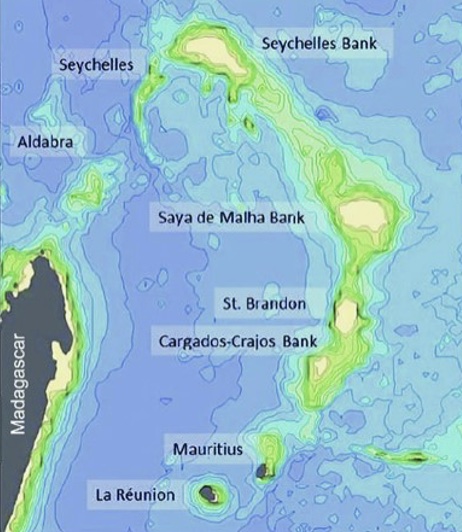
Supported by Arctic Sunrise, Greenpeace, and a research team, they captured underwater footage of the seagrass growing on the bank. By keeping carbon safely locked up on the seabed, seagrass meadows help slow down climate change. Worldwide, they are a critical feeding and breeding ground to a wealth of wildlife. Science research is critical and essential to provide evidence for global protection. In this area damage from bottom trawling was in evidence. Communicating findings using social media has become an important tool in protection of the international waters of the wider ocean environment. Storytelling is again a facet of that, as is underwater photo coverage.

Communities across the Western Indian Ocean, from Seychelles to Mauritius, Réunion and Madagascar, are already showing the way in ocean protection. Greenpeace is calling on governments all around the world to agree a strong Global Ocean Treaty to help support people, protect wildlife and combat climate change.
3.The Sargasso Sea in the North Atlantic off Bermuda
Greenpeace’s ship Arctic Sunrise is in the Sargasso Sea doing important scientific work like e-DNA sampling and surveys of seabirds and cetaceans (whales, dolphins and porpoises). e-DNA sampling studies the traces of genetic material that creatures leave in the water as they swim through, to measure biodiversity in that part of the ocean. Like many parts of the world’s ocean, the Sargasso Sea faces threats from climate change and plastic pollution. Greenpeace has mapped out a pathway to protecting at least 30% of our oceans by 2030, in line with the new Global Ocean Treaty.
Because of its incredible and unique ecosystem, one of the priority areas for a new ocean sanctuary is the Sargasso Sea. These studies will gather crucial evidence to help make the case that the Sargasso should become one of the world’s first ocean sanctuaries on the high seas. Arctic Sunrise has been a floating laboratory in the area, and also visiting Bermuda, which sits centrally in the Sargasso Sea. Making the Sargasso Sea the first ocean sanctuary on the high seas would be an incredible start to putting the Global Ocean Treaty’s promise of protecting 30% of the oceans by 2030 into effect. Alongside other countries in the region, the UK has a unique role to play, given its links to Bermuda. That is an additional reason why we are calling on the UK government to ratify the Global Ocean Treaty. Bermuda is the oldest self-governing overseas territory in the British Commonwealth. Its 1968 constitution provides the island with formal responsibility for internal self-government, while the British Government retains responsibility for external affairs, defence, and security. That includes Global Treaties!

The Sargasso Sea, located entirely within the Atlantic Ocean, is the only sea without a land boundary, being instead

defined by currents. The Sargassum seaweed that floats in the Sargasso Sea is what makes it such a special place – and the birthplace and migration route stop for many iconic species, including the famous eels of the Rivers Severn and Wye fame; jellied eels remain now a rare delicacy in the UK. Primarily because of its Sargassum, former Chief Scientist of the US National Oceanic and Atmospheric Administration (NOAA) Sylvia Earle called the Sargasso Sea a “golden floating rainforest”. Like rainforests on land, this unique ecosystem supports many iconic species from birth and throughout their lives. These studies this year will gather crucial evidence to help make the case that the Sargasso should become one of the world’s first ocean sanctuaries on the high seas.
Making the Sargasso Sea the first ocean sanctuary on the high seas would be an incredible start to putting the Global Ocean Treaty’s promise of protecting 30% of the oceans by 2030 into effect. Alongside other countries in the region, the UK has a unique role to play, given its links to Bermuda. That’s why Greenpeace is calling on the UK government to ratify the Global Ocean Treaty. Bermuda sits in the Sargasso Sea. The research has so far provided environmental DNA evidence, seabird surveys, plastic choking the seaweed, 2000 miles of fishing lines and ghost gear and many local voices in the region calling for the ocean protection.
Eleanor Polisano head of Oceans at Greenpeace is calling for one year from now:
- Global Ocean Treaty in force
- Ocean sanctuaries unlocked
- Deep Sea Mining halted
- In shifting from extraction, exploitation and exhaustion of ecosystems, to restoration and hope in action
- It is vital to keep the momentum going. The UK Government must sign the Global Ocean Treaty for Bermuda, encouraging local, regional co-champions for the whole region. Whichever party is in government after 4 July 2024, must make ocean protection a priority through the signing into law in the UK, the Global Ocean Treaty.
The Greenpeace global ships continue their journeys, visiting communities, completing field research, encouraging writers, and storytellers on the ships. Ships are an essential piece as a campaigning tool. We must all continue to lobby our politicians using people power and coalitions. Throughout 2024 and 2025, Greenpeace ships are sailing to several ecologically-significant locations around our beautiful blue planet. Their iconic vessels will be spotted all round the world – from the deep-sea plateau of Lord Howe Rise, south of Australia, to the vast underwater mountain range of Emperor Seamounts – the highest parts of which form the islands of Hawaii! As only Greenpeace can, using their ship as research laboratories, and for raising awareness and information on the challenges ahead, they are working with world-renowned experts and local people including politicians and regulators to highlight to governments why these precious areas need protecting. As they all fall outside of national boundaries, countries will have to work together to preserve them. See Greenpeace.co.uk
References:
Carson, R. (Sept 1962) Silent Spring. Penguin Modern Classics ed. 13/10/2022
www.openseas.scot (blog June 26, 2024) A History of Marginalisation – how political decisions in the 1980s undermined Scotland’s inshore fishing and coastal communities.
BBC iplayer (June 2024) On Thin Ice Putin v Greenpeace. 6 episodes. A new BBC documentary tells the story of Greenpeace activists whose arrest sparked a global outcry.
Heffernan, O. (May 2024) The High Seas: Ambition, Power and Greed on the Unclaimed Ocean. Profile Books Ltd; ISBN: 9781788163576
https://ourseas.scot/wp Scottish Inshore Fisheries Committee (Dec. 1970). Regulation of Scottish Inshore Fisheries. The Cameron Report. Department of Agriculture and Fisheries for Scotland
Sally Campbell
June 2024