Antarctic Krill, and Ocean Treaties
Environment, our Role and the Power of the big Players
Many individuals, ENGOS, the United Nations have worked over the last 50 years to protect Antarctica. However, in November 2024, a headline read “Very bad precedent: China and Russia team up to undermine krill fishing restrictions in Antarctica”. Working together to block new Antarctic marine parks and loosen krill fishing restrictions, undermining the international convention designed to protect the region from overexploitation. With the support of Russia, China used its veto rights at the meeting of the 26-nation Commission for the Conservation of Antarctic Marine Resources (CCAMLR) in Tasmania to prevent the renewal of an agreement restricting krill fishing. The two countries also blocked the declaration of four marine parks around the southern continent.
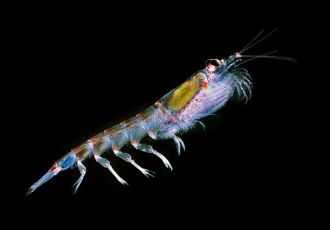
Krill is an important food source for penguins, seals and whales, and gives a rich ecosystem, and krill is one of the signature species The cold waters of Antarctica provide an environment rich in oxygen. The colder water is, the more oxygen it can retain. As the water becomes warmer, less oxygen can be dissolved in the water. Krill is rich in omega-3 fatty acids; and krill are also an important ingredient of food for farmed fish, and in the west of Scotland that is salmon. The ever increasing demand for more inshore marine waters for the use of salmon farms is a sad reflection on the priority the Scottish Government, Scottish Crown Estate and SEPA give to a healthy ecosystem of inshore waters in the west of Scotland, and sustainable fisheries to support communities. The power of multinational Norwegian and Faroese salmon farmers (Mowi, Bakkafrost etc) over the Scottish Government remains depressingly familiar to the communities in Scotland fighting new salmon farms.
The commission (CCAMLR) has a rule restricting the annual Antarctic krill take in four neighbouring zones around the west Antarctic peninsula to 620,000 tonnes a year. The four zones cover the west Antarctic peninsula, neighbouring waters in the Weddell Sea and around the South Orkney and South Georgia islands.

A separate rule, known as measure 51-07, says no more than 45% of that catch can be taken from any one of those zones. Countries at the meeting were seeking to renew that rule, in place since 2009. Dr Tony Press of the University of Tasmania said the precautionary principal that had been supported by countries at CCAMLR meetings for three decades had “gone backwards” at the meeting that finished last week. “That sets a very bad precedent for the future,” he said.
But increasingly China has a long-term strategy to expand that krill fishery and seeking to increase its influence in the region for geopolitical reasons, thinking of future exploitation. As the ice caps melt in both the Arctic and Antarctic regions, Russia sees an opportunity to “disrupt the world’s rule-based order”. Openings for mining and other exploitation may be coming.
A May report from the commission on the krill fishery found 14 vessels were planning to take krill in 2024, including four ships each from China and Norway, three from South Korea and one each from Chile, Russia and Ukraine. China and Norway use a factory fishing method that continuously pumps krill from nets on to the vessel. The fishery report showed the amounts taken in recent years were the highest on record. The annual average take of krill from 2019 to 2023 was 415,800 tonnes, compared to 266,000t for the previous five years. “This is a backwards step for CCAMLR and puts krill, and the ecosystems and predators it supports, at risk.”

You ask what can I/we do?
• first step – do not purchase omega-3 fish oil pills from the chemist or supermarket
• farmed salmon has a huge carbon footprint for their feed, which includes krill from Antarctica, soya from the Amazon and fish from illegal fisheries on the High Seas etc.
• use your voice, and letters with politicians regarding international Ocean Marine Protected Areas treaties. Urge ratification of the UN Ocean Treaty signed in 2024 and now ratified by 15 Ocean Champions out of 105 countries which signed the treaty. The UK signed the treaty but now must ratify (put into law in the UK) to add to the countries supporting the treaty.
• we are all aware the new UK government has a heavy parliamentary timetable. Many other priorities are pushing this timetable so please keep demanding action in this important ratification.
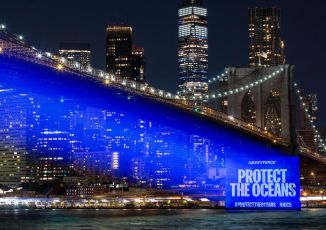
WHAT IS THE UN OCEAN TREATY? A reminder…..with thanks to Greenpeace
The world’s seas are under threat like never before and time is running out to meet the global biodiversity goal of conserving at least 30% of the planet’s oceans by 2030. The only feasible way to meet this goal is via the creation of a network of ocean sanctuaries on the high seas – the vast expanses of the ocean that lie beyond national jurisdiction.
This has finally been made possible by the agreement of the UN Global Ocean Treaty which, once it enters into force, will enable countries to work together to finally create high seas ocean sanctuaries. The world’s oceans are already under threat from overfishing, pollution and climate change. Now, the spectre of deep-sea mining on the horizon poses new dangers to the world’s oceans.
To become a global leader on biodiversity and ocean protection, the UK government should:
1. Ratify the Global Ocean Treaty as soon as possible – Many of the UK’s allies are aiming to complete ratification by June 2025, and the government should keep pace with this deadline. Write to Ed Miliband.
2. Work in collaboration with allies around the world to begin developing proposals for high seas ocean sanctuaries, ready to present at the Treaty’s first Conference of the Parties (COP1) which will take place within one year of the Treaty entering into force. The Sargasso Sea has been identified as a priority site to protect under the new Treaty and the UK is well-placed to spearhead this proposal, collaborating with other allies.
3. Proactively push for a moratorium on deep sea mining at the International Seabed Authority. The government should build on its existing support for a precautionary pause on deep sea mining to position itself as one of the strongest international voices advancing a moratorium.
Sally Campbell
November 2024